Optimizing Your Personal Investment Portfolio in 2026: A Deep Dive into Low-Cost Index Funds for Long-Term Growth
Anúncios
In the dynamic world of finance, the pursuit of long-term wealth accumulation often leads investors down myriad paths. From individual stock picking to complex derivatives, the options can be overwhelming. However, for those seeking a robust, efficient, and surprisingly simple strategy to optimize their personal investment portfolio for sustained growth, low-cost index funds stand out as a beacon. As we look towards 2026 and beyond, understanding and leveraging the power of index fund investing is more crucial than ever.
This comprehensive guide will delve into why low-cost index funds are an indispensable tool for any serious investor, how they contribute to significant long-term growth, and practical steps you can take to integrate them effectively into your financial strategy. We’ll explore their benefits, dissect common misconceptions, and provide actionable insights to help you navigate the investment landscape with confidence.
The Enduring Appeal of Index Fund Investing
At its core, index fund investing involves purchasing a type of mutual fund or Exchange Traded Fund (ETF) designed to track the performance of a specific market index, such as the S&P 500, Dow Jones Industrial Average, or a total stock market index. Unlike actively managed funds, which rely on fund managers to pick individual stocks and time the market, index funds aim to replicate the performance of their underlying benchmark. This passive approach offers several compelling advantages that have cemented their place as a cornerstone of smart investing.
Anúncios
Simplicity and Diversification
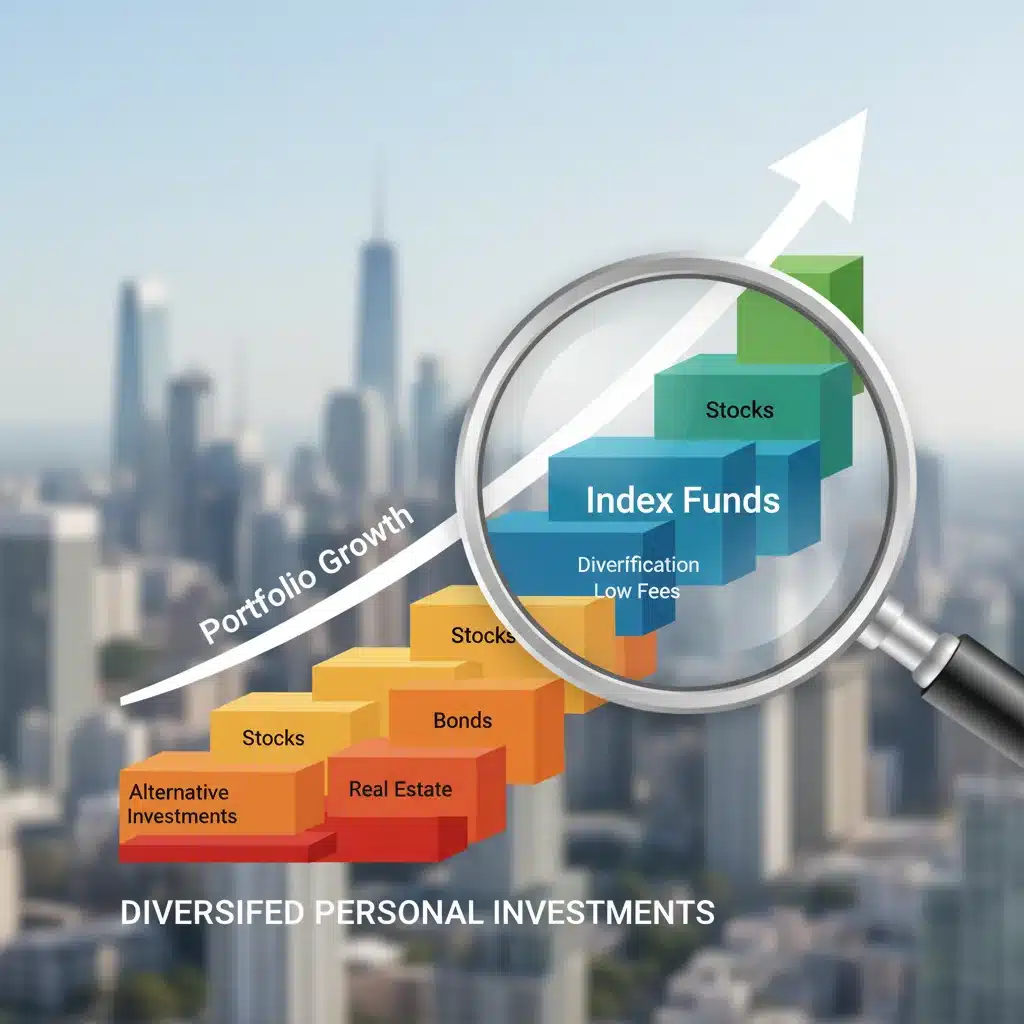
One of the most attractive features of index fund investing is its inherent simplicity. By investing in a single index fund, you gain exposure to hundreds, if not thousands, of companies across various sectors. This instant diversification significantly reduces company-specific risk. Instead of betting on the success of one or two companies, you are betting on the overall health and growth of the economy, which historically has been a winning wager over the long term.
Lower Costs: A Game Changer for Long-Term Returns
The ‘low-cost’ aspect of low-cost index funds is not just an add-on; it’s a fundamental driver of superior long-term returns. Actively managed funds typically charge higher expense ratios (annual fees) to cover the costs of research, trading, and manager salaries. These fees, often ranging from 0.5% to 2% or even higher, might seem small annually, but they compound over decades, significantly eroding your investment returns. Index funds, by contrast, typically boast expense ratios as low as 0.03% to 0.20%. Over a 30-year investment horizon, the difference in fees can translate into tens or even hundreds of thousands of dollars in lost potential gains. This is a critical factor when considering how to optimize your personal investment portfolio.
Outperforming the Experts: The Active vs. Passive Debate
Perhaps the most compelling argument for index fund investing comes from empirical data. Numerous studies, most notably the SPIVA (S&P Dow Jones Indices Versus Active) reports, consistently show that a significant majority of actively managed funds fail to outperform their respective benchmarks over extended periods, especially after accounting for fees. This is not to say active managers never beat the market, but consistently doing so is incredibly difficult. For the average investor, trying to pick the few funds that will beat the market is a fool’s errand. Opting for low-cost index funds allows you to capture market returns without the added cost and risk of underperformance.
Building a Resilient Personal Investment Portfolio with Index Funds for 2026
Optimizing your personal investment portfolio for 2026 and beyond requires a strategic approach. Here’s how index funds can be the cornerstone of that strategy:
Step 1: Define Your Financial Goals and Risk Tolerance
Before diving into specific funds, clearly define what you’re investing for (retirement, a down payment, education) and your time horizon. Your risk tolerance – how comfortable you are with potential fluctuations in your portfolio’s value – will dictate your asset allocation. Younger investors with longer time horizons can generally afford to take on more risk, leaning heavily into equity index funds. Those closer to retirement might prefer a more balanced approach with a higher allocation to bond index funds.
Step 2: Choose Your Core Index Funds
A well-diversified portfolio doesn’t require dozens of funds. For many, a simple three-fund portfolio can suffice, offering broad market exposure at minimal cost. Consider these core options for your index fund investing strategy:
- Total Stock Market Index Fund: This fund provides exposure to the entire U.S. stock market, including large, mid, and small-cap companies. Examples include Vanguard Total Stock Market Index Fund (VTSAX or VTI) or Fidelity Total Market Index Fund (FSKAX).
- International Stock Market Index Fund: To diversify globally and reduce country-specific risk, an international index fund is crucial. This gives you exposure to developed and emerging markets outside the U.S. Examples include Vanguard Total International Stock Index Fund (VTIAX or VXUS).
- Total Bond Market Index Fund: For stability and income, particularly as you approach retirement, a total bond market index fund offers exposure to a wide range of U.S. investment-grade bonds. Examples include Vanguard Total Bond Market Index Fund (VBTLX or BND).
Step 3: Determine Your Asset Allocation
Your asset allocation is the mix of stocks and bonds in your portfolio. A common rule of thumb for aggressive investors is to subtract your age from 110 or 120 to determine the percentage of your portfolio that should be in stocks. For example, a 30-year-old might have 80-90% in stocks and 10-20% in bonds. As you age, you’ll gradually shift towards a more conservative allocation with a higher percentage in bonds. This is a dynamic process and a key part of optimizing your personal investment portfolio.
Step 4: Automate Your Investments and Rebalance Periodically
Consistency is key to successful index fund investing. Set up automatic contributions to your investment accounts. This practices dollar-cost averaging, where you invest a fixed amount regularly, regardless of market fluctuations, reducing the impact of volatility. Periodically (e.g., annually), rebalance your portfolio to bring it back to your target asset allocation. If stocks have performed exceptionally well, you might sell some stock index funds and buy bond index funds to restore your desired percentages. This ensures you’re always aligned with your risk tolerance.
The Power of Compounding: Your Ally in Long-Term Growth
One of the most profound concepts in investing, and one that greatly benefits from the consistent, low-cost nature of index fund investing, is compounding. Compounding interest is essentially earning returns on your initial investment and on the accumulated interest from previous periods. Albert Einstein reportedly called it the ‘eighth wonder of the world.’ Over long periods, even modest returns, when compounded, can lead to substantial wealth accumulation. The lower the fees of your investments, the more money remains invested to compound, accelerating your growth.
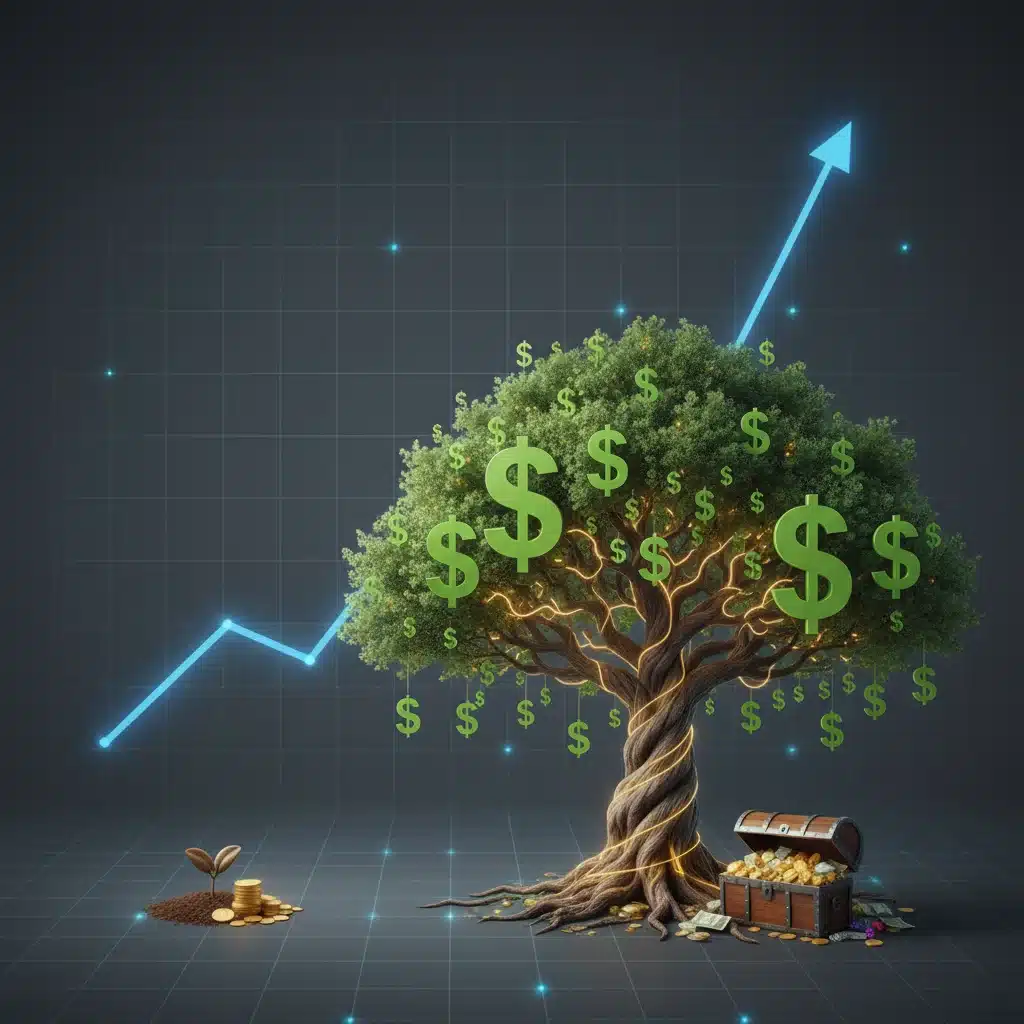
Consider two scenarios: Investor A invests $10,000 annually for 30 years, earning an average 7% annual return with 0.1% in fees. Investor B invests the same amount, earning 7% but with 1.5% in fees. Over 30 years, Investor A’s portfolio could be hundreds of thousands of dollars larger due to the magic of compounding and lower fees. This illustrates why choosing low-cost options for your personal investment portfolio is paramount.
Addressing Common Misconceptions about Index Fund Investing
Despite their proven track record, index funds sometimes face misconceptions:
Misconception 1: Index Funds Only Offer Average Returns
While it’s true that index funds aim to match market returns, ‘average’ in this context means capturing the returns of the entire market, which historically has been quite robust over the long term. Given that most actively managed funds underperform the market, achieving ‘average’ market returns is actually an above-average outcome for many investors. Furthermore, when adjusted for risk, index funds often provide superior risk-adjusted returns.
Misconception 2: You Need to Be a Financial Expert to Invest in Index Funds
Quite the opposite. Index fund investing is celebrated for its accessibility. You don’t need to analyze company balance sheets or understand complex market dynamics. The strategy is straightforward: invest regularly in broad-market, low-cost index funds, and let time and compounding do the heavy lifting. This makes them ideal for both novice and experienced investors looking to simplify their financial lives.
Misconception 3: Index Funds Are Only for Passive Investors
While index funds are a cornerstone of passive investing, they can also be incorporated into more active strategies. For example, some investors might use a core-satellite approach, with a large portion of their portfolio in index funds (the core) and a smaller portion in individual stocks or specialized funds (the satellite) for higher potential returns (and risk). However, for most people, a purely passive approach offers the best balance of returns, risk, and effort.
The Role of ETFs in Index Fund Investing
When discussing index fund investing, it’s important to differentiate between traditional mutual funds and Exchange Traded Funds (ETFs). Both can be index funds, but they trade differently:
- Mutual Funds: Bought and sold at the end of the trading day at their Net Asset Value (NAV). Often require higher minimum investments, though some brokerages offer no-minimum funds.
- ETFs: Trade like stocks throughout the day on exchanges. They typically have lower expense ratios and no minimum investment requirements beyond the cost of a single share, making them highly accessible.
For most individual investors, especially those starting out, ETFs often present a more flexible and cost-effective entry point into index fund investing. Many popular index funds are available in both mutual fund and ETF versions, allowing investors to choose based on their preference and brokerage options.
Tax Efficiency: Another Advantage of Index Funds
Beyond low fees, index funds, particularly ETFs, often boast superior tax efficiency compared to actively managed mutual funds. Actively managed funds frequently buy and sell securities, generating capital gains distributions that are passed on to shareholders, even if those shareholders haven’t sold their fund shares. These distributions are taxable events. Index funds, due to their passive nature and lower turnover, typically generate fewer capital gains distributions, leading to a more tax-efficient investment over the long run, especially in taxable brokerage accounts. This further contributes to optimizing your personal investment portfolio.
Crafting Your Personal Investment Portfolio for 2026 and Beyond
As we approach 2026, the principles of sound investing remain constant. The goal is to build a diversified, low-cost, and tax-efficient portfolio that aligns with your financial goals and risk tolerance. Here’s a summary of how to achieve this with index fund investing:
- Start Early and Invest Consistently: Time in the market, not timing the market, is the most powerful force in wealth creation. The sooner you start, the more time compounding has to work its magic.
- Embrace Diversification: Use broad-market index funds to spread your risk across thousands of companies and various geographies.
- Prioritize Low Costs: Fees are the silent killer of returns. Always opt for funds with the lowest expense ratios.
- Stay Disciplined: Avoid the temptation to react to short-term market fluctuations. Stick to your long-term plan, rebalance periodically, and continue investing regularly.
- Utilize Tax-Advantaged Accounts: Maximize contributions to IRAs, 401(k)s, and other tax-advantaged accounts first, as they offer significant tax benefits that enhance long-term growth.
The Future of Index Fund Investing
The popularity and effectiveness of index fund investing show no signs of waning. As financial technology advances and investor education improves, more individuals are recognizing the profound benefits of this approach. While market conditions and economic landscapes will always evolve, the fundamental principles that make index funds so powerful – broad diversification, low costs, and market-matching returns – are timeless. For those looking to confidently navigate the investment world in 2026 and for decades to come, building a robust personal investment portfolio around low-cost index funds is not just a smart choice, but often the optimal one.

Remember, successful investing is less about finding the next hot stock and more about consistent, disciplined adherence to a sound strategy. Index fund investing provides that strategy, allowing you to focus on your life while your money works hard for you.
Conclusion: Secure Your Financial Future with Index Funds
Optimizing your personal investment portfolio for long-term growth by 2026 is an attainable goal for everyone, regardless of their financial expertise. By understanding and implementing a strategy centered around low-cost index funds, you can build a diversified, resilient, and highly efficient portfolio designed to capture market returns while minimizing costs and unnecessary risks. The simplicity, diversification, and cost-effectiveness of index fund investing make it an unparalleled choice for individuals committed to achieving their financial aspirations.
Don’t let the complexities of the financial world deter you. Start small, stay consistent, and let the power of compounding and the efficiency of index funds propel you towards a secure and prosperous financial future. The journey to financial independence is a marathon, not a sprint, and low-cost index funds are your reliable training partners.