Achieve Financial Freedom by 2026: A 12-Month Plan to Eradicate High-Interest Debt

Anúncios
Achieve Personal Financial Freedom by 2026: A 12-Month Plan to Eliminate High-Interest Consumer Debt
The dream of personal financial freedom by 2026 is not merely a fantasy; it’s an achievable goal with the right strategy and unwavering commitment. For many, the most significant hurdle to overcome on this journey is high-interest consumer debt. Credit cards, personal loans, and other forms of revolving debt can feel like a financial straitjacket, stifling your ability to save, invest, and truly live life on your own terms. This comprehensive 12-month plan is designed to provide a clear roadmap, empowering you to eliminate high-interest debt and lay a solid foundation for lasting financial independence.
Anúncios
Imagine a life where your hard-earned money works for you, not for your creditors. A life free from the constant stress of minimum payments and mounting interest. This vision is within reach. By focusing intensely on strategies to eliminate high-interest debt over the next year, you can transform your financial landscape and step into 2026 with a renewed sense of security and opportunity.
Understanding the Enemy: What is High-Interest Consumer Debt?
Before we can conquer high-interest debt, we must first understand its nature. High-interest consumer debt typically refers to any form of borrowing that carries an annual percentage rate (APR) significantly above the prime rate. This most commonly includes:
Anúncios
- Credit Card Debt: Often carrying APRs ranging from 15% to 25% or even higher.
- Payday Loans: notorious for exorbitant interest rates, sometimes in the triple digits.
- Certain Personal Loans: especially those from lenders targeting individuals with lower credit scores.
- Retail Store Cards: similar to credit cards but often with even higher APRs and limited usability.
The insidious nature of high-interest debt lies in its ability to compound rapidly. A small balance can quickly balloon into an unmanageable sum, with a significant portion of your monthly payments going towards interest rather than the principal. This creates a vicious cycle that can be incredibly difficult to break without a deliberate and aggressive plan.
The 12-Month Debt Elimination Blueprint: A Step-by-Step Guide
This plan is structured into actionable phases, designed to guide you from initial assessment to complete debt freedom within a year. Remember, consistency is key.
Months 1-2: Assessment and Foundation Building
Step 1: Get a Crystal-Clear Picture of Your Debt
The first and most crucial step is to gather all your debt information. List every single debt you owe, including:
- Creditor Name
- Current Balance
- Interest Rate (APR)
- Minimum Monthly Payment
- Due Date
Organize this information in a spreadsheet. Seeing the full scope of your debt, especially the high-interest ones, can be a powerful motivator. Don’t shy away from the numbers; knowledge is power.
Step 2: Create a Realistic Budget (and Stick to It!)
A budget is your financial GPS. It tells your money where to go instead of wondering where it went. For these initial months, focus on a zero-based budget if possible, where every dollar has a job. Track every single penny you spend. Utilize budgeting apps (Mint, YNAB, Personal Capital), spreadsheets, or even a pen and paper. The goal is to identify:
- Fixed Expenses: Rent/Mortgage, car payments, insurance premiums.
- Variable Expenses: Groceries, utilities, entertainment, dining out.
- Discretionary Spending: Non-essential items you can cut back on.
Look for immediate areas to cut. Even small reductions in daily spending can free up significant funds for debt repayment.
Step 3: Build a Mini Emergency Fund ($1,000-$2,000)
Before aggressively attacking debt, it’s vital to have a small emergency fund. This acts as a buffer against unexpected expenses (car repair, medical bill) that could otherwise force you back into debt. Aim for $1,000 to $2,000. This fund should be easily accessible, ideally in a separate savings account.
Months 3-6: Aggressive Debt Attack
Step 4: Choose Your Debt Repayment Strategy (Snowball vs. Avalanche)
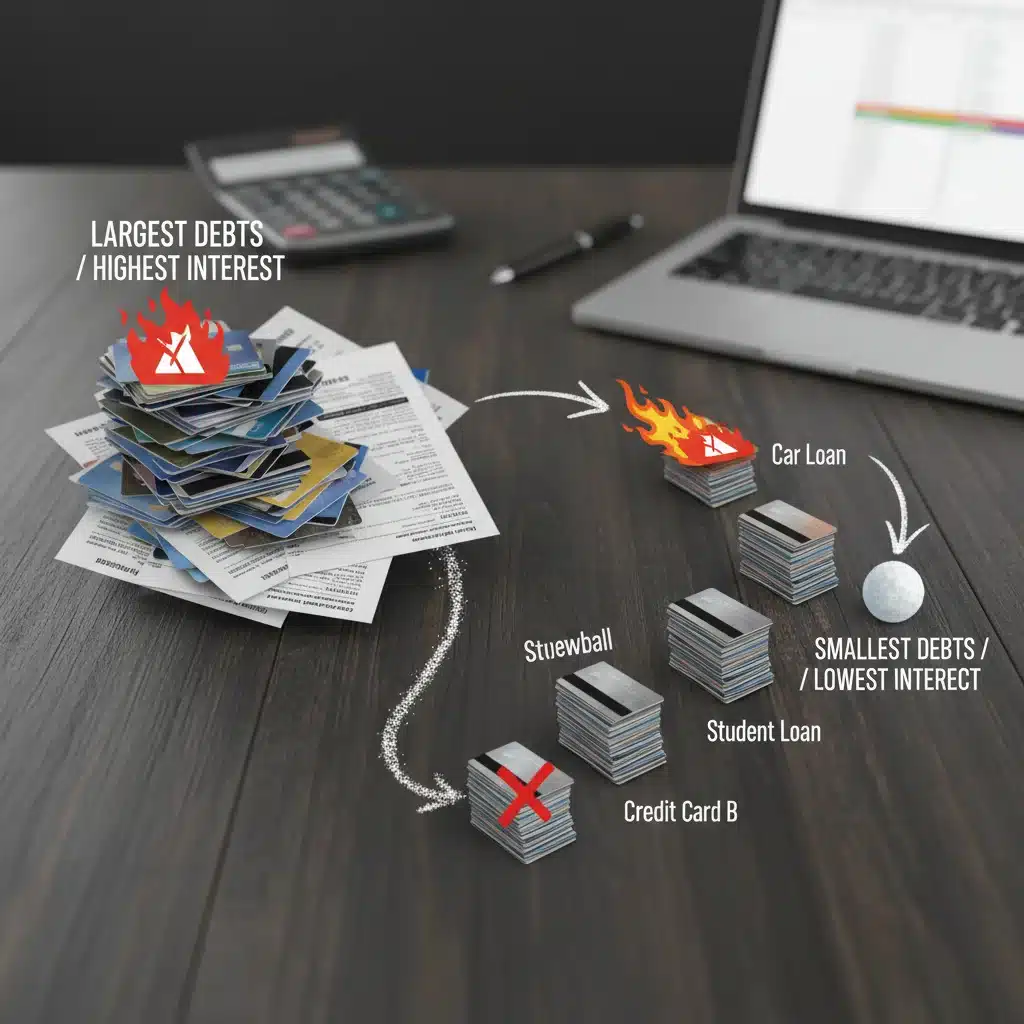
Now that you have a clear picture of your debt and a budget, it’s time to choose your attack method to eliminate high-interest debt. Both methods involve paying minimums on all debts except one, on which you focus all extra payments.
- Debt Snowball Method: List debts from smallest balance to largest. Pay minimums on all, and throw all extra money at the smallest debt. Once it’s paid off, take the money you were paying on that debt (minimum payment + extra) and apply it to the next smallest debt. This method provides psychological wins.
- Debt Avalanche Method: List debts from highest interest rate to lowest. Pay minimums on all, and throw all extra money at the debt with the highest interest rate. Once it’s paid off, take that payment amount and apply it to the next highest interest rate debt. This method saves you the most money in interest.
For high-interest debt, the avalanche method is mathematically superior as it minimizes the total interest paid. However, if you need quick wins to stay motivated, the snowball method can be very effective. Choose the one that you are most likely to stick with.
During these months, every extra dollar should go towards your chosen target debt. This means being extremely disciplined with your budget and actively looking for ways to increase your income or decrease your spending.
Step 5: Increase Income and Cut Expenses Further
To accelerate your debt payoff, you need more money. Consider:
- Side Hustles: Freelancing, ride-sharing, dog walking, selling crafts online.
- Selling Unused Items: Declutter your home and sell items on platforms like eBay, Facebook Marketplace, or local consignment shops.
- Negotiating Bills: Call your internet, cable, and insurance providers to see if you can get a lower rate.
- Temporary Frugality: Cut out non-essential subscriptions, pack lunches, limit dining out, find free entertainment.
The more you can funnel towards your high-interest debt, the faster you will eliminate high-interest debt.
Months 7-10: Momentum and Optimization
Step 6: Explore Debt Consolidation or Balance Transfers (Caution Advised)
Once you’ve made significant progress and your credit score might have improved, you could consider options like:
- Balance Transfer Credit Cards: If you have excellent credit, you might qualify for a 0% APR balance transfer card for a promotional period (e.g., 12-18 months). This can be a powerful tool to pay down principal without accruing interest, but be extremely careful. Ensure you can pay off the transferred balance before the promotional period ends, as deferred interest or high APRs can kick in. Also, be aware of balance transfer fees (typically 3-5%).
- Debt Consolidation Loans: A personal loan with a lower, fixed interest rate can combine multiple high-interest debts into one manageable payment. This simplifies your repayment and can save you money on interest. However, ensure the new interest rate is genuinely lower, and avoid taking on new debt once consolidated.
These options are not a magic bullet and require discipline. They are tools to optimize your repayment, not an excuse to spend more. Use them strategically to further eliminate high-interest debt.
Step 7: Automate Payments and Savings
Set up automatic minimum payments for all your debts to avoid late fees. Crucially, automate your extra debt payments as well. If your paycheck automatically sends an extra $X to your target debt, you’re less likely to miss it. Similarly, start automating small contributions to your emergency fund or even initial investments once debt is gone.
Months 11-12: The Final Push and Future Planning
Step 8: Celebrate Milestones (Wisely!) and Stay Motivated
Debt repayment is a marathon, not a sprint. Acknowledge your progress. When you pay off a debt, take a moment to celebrate, but do so frugally. This helps maintain motivation. Share your journey with a trusted friend or partner for accountability and support.
Step 9: Build a Full Emergency Fund (3-6 Months of Expenses)
As you near the complete elimination of your high-interest debt, shift your focus to building a robust emergency fund. This fund should cover 3 to 6 months of essential living expenses. This provides true financial security and prevents you from falling back into debt during unforeseen circumstances.
Step 10: Start Investing and Wealth Building
Once your high-interest consumer debt is gone and your emergency fund is solid, it’s time to shift your focus from debt elimination to wealth accumulation. Start contributing to retirement accounts (401k, IRA), brokerage accounts, or other investment vehicles. The money you were previously dedicating to debt payments can now supercharge your savings and investments.
Key Principles for Success in Eliminating High-Interest Debt
Discipline and Consistency
This is arguably the most important factor. There will be days when you feel discouraged, tempted to spend, or simply tired of the grind. Remind yourself of your goal: financial freedom by 2026. Stick to your budget, make those extra payments, and stay consistent.
Mindset Shift
Change your relationship with money. View debt as a temporary obstacle, not a permanent state. Embrace delayed gratification. Understand that every small sacrifice today contributes to a significantly better financial tomorrow. Educate yourself continuously about personal finance.

Adopt a ‘why not me?’ attitude when it comes to financial success. If others can eliminate high-interest debt and achieve financial freedom, so can you.
Live Below Your Means
This is a foundational principle of financial success. Spending less than you earn is the simplest path to creating a surplus that can be used for debt repayment and savings. This doesn’t necessarily mean living a miserable existence, but rather making conscious choices about where your money goes.
Avoid New Debt
While aggressively paying off old debt, be absolutely vigilant about not incurring new debt. Cut up credit cards if necessary, or freeze them. If an emergency arises and you haven’t yet built your full emergency fund, use your mini-fund. If that’s exhausted, explore alternatives like borrowing from family (with a clear repayment plan) before resorting to high-interest loans.
Seek Professional Help if Needed
If your debt situation feels overwhelming, don’t hesitate to seek help. Non-profit credit counseling agencies can provide advice, help you negotiate with creditors, and even set up debt management plans. Be wary of for-profit debt settlement companies that often charge high fees and can damage your credit.
Anticipating and Overcoming Challenges
The path to eliminate high-interest debt is rarely perfectly smooth. You will encounter challenges, but anticipating them can help you prepare.
- Unexpected Expenses: This is why the emergency fund is crucial. It acts as your shield against financial setbacks.
- Loss of Income: If you lose your job or face a significant pay cut, immediately re-evaluate your budget. Prioritize essential expenses and communicate with your creditors.
- Motivation Dips: Revisit your ‘why.’ Look at your progress. Talk to supportive friends or family. Read success stories.
- Social Pressure: Friends or family might not understand your frugal choices. Learn to politely decline invitations that don’t align with your budget or suggest free/low-cost alternatives.
Remember that every challenge overcome makes you stronger and more resilient in your financial journey.
The Reward: Financial Freedom by 2026
By diligently following this 12-month plan, you won’t just eliminate high-interest debt; you will fundamentally change your financial future. Imagine what you could do with the money you once sent to creditors: invest in your retirement, save for a down payment on a home, fund your children’s education, travel, or pursue a passion project. The possibilities are endless.
Achieving financial freedom by 2026 means having choices. It means reducing stress and gaining control. It means building a legacy. It starts today, with a commitment to understanding your debt, creating a plan, and executing it with relentless determination.
This isn’t just about paying off bills; it’s about reclaiming your financial power and building a life of security and abundance. Take the first step today, and let 2026 be the year you celebrate true financial liberation.
Beyond Debt: Sustaining Financial Health
Once you’ve successfully managed to eliminate high-interest debt, the journey doesn’t end. It evolves. Sustaining financial health requires ongoing attention and strategic planning. Here are some critical steps to ensure your hard-won freedom lasts:
Continue Budgeting and Tracking
While the intensity might lessen, never abandon your budget. It remains your most powerful tool for understanding where your money goes. Shift its focus from debt repayment to wealth accumulation and intentional spending. Regular tracking helps you stay accountable and ensures you’re meeting your new financial goals, whether that’s saving for a down payment, investing more, or funding a dream vacation.
Increase Your Emergency Fund
After paying off high-interest debt, your initial mini-emergency fund should be expanded to cover 3 to 6 months of essential living expenses. For some, especially those with variable incomes or dependents, aiming for 9 to 12 months might be even wiser. This robust safety net protects you from life’s inevitable curveballs without having to resort to debt again.
Prioritize Retirement Savings
Once consumer debt is gone, aggressively fund your retirement accounts. If your employer offers a 401(k) match, contribute at least enough to get the full match – it’s free money! Then, maximize contributions to Roth IRAs or traditional IRAs, taking advantage of tax-advantaged growth. The earlier you start, the more powerful compounding interest becomes.
Invest for Long-Term Goals
Beyond retirement, consider other long-term investment goals. This could include saving for a home, a child’s education, or starting a business. Open a brokerage account and invest in a diversified portfolio of low-cost index funds or ETFs. Consult a financial advisor if you need guidance on specific investment strategies tailored to your risk tolerance and goals.
Review and Adjust Annually
Your financial life isn’t static. Life changes, income changes, and goals change. Make it a habit to conduct an annual financial review. Assess your budget, investment performance, insurance coverage, and overall financial plan. Adjust as needed to ensure you remain on track for your long-term objectives.
Maintain a Healthy Credit Score
Even without high-interest debt, a good credit score is vital. It impacts everything from mortgage rates to insurance premiums. Continue to pay all bills on time, keep old credit accounts open (even if unused), and monitor your credit report regularly for errors. A strong credit score will open doors to better financial opportunities.
Educate Yourself Continuously
The world of personal finance is always evolving. Stay informed about new investment opportunities, tax laws, and financial strategies. Read books, listen to podcasts, and follow reputable financial experts. The more you know, the better equipped you’ll be to make smart financial decisions.
Consider Professional Financial Guidance
As your financial life becomes more complex, a certified financial planner (CFP) can be an invaluable resource. They can help you create a comprehensive financial plan, optimize your investments, plan for retirement, and navigate complex tax situations. Look for fee-only fiduciaries who are legally bound to act in your best interest.
The Psychological Benefits of Debt Freedom
The journey to eliminate high-interest debt isn’t just about numbers; it’s profoundly about well-being. The psychological benefits are immense and often overlooked:
- Reduced Stress and Anxiety: The constant burden of debt can take a severe toll on mental health. Freedom from debt brings a significant reduction in financial stress, leading to greater peace of mind.
- Improved Relationships: Money issues are a leading cause of relationship strain. When debt is under control, financial arguments decrease, and partners can collaborate on shared financial goals.
- Greater Freedom and Flexibility: Without debt payments looming, you have more disposable income and greater flexibility to pursue opportunities, change careers, or take risks that align with your passions.
- Enhanced Self-Esteem and Confidence: Successfully tackling a major challenge like debt elimination builds incredible self-confidence. It proves to yourself that you are capable of setting and achieving difficult goals.
- Better Sleep: Many people report sleeping better once they are free from the weight of debt. The worry of making payments or dealing with collectors often keeps people awake at night.
- More Joy and Less Worry: The ability to spend, save, and give without the guilt or constraint of debt allows for a more joyful and less anxious existence.
Embracing this 12-month plan to eliminate high-interest debt is more than a financial strategy; it’s a commitment to a better quality of life. The sacrifices made over this year will yield dividends far beyond monetary value, paving the way for a truly financially free and fulfilling 2026 and beyond.