
Decoding the FAFSA 2026-2027 Updates: Your Guide to Securing Up to $7,395 in Federal Student Aid
Navigating the world of college financial aid can often feel like deciphering a complex code. For students and families planning for the 2026-2027 academic year, understanding the latest FAFSA (Free Application for Federal Student Aid) updates is not just helpful; it’s absolutely crucial. These changes can significantly impact how much federal student aid you qualify for, potentially unlocking up to $7,395 in assistance. This comprehensive guide will walk you through the essential FAFSA 2026-2027 updates, offering insider tips and strategic advice to ensure you maximize your financial support.
Anúncios
The FAFSA is your gateway to federal grants, scholarships, work-study programs, and federal student loans. Its importance cannot be overstated, as it serves as the foundation for nearly all financial aid decisions made by colleges and universities across the United States. With recent legislative changes, the application process and eligibility criteria have undergone significant revisions. Staying informed about these FAFSA 2026-2027 updates is your first step towards a financially secure higher education.
We understand that the prospect of filling out financial aid forms can be daunting. That’s why we’ve broken down the most important aspects of the upcoming FAFSA cycle into digestible, actionable insights. From understanding the new terminology to leveraging strategic financial planning, we’ll cover everything you need to know to confidently approach the FAFSA and secure the aid you deserve.
Anúncios
The Evolution of FAFSA: What Led to the 2026-2027 Changes?
The FAFSA has been a cornerstone of federal student aid for decades, but it’s not a static document. The recent FAFSA Simplification Act brought about the most significant overhaul to the application process and aid calculation methodology in over 40 years. While many of these changes were implemented for the 2024-2025 aid year, their full impact and subsequent refinements continue to shape future cycles, including the FAFSA 2026-2027 updates.
The primary goals behind these reforms were to streamline the application process, make federal student aid more accessible, and provide a clearer picture of a family’s financial need. This involved simplifying the form, changing how eligibility is determined, and expanding aid opportunities for a broader range of students. Understanding these foundational shifts is key to grasping the specific FAFSA 2026-2027 updates.
Historically, the FAFSA was often criticized for its length and complexity, deterring many eligible students from applying. The new FAFSA aims to be shorter and more user-friendly, leveraging direct data exchange with the IRS to reduce the burden on applicants. These improvements are designed to make the process less intimidating and more efficient, ultimately connecting more students with the financial resources they need to pursue higher education.
Key FAFSA 2026-2027 Updates You Must Know
Let’s dive into the specifics of what’s changing and what you need to be aware of for the FAFSA 2026-2027 cycle. These updates primarily build upon the foundational changes introduced in previous years, with some clarifications and ongoing adjustments.
1. New Terminology: Say Goodbye to EFC, Hello to SAI
One of the most significant FAFSA 2026-2027 updates is the replacement of the Expected Family Contribution (EFC) with the Student Aid Index (SAI). While both are indices used to determine financial need, the SAI calculation is different and, for many families, will result in a lower number, potentially increasing eligibility for need-based aid. The SAI can even be a negative number, indicating a higher level of financial need.
Understanding the SAI is paramount. It’s not the amount of money your family will pay, but rather an eligibility index that financial aid offices use to determine how much federal student aid you are eligible to receive. A lower SAI generally means more financial aid. Familiarize yourself with this new term and how it’s calculated, as it’s central to your aid package.
2. Simplified Application Process and Data Retrieval
The FAFSA 2026-2027 updates continue to emphasize a more streamlined application. The number of questions has been significantly reduced, and the process of transferring tax information directly from the IRS has become mandatory for all applicants and contributors (parents, spouses). This feature, known as the Direct Data Exchange (DDX), aims to simplify the process and reduce errors.
This means that most applicants will no longer need to manually enter their tax information, drastically cutting down on the time and effort required to complete the FAFSA. However, it also means that all contributors must consent to the DDX, even if they didn’t file taxes. This consent is crucial for the FAFSA to be processed successfully.
3. Changes to Financial Need Calculation
- Income Protection Allowances (IPAs): These allowances, which protect a portion of a family’s income from being considered available for college costs, have increased. This means more of your income is protected, potentially leading to a lower SAI and more aid eligibility.
- Treatment of Family Farms and Small Businesses: For the 2026-2027 cycle, the net worth of family farms and small businesses (with 100 or fewer full-time employees) will continue to be excluded from the asset calculation. This is a significant change from previous FAFSA cycles and benefits many families who own these types of assets.
- Divorced/Separated Parents: The FAFSA now uses the parent who provided the most financial support to the student in the past 12 months, rather than the parent the student lived with most. This change can have a substantial impact on the SAI calculation for students from divorced or separated families.
- Number of Students in College: The previous FAFSA formula divided the EFC by the number of students in college. Under the new SAI calculation, this benefit has been eliminated. While this might seem like a disadvantage for families with multiple children in college, the increased IPAs and other changes aim to mitigate this impact.
4. Federal Pell Grant Eligibility Expansion
The FAFSA 2026-2027 updates continue to expand eligibility for the Federal Pell Grant, which is often considered the foundation of federal student aid. More students from low-income backgrounds are expected to qualify for the maximum Pell Grant, which for the 2024-2025 award year was $7,395. This amount is subject to change for 2026-2027 but serves as a strong indicator of the potential aid available.
Eligibility for Pell Grants is now tied to federal poverty levels and the student’s (and family’s) income. A student’s SAI will determine the specific amount of Pell Grant they receive. Some students with an SAI of zero or less will automatically qualify for the maximum Pell Grant. This expansion is a direct result of the FAFSA Simplification Act’s goal to make higher education more affordable for those who need it most.

Insider Tips to Maximize Your FAFSA 2026-2027 Aid
Understanding the FAFSA 2026-2027 updates is one thing; strategically applying that knowledge to maximize your aid is another. Here are some insider tips to help you secure the most financial assistance possible:
1. File Early, Every Year
This is perhaps the most crucial piece of advice. The FAFSA for 2026-2027 is expected to open in October 2025. While federal aid generally operates on a first-come, first-served basis for some programs, many states and individual colleges have their own deadlines and limited funds. Filing as close to the opening date as possible increases your chances of receiving all the aid you’re eligible for, especially institutional grants and state-specific programs.
Don’t wait until the last minute. Gather all necessary documents well in advance and be ready to submit your application as soon as it becomes available. Early submission also allows time to correct any errors or provide additional documentation if requested by financial aid offices.
2. Understand the Prior-Prior Year (PPY)
The FAFSA for the 2026-2027 academic year will use tax information from the 2024 tax year. This is known as the ‘prior-prior year’ (PPY) data. This means that financial decisions made in 2024 will directly impact your aid eligibility for 2026-2027. This advance notice allows for strategic financial planning.
While it’s generally not advisable to make major financial changes solely for financial aid purposes, being aware of the PPY can help you understand how your income and assets from a specific tax year will be viewed. For instance, if you anticipate a significant one-time income event, understanding the PPY can help you plan its timing to minimize its impact on your aid eligibility.
3. Strategic Asset Management
The FAFSA considers certain assets when calculating your SAI. While the primary residence is excluded, non-retirement investment accounts, savings accounts, and certain business assets (for larger businesses) are factored in. Here are some strategies:
- Reduce Savable Assets: If possible, consider using funds from non-retirement savings accounts to pay down consumer debt (like credit cards) or make necessary purchases before the FAFSA base year (2024 for the 2026-2027 FAFSA).
- Invest in Retirement Accounts: Funds in qualified retirement accounts (401(k)s, IRAs) are not counted as assets on the FAFSA. Maximizing contributions to these accounts is a sound financial strategy that also benefits your aid eligibility.
- 529 Plans: Funds in a 529 college savings plan owned by a dependent student or a custodial parent are generally treated favorably, impacting the SAI less than other assets. However, if the 529 plan is owned by a grandparent or other non-custodial individual, distributions from that plan will count as untaxed income to the student in the year they are disbursed, which can negatively impact future aid eligibility. Consider transferring ownership to the student or parent if appropriate.
4. Special Circumstances and Professional Judgment
Life happens. If your family has experienced a significant change in financial circumstances since the 2024 tax year (e.g., job loss, divorce, death of a parent, high unreimbursed medical expenses), the FAFSA’s PPY data might not accurately reflect your current ability to pay. In such cases, you can appeal to the financial aid office for a ‘Professional Judgment’ review.
Gather documentation to support your claim (e.g., termination letters, medical bills). Financial aid administrators have the authority to adjust your SAI based on these special circumstances. Don’t hesitate to reach out to the financial aid office at your prospective colleges to discuss your situation.
5. Understand the Contributor Role
The FAFSA 2026-2027 updates introduce the concept of ‘contributors.’ A contributor is anyone (student, student’s spouse, biological or adoptive parent, or parent’s spouse) who is required to provide information on the FAFSA and consent to the use of their tax data. All contributors must provide their consent, even if they didn’t file taxes, for the FAFSA to be processed.
Ensure that all required contributors understand their role and are prepared to provide their information and consent promptly. A delay from any contributor can hold up the entire application process.
6. Correctly Report All Income and Assets
Accuracy is paramount. While the DDX simplifies tax data transfer, you’ll still need to report other income and asset information. Double-check all entries to avoid errors that could delay your application or lead to incorrect aid calculations. Common mistakes include:
- Incorrectly reporting untaxed income (e.g., child support received, veterans’ non-education benefits).
- Misreporting asset values (e.g., including retirement accounts or the value of your primary home, which are excluded).
- Failing to update information if your financial situation has changed significantly since the tax year used.
Beyond Federal Aid: Exploring Other Funding Avenues
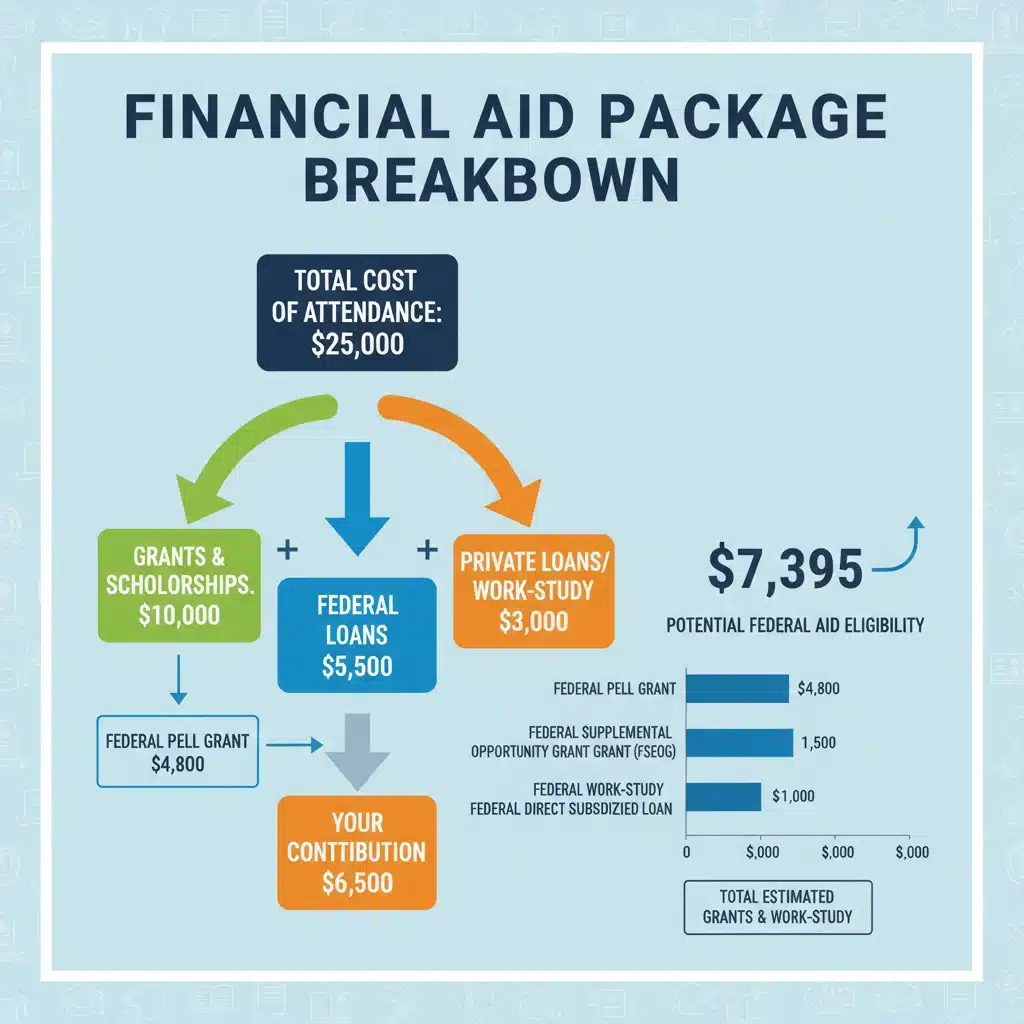
While maximizing your federal student aid through the FAFSA 2026-2027 updates is a critical step, it’s important to remember that it’s just one piece of the financial aid puzzle. Many students combine federal aid with other forms of funding to cover the full cost of attendance.
1. State and Institutional Aid
Many states offer their own financial aid programs, often requiring the FAFSA for eligibility. Similarly, most colleges and universities use the FAFSA to award their institutional grants and scholarships. By completing the FAFSA, you automatically put yourself in contention for these valuable funding sources.
Some private colleges may also require the CSS Profile, an additional financial aid application that provides a more in-depth look at a family’s finances. Check with each college’s financial aid office to understand their specific requirements and deadlines.
2. Scholarships and Grants
Don’t underestimate the power of scholarships and grants. These are ‘gift aid’ that do not need to be repaid. They can come from a myriad of sources: private organizations, community groups, religious affiliations, employers, and even specific academic departments within universities.
Start your scholarship search early and broadly. Look for opportunities based on academic merit, extracurricular activities, unique talents, ethnic background, field of study, and even specific personal characteristics. Websites like Fastweb, Scholarship.com, and the College Board’s Scholarship Search are excellent starting points.
3. Work-Study Programs
Federal Work-Study is a program that provides part-time jobs for undergraduate and graduate students with financial need, allowing them to earn money to help pay for educational expenses. The FAFSA determines your eligibility for this program. Work-study jobs are often on campus or with non-profit organizations, offering flexible hours that accommodate academic schedules.
This program not only provides income but also valuable work experience, which can be beneficial for future career prospects. If you are offered work-study, seriously consider taking advantage of it.
4. Education Tax Credits and Deductions
While not direct aid, federal tax credits and deductions can significantly reduce the overall cost of college. The American Opportunity Tax Credit and the Lifetime Learning Credit can provide substantial tax relief for qualified educational expenses. Consult with a tax professional or review IRS publications to understand your eligibility.
Common Pitfalls to Avoid with the FAFSA 2026-2027
Even with a simplified FAFSA, mistakes can happen. Being aware of common pitfalls can help you avoid them and ensure a smooth application process:
- Missing Deadlines: This is the most common and costly mistake. Federal, state, and institutional deadlines vary. Mark all relevant deadlines on your calendar and aim to submit well in advance.
- Incorrect Social Security Numbers: A single digit error can cause significant delays. Double-check all SSNs for accuracy.
- Not Consenting to DDX: As mentioned, all contributors must consent to the Direct Data Exchange with the IRS. Without this consent, your FAFSA cannot be processed.
- Ignoring the Student’s Assets: While parental assets are assessed at a lower rate, student assets are assessed more heavily. Don’t forget to report them accurately.
- Assuming You Won’t Qualify: Many families mistakenly believe their income is too high to qualify for aid. The new FAFSA 2026-2027 updates, especially the increased IPAs and changes to the SAI calculation, mean that more families may be eligible for some form of aid. Always apply!
- Not Using the Correct FAFSA Form: Ensure you are completing the FAFSA for the correct academic year (2026-2027 in this case).
- Forgetting to Sign Electronically: Both the student and one parent (if dependent) must sign the FAFSA using their FSA ID. An unsigned FAFSA will not be processed.
The FSA ID: Your Essential Key
Before you even begin the FAFSA for 2026-2027, both the student and at least one parent (if the student is dependent) must create an FSA ID. This is a username and password combination that serves as your electronic signature and allows you to access federal student aid websites. It’s crucial for logging into the FAFSA, signing it electronically, and accessing your federal student aid information throughout your college career.
It can take a few days for an FSA ID to become active, so create it well in advance of when you plan to complete the FAFSA. Keep your FSA ID and password in a secure place, as you will need it annually.
Preparing for the 2026-2027 FAFSA: A Checklist
To ensure you’re fully prepared for the FAFSA 2026-2027 updates, use this checklist:
- Create/Retrieve FSA IDs: Both student and parent(s) should have active FSA IDs.
- Gather 2024 Tax Information: Although the DDX will retrieve most data, have your 2024 federal tax returns (Form 1040) and W-2s handy for reference.
- Collect Records of Other Income: This includes untaxed income like child support received, veterans’ non-education benefits, and workers’ compensation.
- List Asset Information: Know the current balances of cash, savings, and checking accounts, as well as the net worth of investments (excluding retirement accounts and primary residence).
- Identify Contributors: Determine who needs to provide information and consent on the FAFSA (student, student’s spouse, biological/adoptive parents, or stepparent if applicable).
- Research School Deadlines: Check the financial aid deadlines for all colleges you are considering.
- Set a Calendar Reminder: Mark October 2025 (or earlier if announced) as the FAFSA opening date.
- Understand Your State’s Requirements: Some states have early deadlines for state-specific aid programs.
The Bottom Line: Your Financial Future Starts with FAFSA
The FAFSA 2026-2027 updates represent an ongoing effort to simplify the financial aid process and expand access to higher education. By understanding these changes, proactively gathering your information, and applying strategically, you can significantly increase your chances of securing valuable federal student aid, potentially up to $7,395 in Pell Grant funds alone, and much more when combined with other federal programs.
Don’t let the complexity of financial aid deter you. The resources and guidance are available to help you navigate this essential step. Your education is an investment, and the FAFSA is your primary tool to make that investment more affordable. Take the time to prepare, understand the new landscape, and complete your application accurately and on time. Your financial future in higher education depends on it.