Master Your Paycheck 2026: Optimize Deductions & Boost Take-Home Pay

Anúncios
Master Your Paycheck 2026: Optimize Deductions & Boost Take-Home Pay
Are you tired of seeing a significant chunk of your hard-earned money disappear before it even hits your bank account? You’re not alone. Understanding your paycheck can feel like deciphering a cryptic code, especially with the ever-evolving tax laws and benefit structures. As we look towards 2026, it’s more crucial than ever to not just understand, but actively optimize paycheck deductions to ensure you’re maximizing your take-home pay. This comprehensive guide will break down the complexities, reveal hidden opportunities, and provide actionable strategies to help you potentially increase your net income by at least 2%.
Anúncios
Many individuals simply accept their paycheck as is, unaware of the power they hold to influence their financial outcome. From federal and state taxes to retirement contributions and health insurance premiums, each deduction plays a role in your overall financial health. By strategically adjusting these elements, you can unlock significant savings and boost your disposable income. Let’s dive deep into the world of paycheck deductions for 2026 and empower you to take control of your financial future.
Understanding the Anatomy of Your 2026 Paycheck
Before we can optimize paycheck deductions, we must first understand what makes up your gross pay and where all your money is going. Your paycheck is typically divided into two main components: gross pay and net pay. Gross pay is your total earnings before any deductions, while net pay is the amount you actually receive after all deductions have been taken out. The gap between these two figures is what we aim to strategically narrow.
Anúncios
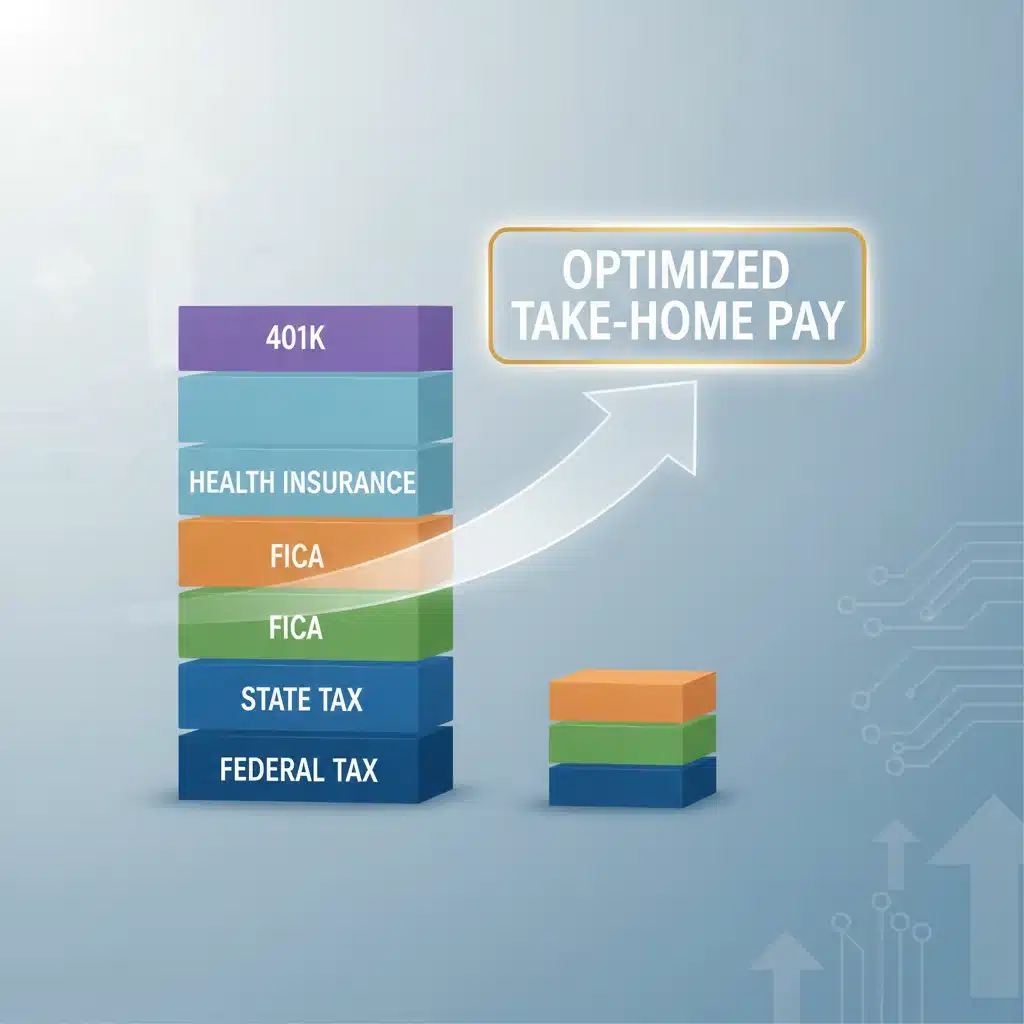
Key Paycheck Deductions Explained:
- Federal Income Tax: This is a mandatory deduction based on your income, filing status, and the allowances you claim on your W-4 form. The tax brackets and rates are subject to change, so staying informed about 2026 tax laws is vital.
- State Income Tax: Similar to federal tax, but levied by your state. Not all states have income tax, but if yours does, it’s a significant deduction.
- FICA Taxes (Social Security and Medicare): These are federal taxes that fund Social Security and Medicare. Social Security tax is a flat percentage up to a certain income limit, while Medicare tax applies to all earned income.
- Health Insurance Premiums: If you receive health insurance through your employer, your share of the premium is deducted from your paycheck.
- Retirement Contributions (401(k), 403(b), etc.): Contributions to employer-sponsored retirement plans are often pre-tax, meaning they reduce your taxable income.
- Other Benefits (Dental, Vision, Life Insurance): Premiums for these additional benefits are also typically deducted.
- Flexible Spending Accounts (FSAs) and Health Savings Accounts (HSAs): These accounts allow you to set aside pre-tax money for eligible healthcare or dependent care expenses.
- Loan Repayments: Some employers may deduct loan repayments (e.g., 401(k) loans, garnishments) directly from your pay.
Each of these deductions impacts your net pay differently. Some are mandatory, while others are elective and offer opportunities for strategic adjustment to optimize paycheck deductions.
Strategy 1: Revisit Your W-4 Form for Optimal Withholding
One of the most immediate and impactful ways to optimize paycheck deductions is by reviewing and adjusting your W-4 form. This form tells your employer how much federal income tax to withhold from each paycheck. Many people set their W-4 once and forget about it, potentially leading to over-withholding (giving the government an interest-free loan) or under-withholding (facing a large tax bill at year-end).
Why Your W-4 Matters:
The goal is to have your withholding closely match your actual tax liability. If you consistently receive a large tax refund, it means you’re overpaying throughout the year. While a refund feels nice, that money could have been working for you in an interest-bearing account or used to pay down high-interest debt. Conversely, under-withholding can lead to penalties.
How to Adjust Your W-4 for 2026:
- Use the IRS Tax Withholding Estimator: The IRS provides a free online tool that helps you determine the correct number of allowances or additional withholding to claim. It considers your income, deductions, credits, and other factors.
- Consider Life Changes: Major life events like marriage, divorce, having a child, buying a home, or changing jobs significantly impact your tax situation. Update your W-4 promptly after such events.
- Factor in Other Income: If you or your spouse have multiple jobs, or if you have significant income from investments or side gigs, you’ll need to adjust your W-4 to account for this.
- Additional Withholding: If you prefer to have a buffer or anticipate higher income, you can always elect to have an additional dollar amount withheld from each paycheck.
By accurately filling out your W-4, you can ensure that your tax withholding is as precise as possible, helping you to optimize paycheck deductions and receive more of your money throughout the year.
Strategy 2: Maximize Pre-Tax Contributions to Retirement and Health Accounts
This is arguably one of the most powerful strategies to optimize paycheck deductions and simultaneously boost your long-term financial health. Pre-tax contributions reduce your taxable income, meaning you pay less in federal and often state income taxes now, while also saving for the future.
Retirement Accounts (401(k), 403(b), etc.):
Contributions to these employer-sponsored plans are typically made with pre-tax dollars. Not only does this reduce your current taxable income, but your money grows tax-deferred until retirement. Many employers also offer a matching contribution, which is essentially free money – a 100% return on your investment!
- Increase Your Contribution Rate: Even a small increase, like 1% or 2% of your salary, can significantly impact your tax liability and retirement savings over time. For example, if you earn $60,000 and increase your 401(k) contribution by 2%, that’s an additional $1,200 annually that is not subject to income tax.
- Hit the Employer Match: Always contribute at least enough to get the full employer match. Missing out on this is leaving money on the table.
- Stay Aware of 2026 Contribution Limits: The IRS adjusts contribution limits annually. Be sure to know the maximums for 2026 to optimize paycheck deductions and savings.
Health Savings Accounts (HSAs) and Flexible Spending Accounts (FSAs):
These accounts are fantastic tools for healthcare expenses, offering significant tax advantages.
Health Savings Accounts (HSAs):
HSAs are available to individuals enrolled in high-deductible health plans (HDHPs). They offer a triple tax advantage:
- Contributions are tax-deductible (or made pre-tax through payroll).
- Earnings grow tax-free.
- Withdrawals for qualified medical expenses are tax-free.
HSAs are often referred to as a ‘super 401(k)’ because of their unparalleled tax benefits, especially if you can afford to pay for current medical expenses out-of-pocket and let the HSA grow as an investment vehicle.
Flexible Spending Accounts (FSAs):
FSAs allow you to set aside pre-tax money for eligible healthcare or dependent care expenses. While they don’t offer the investment growth of an HSA, they still reduce your taxable income. The main drawback is the ‘use-it-or-lose-it’ rule, though some plans offer a grace period or a limited carryover amount into the next year.
- Estimate Your Expenses: Carefully estimate your anticipated medical, dental, vision, and dependent care expenses for 2026 to avoid over-contributing to an FSA.
- Know the Limits: Be aware of the annual contribution limits for both HSAs and FSAs for 2026.
By strategically utilizing these pre-tax accounts, you can significantly optimize paycheck deductions, reduce your current tax burden, and simultaneously save for future needs.
Strategy 3: Evaluate Your Health Insurance and Other Benefit Choices
Your employer-sponsored benefits package is a major component of your compensation, and the choices you make here directly impact your paycheck deductions. It’s easy to stick with the same plan year after year, but a thorough review during open enrollment can reveal opportunities to optimize paycheck deductions.
Health Insurance Plans:
Many employers offer a choice between different health insurance plans, such as a Preferred Provider Organization (PPO), Health Maintenance Organization (HMO), or a High-Deductible Health Plan (HDHP).
- PPO/HMO vs. HDHP: PPOs and HMOs typically have higher monthly premiums (higher paycheck deductions) but lower deductibles and out-of-pocket costs. HDHPs have lower premiums (lower paycheck deductions) but higher deductibles.
- Assess Your Healthcare Needs: If you’re generally healthy and don’t anticipate many doctor visits or prescriptions, an HDHP with an HSA might be a more cost-effective choice, allowing you to optimize paycheck deductions. If you have chronic conditions or foresee significant medical expenses, a PPO or HMO might be better, despite the higher premium.
- Spousal Coverage: If both you and your spouse have access to employer-sponsored health insurance, compare both plans carefully. Sometimes it’s cheaper to be on one spouse’s plan, or to each have your own, rather than being on separate plans.
Other Voluntary Benefits:
Review all voluntary benefits like dental, vision, life insurance, disability insurance, and legal plans. While some are essential, others might be redundant or unnecessary for your current situation.
- Life Insurance: Does your employer-provided life insurance meet your needs? Do you have sufficient coverage outside of work? Avoid paying for excessive coverage if it’s not necessary.
- Disability Insurance: Both short-term and long-term disability can be crucial. Understand what your employer offers and if you need supplemental coverage.
- Legal Plans: Are you likely to use a legal plan in 2026? If not, consider opting out to reduce deductions.
By carefully evaluating your benefit elections each year, you can ensure you’re paying for what you truly need and not unnecessarily high deductions.
Strategy 4: Leverage Tax Credits and Deductions Outside Your Paycheck
While not directly impacting paycheck deductions, understanding and claiming all eligible tax credits and deductions when you file your annual tax return is crucial for overall take-home pay optimization. The less you owe in taxes, the more of your gross income you effectively keep.
Key Tax Credits and Deductions for 2026 (Subject to Legislation):
- Child Tax Credit: If you have qualifying children, this credit can significantly reduce your tax liability.
- Earned Income Tax Credit (EITC): A refundable credit for low-to-moderate-income working individuals and families.
- Education Credits: Credits like the American Opportunity Tax Credit or Lifetime Learning Credit can help offset educational expenses.
- Student Loan Interest Deduction: You can deduct a certain amount of student loan interest paid.
- Itemized Deductions: While many taxpayers take the standard deduction, if your itemized deductions (e.g., state and local taxes, mortgage interest, charitable contributions, medical expenses above a certain threshold) exceed the standard deduction, you should itemize.
- IRA Contributions: Contributions to a Traditional IRA can be tax-deductible, even if you have an employer-sponsored plan, depending on your income.
It’s important to keep accurate records of all eligible expenses throughout the year. Consulting with a tax professional can help ensure you don’t miss any valuable opportunities to reduce your overall tax burden, which indirectly helps to optimize paycheck deductions by reducing the total amount of tax you owe.
Strategy 5: Understand and Address Wage Garnishments or Other Mandatory Deductions
In some unfortunate circumstances, your paycheck may include mandatory deductions due to wage garnishments. These can arise from unpaid debts, child support, spousal support, or federal taxes. While these aren’t ‘optional’ deductions you can optimize, understanding them is the first step towards addressing them.
Common Reasons for Wage Garnishments:
- Child Support/Spousal Support: Court-ordered payments for family obligations.
- Student Loan Defaults: If federal student loans go into default, wages can be garnished.
- Unpaid Taxes: The IRS can garnish wages for unpaid federal taxes.
- Creditor Judgments: If a creditor suits you and wins a judgment, they can obtain a court order to garnish your wages.
What You Can Do:
- Know Your Rights: Understand the legal limits on how much of your wages can be garnished. These limits vary by state and type of garnishment.
- Seek Legal Advice: If you are facing wage garnishment, consult with an attorney specializing in debt or family law. They can help you understand your options, which might include negotiating a payment plan, challenging the garnishment, or exploring bankruptcy.
- Communicate with Creditors: Sometimes, open communication with creditors can lead to a mutually agreeable payment plan that avoids or halts garnishment.
While these deductions are not about optimization in the traditional sense, proactively managing the underlying issues can prevent or resolve garnishments, thereby restoring your full earning potential and significantly increasing your take-home pay.
Practical Steps to Boost Your Take-Home Pay by 2% (or More!)
Achieving a 2% increase in your take-home pay might seem modest, but it can translate into hundreds or even thousands of dollars annually, which can make a substantial difference in your financial well-being. Let’s put these strategies into action.
Step-by-Step Action Plan:
- Gather Your Documents: Collect your most recent pay stub, your W-4 form, and your benefits enrollment information.
- Review Your Current Deductions: Go line by line through your pay stub. Identify what’s mandatory (FICA, some taxes) and what’s elective (401(k), health insurance, FSAs).
- Utilize the IRS Withholding Estimator: Spend 15-20 minutes on the IRS website to ensure your W-4 is optimized. Adjust your withholding if necessary. Even a slight adjustment here can increase your per-paycheck net income.
- Assess Your Retirement Contributions: Are you contributing enough to get the full employer match? If not, increase your contribution to at least that level. If you’re already getting the match, consider increasing your contribution by an additional 1% or 2% of your salary. The tax savings alone can be significant.
- Re-evaluate Your Health & Welfare Benefits: During open enrollment, compare all available health plans, dental, vision, and other benefits. Could an HDHP with an HSA save you money if you’re healthy? Are you paying for benefits you don’t use or need?
- Plan for Pre-Tax Healthcare Savings: If eligible, contribute to an HSA or FSA for anticipated medical expenses. Even a modest contribution of $500 to an FSA can save you a significant amount in taxes.
- Explore Tax Credits & Deductions: Keep track of potential tax credits and deductions throughout 2026. Consult with a tax professional if your situation is complex.
- Automate Savings: Once you’ve optimized your deductions, consider automatically transferring a portion of your increased take-home pay to a high-yield savings account or investment account. This ensures the money works for you.
- Regular Review: Make it a habit to review your paycheck and deductions at least once a year, preferably during open enrollment or when significant life changes occur.
Example of a 2% Increase:
Let’s say your gross annual salary is $70,000. A 2% increase in take-home pay means an extra $1,400 annually, or roughly $116 per month. This could be achieved through a combination of:
- Adjusting W-4 to reduce over-withholding.
- Increasing 401(k) contributions by 1% (reducing taxable income).
- Switching to a more cost-effective health plan.
- Utilizing an HSA for pre-tax savings.
Each small adjustment contributes to the overall goal to optimize paycheck deductions and improve your financial standing.

The Long-Term Financial Impact of Optimizing Your Paycheck
Optimizing your paycheck isn’t just about getting a little more money today; it’s about building a stronger financial foundation for tomorrow. Every dollar you strategically save on taxes or efficiently allocate to pre-tax accounts compounds over time.
Enhanced Financial Security:
More take-home pay means more money available for your emergency fund, debt repayment, or other savings goals. This increased liquidity provides a buffer against unexpected expenses and reduces financial stress.
Accelerated Wealth Building:
By maximizing pre-tax contributions to retirement accounts, you’re not only reducing your current tax bill but also accelerating your wealth accumulation. The power of compound interest means that even small, consistent contributions can lead to substantial balances over decades.
Better Budgeting:
When you understand exactly where your money is going and have optimized your deductions, you can create a more accurate and effective budget. This clarity allows you to make informed decisions about your spending and saving habits.
Peace of Mind:
Knowing that you are actively managing and optimizing your financial resources brings a sense of control and peace of mind. You’re not just a passive recipient of your paycheck; you’re an active participant in your financial journey.
Navigating Potential Changes in 2026 Tax Legislation
It’s important to acknowledge that tax laws are not static. As we approach 2026, there may be legislative discussions or changes that could impact federal and state income tax rates, deduction limits, or tax credit eligibility. Staying informed is key to continued paycheck optimization.
How to Stay Updated:
- Follow Reputable Financial News Sources: Keep an eye on major financial news outlets for updates on tax policy.
- Check IRS and State Tax Websites: These are the official sources for current tax laws and regulations.
- Consult a Tax Professional: For personalized advice and to understand how potential changes might affect your specific situation, a qualified tax advisor is invaluable.
Proactive monitoring of legislative changes will allow you to adapt your strategies to optimize paycheck deductions as needed, ensuring you always make the most of your earnings.
Conclusion: Take Control of Your 2026 Paycheck
Understanding and actively managing your paycheck deductions is a fundamental aspect of personal finance. By applying the strategies outlined in this guide – from fine-tuning your W-4 to maximizing pre-tax contributions and critically evaluating your benefits – you can significantly optimize paycheck deductions and realistically boost your take-home pay by 2% or more in 2026.
Don’t let the complexity of a pay stub deter you. Each line item represents a choice, an opportunity, or a consequence. Take the time to review, understand, and adjust. The financial impact of these efforts will not only be felt in your monthly budget but will also contribute to your long-term financial security and wealth accumulation. Start today, and empower yourself with the knowledge to make your money work harder for you.