
Maximizing Personal Tax Deductions in 2026: A Comprehensive Guide to Reducing Your Taxable Income
As the tax year 2026 approaches, understanding and effectively utilizing personal tax deductions is more crucial than ever for optimizing your financial health. Navigating the ever-evolving tax landscape can be daunting, but with the right knowledge and strategic planning, you can significantly reduce your taxable income and keep more of your hard-earned money. This comprehensive guide will delve into the intricacies of personal tax deductions for 2026, offering actionable insights and expert advice to help you maximize your savings.
The tax code is complex, with numerous provisions designed to encourage certain behaviors, such as saving for retirement, investing in education, or contributing to charity. By identifying and claiming all eligible personal tax deductions, you can lower your adjusted gross income (AGI), which in turn can reduce your overall tax liability. This article is designed to be your go-to resource for understanding the key changes, identifying common deductions, and implementing strategies to ensure you're not leaving any money on the table.
Anúncios
Understanding the Fundamentals of Personal Tax Deductions
Before diving into specific deductions, it’s essential to grasp the fundamental concept of personal tax deductions. A tax deduction reduces your taxable income, thereby lowering the amount of tax you owe. For example, if your taxable income is $70,000 and you claim $10,000 in deductions, your new taxable income becomes $60,000. This is different from a tax credit, which directly reduces the amount of tax you owe, dollar for dollar.
In the United States, taxpayers generally have two options for claiming deductions: taking the standard deduction or itemizing deductions. The standard deduction is a fixed dollar amount that taxpayers can subtract from their income, and it varies based on filing status, age, and whether you are blind. Itemizing deductions involves listing out specific eligible expenses, such as mortgage interest, state and local taxes (SALT), and medical expenses. For many, the standard deduction provides a simpler and often more beneficial approach, especially since the Tax Cuts and Jobs Act (TCJA) of 2017 significantly increased standard deduction amounts. However, for those with substantial itemizable expenses, itemizing can lead to greater savings.
Anúncios
For the 2026 tax year, it’s crucial to stay updated on any potential legislative changes that might impact standard deduction amounts or the rules surrounding itemized deductions. While precise figures for 2026 are not yet finalized, historical trends suggest incremental increases. Staying informed through reliable sources like the IRS website or consulting with a tax professional is always recommended.
Key Personal Tax Deductions to Consider for 2026
Let’s explore some of the most common and impactful personal tax deductions that individuals should be aware of for the 2026 tax year. Understanding these categories is the first step toward maximizing your savings.
1. Standard Deduction vs. Itemized Deductions
As mentioned, this is your primary choice. For 2026, the standard deduction amounts are expected to be adjusted for inflation. It’s vital to compare the projected standard deduction for your filing status against your total itemizable expenses. If your itemized deductions exceed the standard deduction, you should itemize. Common itemized deductions include:
- State and Local Taxes (SALT): This includes property taxes, state income taxes, and local income taxes. However, the TCJA imposed a $10,000 cap on the SALT deduction, which remains a significant factor for many taxpayers, particularly those in high-tax states.
- Mortgage Interest: You can deduct interest paid on your primary home mortgage and, in some cases, a second home, up to certain limits.
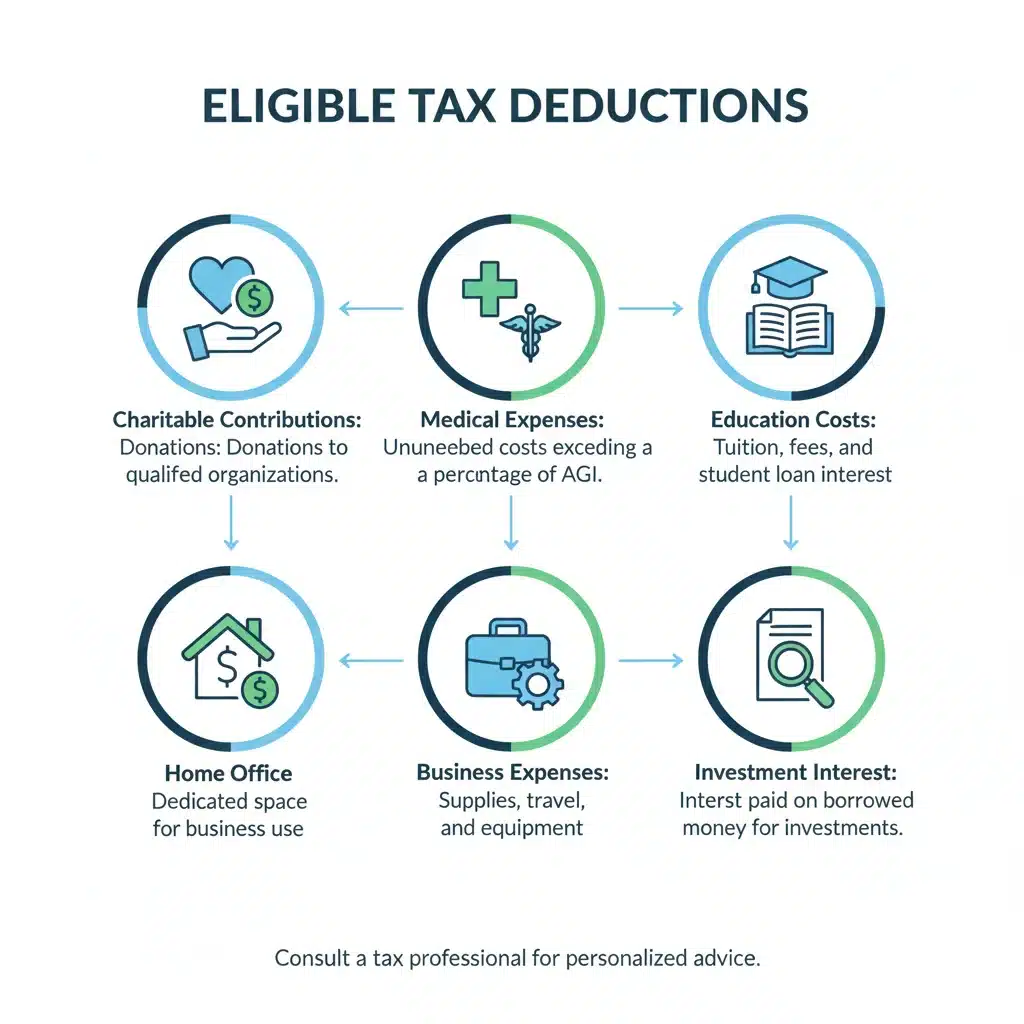
- Medical and Dental Expenses: If your unreimbursed medical expenses exceed a certain percentage of your adjusted gross income (AGI) – typically 7.5% for most years – you can deduct the amount above that threshold. This can include insurance premiums, doctor visits, prescription medications, and even certain travel costs for medical care.
- Charitable Contributions: Donations to qualified charitable organizations can be deducted. The rules for cash contributions and non-cash contributions differ, and there are AGI limits on how much you can deduct.
2. "Above-the-Line" Deductions (Adjustments to Income)
These deductions are particularly valuable because they reduce your AGI, which can impact your eligibility for other tax credits and deductions. They are called "above-the-line" because they are subtracted from your gross income before you even consider the standard or itemized deduction. Key examples include:
- IRA Contributions: Contributions to a traditional IRA are often tax-deductible, reducing your current taxable income. There are income limitations and other rules that determine eligibility and the maximum deductible amount. For 2026, contribution limits are expected to be adjusted for inflation.
- Health Savings Account (HSA) Contributions: If you have a high-deductible health plan (HDHP), contributions to an HSA are 100% tax-deductible. HSAs offer a triple tax advantage: tax-deductible contributions, tax-free growth, and tax-free withdrawals for qualified medical expenses.
- Student Loan Interest: You can deduct up to $2,500 in student loan interest paid during the year, subject to income limitations. This is a significant benefit for many recent graduates and those still paying off student debt.
- Self-Employment Tax Deduction: Self-employed individuals can deduct one-half of their self-employment taxes (Social Security and Medicare taxes).
- Educator Expenses: Eligible educators can deduct up to a certain amount for unreimbursed business expenses, such as books, supplies, and professional development courses.
- Alimony Paid: For divorce or separation agreements executed before January 1, 2019, alimony payments are deductible by the payer. For agreements made after this date, alimony is no longer deductible.
3. Business Expenses for Self-Employed Individuals
For independent contractors, freelancers, and small business owners, a wide array of business expenses can be deducted. It’s crucial to keep meticulous records. Common deductions include:
- Home Office Deduction: If you use a portion of your home exclusively and regularly for business, you may qualify for this deduction. You can use a simplified option or calculate actual expenses.
- Business Travel and Meals: Expenses for business-related travel, including airfare, lodging, and 50% of business meals, can be deducted.
- Professional Development: Costs associated with improving your professional skills, such as courses, seminars, and certifications, are often deductible.
- Equipment and Supplies: Office supplies, computer equipment, software, and other items necessary for your business operations.
- Health Insurance Premiums: Self-employed individuals can often deduct health insurance premiums if they are not eligible to participate in an employer-sponsored health plan.
Strategies for Maximizing Your Personal Tax Deductions in 2026
Now that we’ve covered the main categories, let’s explore practical strategies to ensure you’re taking full advantage of every opportunity to reduce your tax burden.
1. Meticulous Record-Keeping
This cannot be stressed enough. The foundation of successful tax planning and deduction claiming is excellent record-keeping. Keep all receipts, invoices, bank statements, and other documentation related to potential deductions. Digital solutions, such as scanning apps and accounting software, can make this process much easier and more organized. For 2026, consider:
- Digitalizing Receipts: Use apps like Expensify, Shoeboxed, or even simple cloud storage solutions to photograph and store receipts immediately.
- Dedicated Accounts: If you’re self-employed, have separate bank accounts and credit cards for business expenses to simplify tracking.
- Mileage Logs: If you use your vehicle for business, medical, or charitable purposes, maintain a detailed mileage log.
2. Proactive Tax Planning Throughout the Year
Don’t wait until April to think about your taxes. Tax planning should be an ongoing process. Regularly review your financial situation and anticipate potential deductions. For instance, if you’re nearing the end of the year and realize you’re close to the medical expense threshold, consider scheduling elective medical procedures or purchasing necessary medical supplies before December 31st.
Similarly, planning your charitable contributions can be strategic. If you anticipate a high-income year, consider making larger donations. For those who don't itemize every year but have significant charitable intent, a "bunching" strategy can be effective. This involves consolidating several years' worth of charitable contributions into a single year to exceed the standard deduction threshold, allowing you to itemize for that year.
3. Optimize Retirement Contributions
Contributing to tax-advantaged retirement accounts like 401(k)s and IRAs is one of the most powerful ways to reduce your current taxable income. For 2026, maximize your contributions up to the annual limits. If your employer offers a 401(k) match, contribute at least enough to get the full match – it’s essentially free money and reduces your taxable income.
- Traditional IRA: Contributions are often tax-deductible.
- 401(k) / 403(b) / TSP: Contributions are made pre-tax, reducing your current income.
- SEP IRA / SIMPLE IRA: For self-employed individuals and small business owners, these plans offer higher contribution limits and significant tax deductions.
4. Leverage Health Savings Accounts (HSAs)
If you are eligible, an HSA is an incredibly powerful financial tool. Contributions are tax-deductible, earnings grow tax-free, and withdrawals for qualified medical expenses are tax-free. For 2026, contribution limits for HSAs are expected to increase. Maxing out your HSA contributions not only provides a current tax deduction but also builds a tax-free fund for future healthcare costs, including those in retirement.
5. Education-Related Deductions
Education expenses can also lead to significant personal tax deductions. While many education benefits come in the form of credits (like the American Opportunity Tax Credit or Lifetime Learning Credit), there are still deductions to consider:
- Student Loan Interest Deduction: As mentioned, up to $2,500 of student loan interest can be deducted.
- Educator Expenses: If you are a K-12 educator, you can deduct up to a certain amount for unreimbursed classroom expenses.
6. Understand and Utilize Tax Software or Professional Help
Modern tax software (e.g., TurboTax, H&R Block) can guide you through the process of identifying deductions and credits. These programs often ask targeted questions to ensure you don’t miss anything. However, for complex financial situations, significant life changes (marriage, divorce, new business), or substantial investments, consulting a qualified tax professional (CPA, Enrolled Agent) is highly recommended. They can provide personalized advice, identify obscure deductions, and help you navigate audits if they arise.

Potential Changes and What to Watch for in 2026
The tax landscape is rarely static. While this guide provides information based on current understanding and expected trends for 2026, it’s vital to remain aware of potential legislative developments. The Tax Cuts and Jobs Act (TCJA) provisions are set to expire at the end of 2025, which could lead to significant changes in 2026 unless Congress acts to extend or modify them. Key areas to watch include:
- Individual Income Tax Rates: The current lower individual income tax rates are scheduled to revert to pre-TCJA levels. This could mean higher tax brackets for many individuals.
- Standard Deduction Amounts: While likely to be adjusted for inflation, the significant increases from the TCJA could be impacted if the law is not extended.
- SALT Cap: The $10,000 cap on state and local tax deductions is a major point of contention and could be revisited.
- Qualified Business Income (QBI) Deduction: The Section 199A deduction for pass-through entities is also set to expire, which would affect many self-employed individuals and small business owners.
- Estate and Gift Tax Exemptions: The higher exemption amounts are also scheduled to sunset, potentially impacting estate planning for wealthier individuals.
Staying informed about these potential changes by following news from the IRS, financial news outlets, and tax professionals will be critical for effective tax planning in 2026.
Common Pitfalls to Avoid When Claiming Personal Tax Deductions
While the goal is to maximize your personal tax deductions, it’s equally important to avoid mistakes that could lead to penalties or audits. Here are some common pitfalls:
- Lack of Documentation: Claiming deductions without proper records is a red flag for the IRS. Always keep detailed and organized documentation for all expenses you deduct.
- Claiming Ineligible Expenses: Ensure you understand the IRS rules for each deduction. What might seem like a legitimate expense to you might not be deductible under tax law. For example, personal expenses are generally not deductible business expenses.
- Misunderstanding "Ordinary and Necessary" for Business Expenses: For self-employed individuals, business expenses must be both "ordinary" (common and accepted in your trade or business) and "necessary" (helpful and appropriate for your trade or business).
- Ignoring Income Limitations: Many deductions and credits have income thresholds. If your income exceeds these limits, you might not be eligible or the deductible amount might be phased out.
- Not Reporting All Income: While focusing on deductions, ensure you accurately report all sources of income. The IRS receives copies of W-2s, 1099s, and other income statements, so discrepancies are easily flagged.
Conclusion: Empowering Your Financial Future Through Smart Tax Planning
Maximizing personal tax deductions in 2026 is an essential component of sound financial planning. By understanding the available deductions, meticulously tracking your expenses, and engaging in proactive planning throughout the year, you can significantly reduce your tax liability. Whether you opt for the standard deduction or itemize, the goal remains the same: to legally pay the least amount of tax possible.
Remember to stay vigilant for any legislative changes that may impact the 2026 tax year and consult with a qualified tax professional for personalized advice. With diligent effort and informed decisions, you can navigate the complexities of tax season with confidence and ensure you’re taking full advantage of every opportunity to save. Start preparing now, gather your records, and look forward to a more financially optimized 2026.