US Renewable Energy Investment 2026: A 10% Surge Analysis
Anúncios
US Renewable Energy Investment 2026: Analyzing a Potential 10% Increase
The landscape of the United States energy market is in a constant state of evolution, driven by technological advancements, environmental imperatives, and shifting economic paradigms. As we look towards 2026, a significant trend emerges: a projected 10% increase in US Renewable Investment. This isn’t merely a statistic; it represents a profound shift in how the nation powers itself, a commitment to sustainability, and a vast arena of economic opportunity. This comprehensive analysis delves into the multifaceted dynamics underpinning this forecast, exploring the drivers, challenges, and implications for the future of energy in America.
Anúncios
The Current State of US Renewable Investment
Before projecting forward, it’s crucial to understand the foundation upon which this growth is built. The United States has already made considerable strides in adopting renewable energy. Over the past decade, solar and wind power, in particular, have witnessed exponential growth, largely fueled by declining technology costs, federal tax incentives, and state-level renewable portfolio standards. This momentum has set the stage for continued expansion, with US Renewable Investment becoming an increasingly attractive proposition for both public and private sectors.
However, the journey has not been without its hurdles. Intermittency of renewable sources, grid modernization requirements, and initial capital costs have historically presented barriers. Yet, innovation in battery storage, smart grid technologies, and more efficient project financing models are systematically addressing these challenges, paving the way for a more robust and resilient renewable energy infrastructure. The current policy environment, characterized by renewed federal emphasis on climate action and infrastructure development, further solidifies the trajectory towards increased US Renewable Investment.
Drivers Behind the Projected 10% Increase in US Renewable Investment by 2026
Several key factors are converging to create the conditions for a substantial 10% surge in US Renewable Investment by 2026. Understanding these drivers is essential for appreciating the scale and sustainability of this growth.
Anúncios
Policy and Regulatory Frameworks
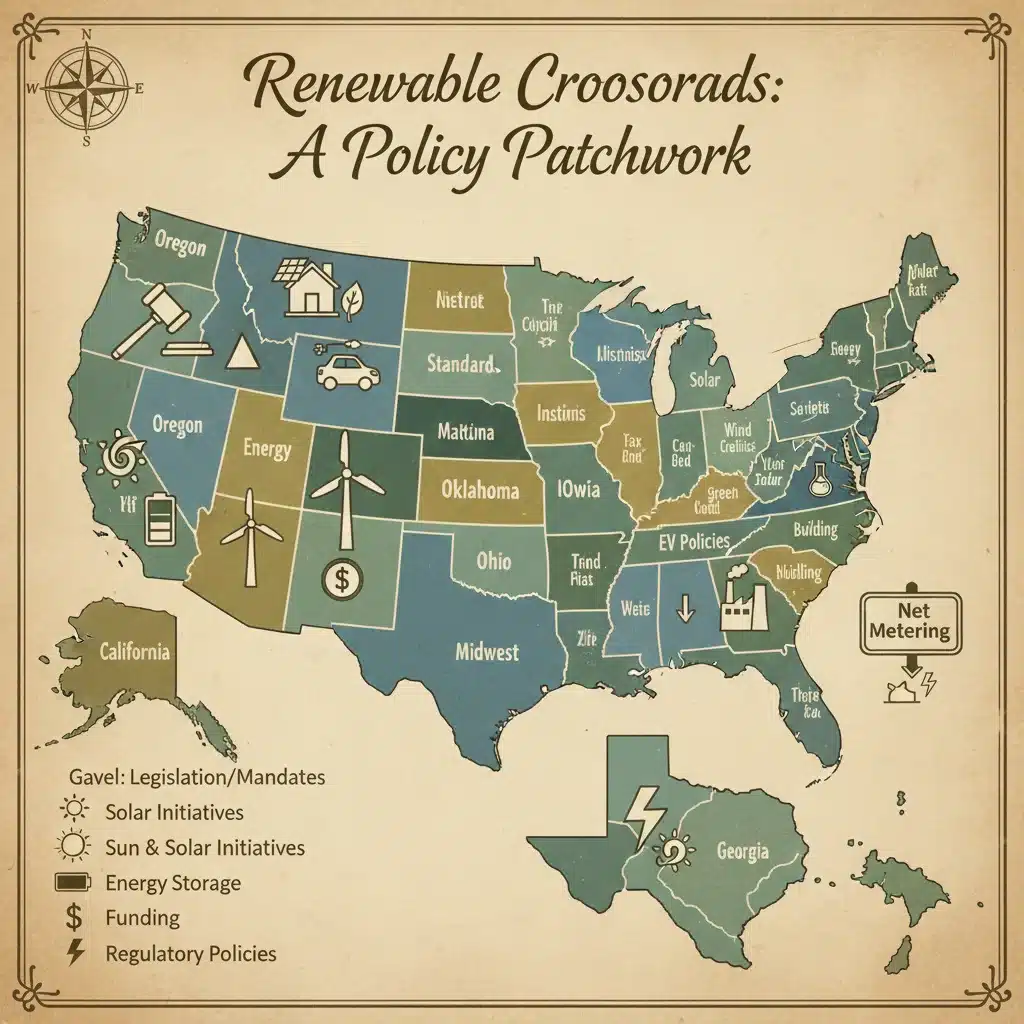
Federal and state policies play an indispensable role in shaping the energy market. The current administration’s commitment to climate change mitigation and renewable energy deployment is a primary catalyst. Initiatives such as extensions of tax credits for solar and wind, investment in grid infrastructure, and research and development funding for emerging clean energy technologies provide a strong incentive for increased US Renewable Investment. Furthermore, many states continue to strengthen their renewable energy mandates, creating stable demand for renewable power generation. The push for environmental justice and equitable access to clean energy also influences policy, often directing investment towards underserved communities and innovative community-scale projects.
Technological Advancements and Cost Reductions
The relentless march of technological innovation has been a game-changer for renewables. The cost of solar photovoltaic (PV) panels has plummeted by over 80% in the last decade, making solar power competitive, and often cheaper, than traditional fossil fuels in many regions. Similarly, wind turbine technology has advanced, leading to larger, more efficient turbines that can capture more energy at lower wind speeds. Beyond generation, breakthroughs in energy storage solutions, particularly lithium-ion battery technology, are addressing the intermittency challenge, making renewables more reliable and dispatchable. These cost reductions and efficiency gains are powerful attractors for US Renewable Investment, promising higher returns and reduced risks.
Corporate Sustainability Goals and ESG Investing
A growing number of corporations are setting ambitious renewable energy targets, driven by consumer demand, investor pressure, and a genuine commitment to sustainability. Companies across various sectors are signing power purchase agreements (PPAs) for renewable energy, investing in on-site generation, and actively pursuing carbon neutrality goals. This corporate demand acts as a significant market pull for new renewable energy projects, contributing directly to increased US Renewable Investment. Concurrently, the rise of Environmental, Social, and Governance (ESG) investing has channeled substantial capital towards sustainable assets, with renewable energy projects being a prime beneficiary. Investors are increasingly recognizing the long-term value and reduced risk associated with green investments.
Consumer Demand and Public Opinion
Public awareness and concern about climate change are at an all-time high, translating into a strong preference for clean energy. Consumers are increasingly opting for electricity providers offering renewable energy options, installing rooftop solar, and purchasing electric vehicles. This grassroots demand creates a supportive environment for policy initiatives and market growth, further encouraging US Renewable Investment. Local communities often advocate for renewable energy projects, seeing them as sources of local jobs, economic development, and improved air quality.
Sector-Specific Growth within US Renewable Investment
While the overall forecast for US Renewable Investment is positive, certain sectors are poised for particularly strong growth.
Solar Power: Continued Dominance
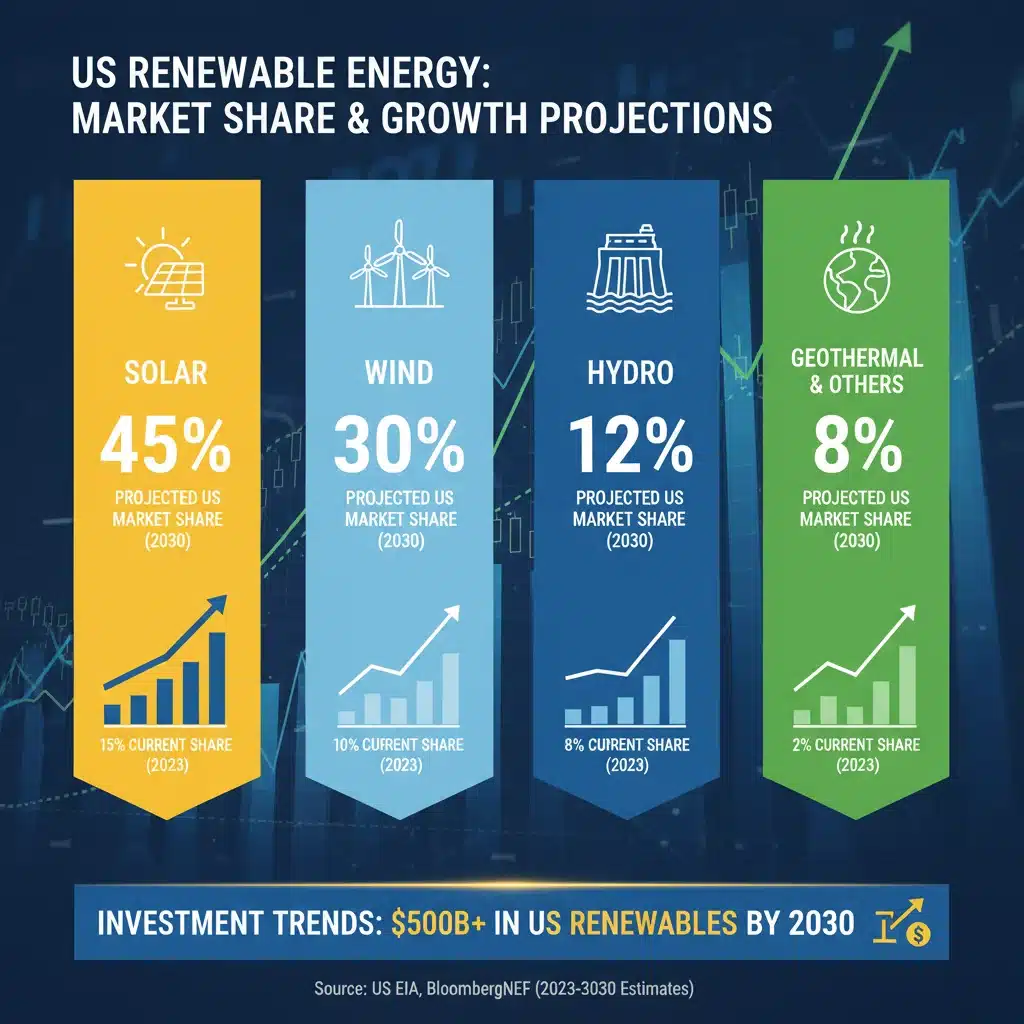
Solar energy is expected to remain a leading component of US Renewable Investment. Utility-scale solar farms, often co-located with battery storage, will continue to expand, particularly in sun-rich states. Distributed solar, including residential and commercial rooftop installations, will also see sustained growth, supported by net metering policies and innovative financing models. The integration of solar into smart home systems and electric vehicle charging infrastructure will further broaden its application.
Wind Energy: Offshore Potential and Onshore Optimization
Wind power, both onshore and offshore, will be another significant area for US Renewable Investment. Onshore wind continues to benefit from technological advancements, allowing for greater energy capture and more efficient land use. However, the most transformative growth is anticipated in offshore wind. The vast potential along the Atlantic and Pacific coasts, coupled with federal and state initiatives to develop this resource, points to a massive influx of capital into offshore wind projects. These projects, while capital-intensive, offer significant baseload power capacity and job creation.
Energy Storage: The Enabler of Renewables
Often considered the linchpin of a renewable-dominated grid, energy storage will attract substantial US Renewable Investment. As the penetration of intermittent renewables increases, the need for reliable storage solutions becomes paramount. Beyond large-scale battery farms, investment will flow into residential battery systems, vehicle-to-grid (V2G) technologies, and alternative storage methods like pumped-hydro and compressed air energy storage. This sector is critical for grid stability, resilience, and optimizing the value of renewable generation.
Emerging Technologies and Infrastructure
Beyond the established renewables, emerging technologies such as green hydrogen production, advanced geothermal systems, and carbon capture utilization and storage (CCUS) will also begin to attract more targeted US Renewable Investment. While these may not contribute as heavily to the 10% increase by 2026, initial investments in these areas are crucial for long-term decarbonization goals. Furthermore, significant investment will be required for grid modernization, including smart grid technologies, transmission line upgrades, and cybersecurity enhancements, to effectively integrate the growing renewable capacity.
Challenges and Considerations for US Renewable Investment Growth
While the outlook for a 10% increase in US Renewable Investment is strong, several challenges need to be navigated to ensure this growth is sustainable and efficient.
Supply Chain Vulnerabilities
The global supply chain for renewable energy components, particularly solar panels and batteries, has faced disruptions and geopolitical complexities. Dependence on a few key regions for critical materials and manufacturing can pose risks to project timelines and costs. Diversifying supply chains and fostering domestic manufacturing capabilities will be crucial for maintaining momentum in US Renewable Investment.
Grid Modernization and Interconnection Queues
The existing electricity grid was not designed for the decentralized, intermittent nature of many renewable energy sources. Significant investment and regulatory reforms are needed to modernize the grid, making it smarter, more resilient, and capable of handling a high penetration of renewables. Furthermore, lengthy interconnection queues for new renewable projects can delay deployment and increase costs, highlighting the need for streamlined approval processes and proactive transmission planning.
Permitting and Siting Issues
Even with broad public support for renewables, individual projects can face local opposition due to concerns about land use, visual impact, or environmental effects. Streamlining permitting processes at federal, state, and local levels, coupled with effective community engagement strategies, will be vital to accelerate US Renewable Investment without undue delays.
Workforce Development
The rapid growth in renewable energy sectors creates a demand for a skilled workforce, from engineers and technicians to project managers and construction workers. Investing in education, training programs, and apprenticeships will be essential to meet this demand and ensure that the benefits of increased US Renewable Investment are widely shared through job creation.
Economic and Environmental Impact of Increased US Renewable Investment
A 10% increase in US Renewable Investment by 2026 will have far-reaching positive implications for both the economy and the environment.
Job Creation and Economic Growth
The renewable energy sector is a significant job creator. Investment in new projects translates into jobs in manufacturing, construction, operations, and maintenance. These are often well-paying jobs that stimulate local economies, particularly in rural areas where many renewable projects are sited. The ripple effect extends to supporting industries, from finance and legal services to transportation and logistics. This economic stimulus is a powerful argument for continued US Renewable Investment.
Reduced Carbon Emissions and Improved Air Quality
The primary environmental benefit of increased US Renewable Investment is the reduction of greenhouse gas emissions. By displacing fossil fuel-based electricity generation, renewables directly contribute to mitigating climate change. Beyond carbon, reduced reliance on fossil fuels also leads to a decrease in other air pollutants, resulting in improved public health outcomes and reduced healthcare costs.
Energy Independence and Security
Diversifying the energy mix with domestically sourced renewables enhances energy independence, reducing reliance on volatile international fossil fuel markets. A decentralized and diversified energy system, supported by robust US Renewable Investment, also improves grid resilience against extreme weather events and cyberattacks, bolstering national energy security.
Innovation and Global Competitiveness
The push for increased US Renewable Investment fosters a vibrant ecosystem of innovation. Research and development in new materials, advanced manufacturing techniques, and smart grid solutions position the US as a leader in clean energy technologies, enhancing its global competitiveness and creating export opportunities.
Future Outlook Beyond 2026: Sustaining the Momentum
The projected 10% increase in US Renewable Investment by 2026 is a significant milestone, but it’s crucial to consider how this momentum can be sustained and accelerated beyond this timeframe. Long-term policy certainty is paramount. This includes consistent federal support, clear regulatory pathways, and continued investment in R&D for next-generation clean energy technologies. The integration of artificial intelligence and machine learning for grid optimization, predictive maintenance, and demand-side management will also be key.
Furthermore, the electrification of transportation and industrial sectors will drive additional demand for clean electricity, necessitating further US Renewable Investment in generation and infrastructure. The development of robust regional transmission networks will be essential to transport renewable energy from resource-rich areas to demand centers efficiently. As the energy transition progresses, a holistic approach that considers equity, environmental justice, and community benefits will be critical to ensure broad public support and a just transition for all.
Conclusion
The forecast of a 10% increase in US Renewable Investment by 2026 signals a pivotal moment in the nation’s energy trajectory. Driven by a powerful confluence of favorable policies, technological breakthroughs, corporate commitments, and surging public demand, this growth represents more than just financial figures; it embodies a strategic shift towards a cleaner, more sustainable, and economically vibrant energy future. While challenges in supply chains, grid modernization, and permitting persist, the collective will and innovative capacity of the US energy sector are well-positioned to overcome them. This anticipated surge in investment will not only accelerate the decarbonization of the electricity sector but also create substantial economic opportunities, enhance energy security, and solidify America’s leadership in the global clean energy transition. The path to 2026 and beyond is set for a greener, more resilient energy landscape, powered by a robust commitment to renewable resources.