Cybersecurity for US Businesses: Implementing 5 Key Protections Against 2026 Threats
Anúncios
Cybersecurity for US Businesses: Implementing 5 Key Protections Against 2026 Threats
In an increasingly digitized world, the landscape of cyber threats is constantly evolving, presenting unprecedented challenges for businesses across the United States. As we look towards 2026, the sophistication and frequency of cyberattacks are projected to intensify, making robust cybersecurity not just an option, but an absolute necessity for survival and sustained growth. From ransomware and phishing to advanced persistent threats (APTs) and supply chain attacks, the vectors for exploitation are multiplying, and the stakes – financial, reputational, and operational – have never been higher. For US Business Cybersecurity, proactive and adaptive strategies are paramount.
Anúncios
The economic impact of cybercrime is staggering, with billions of dollars lost annually to breaches and disruptions. Beyond the immediate financial losses, businesses face regulatory fines, legal liabilities, and irreparable damage to customer trust. Small and medium-sized businesses (SMBs) are particularly vulnerable, often lacking the dedicated resources and expertise of larger enterprises, yet holding valuable data that attracts cybercriminals. This article aims to equip US businesses with a comprehensive understanding of the imminent threats and, more importantly, provide a strategic roadmap for implementing five key cybersecurity protections to fortify their defenses against the challenges of 2026 and beyond.
Understanding the threat landscape is the first step. Cybercriminals are becoming more organized, leveraging artificial intelligence and automation to launch highly targeted and evasive attacks. Nation-state actors and hacktivist groups also pose significant risks, often with geopolitical motivations. Furthermore, the expansion of remote work and cloud computing, while offering immense benefits, has broadened the attack surface, creating new vulnerabilities that must be addressed with tailored security measures. Effective US Business Cybersecurity requires a multi-layered approach, integrating technology, processes, and people to create a resilient security posture.
This guide will delve into critical areas, from advanced threat intelligence and robust access controls to comprehensive incident response planning and continuous employee training. By focusing on these five pillars, US businesses can not only mitigate their risk exposure but also build a culture of security that permeates every level of the organization, transforming cybersecurity from a mere IT function into a core business imperative. The time to act is now; preparing for 2026 means laying the groundwork today for a secure and prosperous future.
Anúncios
1. Implementing Advanced Threat Intelligence and Proactive Monitoring
In the dynamic realm of cybersecurity, relying solely on reactive defense mechanisms is akin to fighting a war by only responding to attacks already underway. For robust US Business Cybersecurity, the integration of advanced threat intelligence and proactive monitoring is no longer a luxury but a fundamental necessity. By 2026, cyber threats will be more sophisticated, targeted, and polymorphic, requiring businesses to anticipate and counter them before they cause significant damage.
The Power of Threat Intelligence
Threat intelligence involves collecting, processing, and analyzing information about potential and actual threats to an organization. This includes data on new malware strains, emerging attack vectors, vulnerabilities, and the tactics, techniques, and procedures (TTPs) used by various threat actors. For US businesses, this intelligence can come from various sources:
- Open-Source Intelligence (OSINT): Publicly available information from news articles, security blogs, forums, and social media.
- Commercial Threat Feeds: Subscriptions to services that provide curated, real-time data on indicators of compromise (IoCs) and threat actor profiles.
- Government and Industry Sharing: Collaboration with government agencies (like CISA) and industry-specific information sharing and analysis centers (ISACs/ISAOs) to receive timely alerts and best practices.
- Internal Intelligence: Data gathered from an organization’s own security incidents, network logs, and vulnerability assessments.
The key is not just to collect data, but to transform it into actionable intelligence. This means understanding what threats are most relevant to your specific industry, geographic location, and technological infrastructure. For example, a healthcare provider will prioritize intelligence related to medical data breaches and ransomware targeting patient records, while a manufacturing firm might focus on intellectual property theft and operational technology (OT) vulnerabilities. This targeted approach significantly enhances US Business Cybersecurity efforts.
Proactive Monitoring: Beyond Basic Detection
Proactive monitoring goes hand-in-hand with threat intelligence. It involves continuously scrutinizing an organization’s network, systems, and applications for any anomalous activity that might indicate a nascent or ongoing attack. This extends beyond traditional intrusion detection systems (IDS) and intrusion prevention systems (IPS) to encompass more advanced techniques:
- Security Information and Event Management (SIEM) Systems: These aggregate and analyze log data from various sources across the IT infrastructure, providing a centralized view of security events and enabling real-time correlation to detect complex attack patterns.
- Extended Detection and Response (XDR) Platforms: XDR solutions expand on Endpoint Detection and Response (EDR) by integrating security data across endpoints, networks, cloud environments, and applications. This provides a much broader and deeper visibility into threats, facilitating faster detection and response.
- User and Entity Behavior Analytics (UEBA): UEBA tools establish baselines of normal user and system behavior. They then use machine learning and statistical analysis to detect deviations from these baselines, which could signify insider threats, compromised accounts, or advanced external attacks.
- Vulnerability Management and Penetration Testing: Regular scanning for vulnerabilities and conducting ethical hacking exercises (penetration testing) help identify weaknesses before attackers can exploit them. This proactive identification is crucial for maintaining strong US Business Cybersecurity.
- Cloud Security Posture Management (CSPM): With increasing reliance on cloud services, CSPM tools continuously monitor cloud environments for misconfigurations, compliance violations, and security risks.
Building a Threat Intelligence Program
For US businesses, establishing a robust threat intelligence program involves several steps:
- Define Objectives: Clearly articulate what you want to achieve with threat intelligence (e.g., reduce ransomware incidents, protect intellectual property, ensure compliance).
- Identify Critical Assets: Understand what data, systems, and services are most valuable to your organization and would be targeted by attackers.
- Source Intelligence: Select appropriate threat intelligence feeds and sharing partnerships.
- Integrate and Automate: Integrate threat intelligence feeds into SIEM, XDR, and other security tools to automate detection and response.
- Analyze and Act: Have skilled analysts who can interpret intelligence and translate it into actionable security controls and policy updates.
- Measure and Refine: Continuously assess the effectiveness of your threat intelligence program and make adjustments as the threat landscape evolves.
By 2026, businesses that have successfully integrated advanced threat intelligence and proactive monitoring will be significantly better positioned to defend against sophisticated cyberattacks, minimizing downtime, data loss, and financial repercussions. This proactive stance is the cornerstone of effective US Business Cybersecurity.
2. Strengthening Identity and Access Management (IAM) with Zero Trust Principles
The traditional perimeter-based security model is increasingly obsolete in today’s distributed and cloud-centric environments. The rise of remote work, mobile devices, and third-party access necessitates a fundamental shift in how businesses manage identities and control access to resources. By 2026, a strong Identity and Access Management (IAM) framework, deeply rooted in Zero Trust principles, will be indispensable for effective US Business Cybersecurity.
The Imperative of Zero Trust
Zero Trust is a security model based on the principle of "never trust, always verify." It assumes that no user, device, or application, whether inside or outside the network perimeter, should be trusted by default. Every access attempt must be authenticated, authorized, and continuously validated. This approach significantly reduces the attack surface and minimizes the impact of a potential breach.
Key Components of a Zero Trust IAM Strategy:
- Multi-Factor Authentication (MFA) Everywhere: MFA adds an essential layer of security beyond passwords. By 2026, MFA should be mandatory for accessing all sensitive systems, applications, and data, not just for external access but also for internal resources. This includes biometrics, hardware tokens, or authenticator apps. Implementing MFA broadly is a critical step for enhancing US Business Cybersecurity.
- Least Privilege Access: Users and systems should only be granted the minimum necessary access rights to perform their specific tasks, and these privileges should be temporary where possible. Regular reviews of access rights are crucial to ensure they remain appropriate and to revoke unnecessary permissions.
- Microsegmentation: This involves dividing the network into smaller, isolated segments, each with its own security controls. If an attacker breaches one segment, they are contained and prevented from moving laterally to other critical parts of the network. This significantly limits the blast radius of a successful attack.
- Continuous Verification: Access decisions should not be a one-time event. User identities, device posture, and environmental factors (e.g., location, time of day) should be continuously monitored and re-verified throughout a session. Any change in these factors could trigger re-authentication or restrict access.
- Strong Authentication and Authorization: Beyond MFA, this includes robust password policies, passwordless authentication methods (where feasible), and context-aware access policies that consider factors like device health, location, and user behavior before granting access.
- Privileged Access Management (PAM): Special attention must be given to accounts with elevated privileges (e.g., administrators, developers). PAM solutions manage, monitor, and audit these accounts, rotating credentials, recording sessions, and enforcing strict approval workflows for sensitive operations. This is vital for protecting core systems and maintaining strong US Business Cybersecurity.
- Identity Governance and Administration (IGA): IGA tools help automate the management of user identities, access rights, and compliance processes. They provide a comprehensive view of who has access to what, facilitate regular access reviews, and streamline user provisioning and de-provisioning.
Benefits for US Businesses:
- Reduced Attack Surface: By removing implicit trust, the potential entry points for attackers are significantly minimized.
- Improved Lateral Movement Prevention: Microsegmentation and continuous verification make it much harder for attackers to move across the network even if they gain initial access.
- Enhanced Data Protection: Granular access controls ensure that only authorized individuals and systems can access sensitive data.
- Better Compliance: Zero Trust principles align well with regulatory requirements such as GDPR, CCPA, and HIPAA, which mandate strict controls over data access.
- Increased Resilience: A breach in one area is less likely to compromise the entire organization, allowing for faster containment and recovery.
Implementing a Zero Trust architecture is a journey, not a destination. It requires a phased approach, starting with critical assets and gradually expanding across the entire IT ecosystem. For US businesses aiming for superior US Business Cybersecurity by 2026, adopting Zero Trust is a strategic imperative that will yield significant security benefits and operational resilience.
3. Developing and Regularly Testing a Robust Incident Response Plan
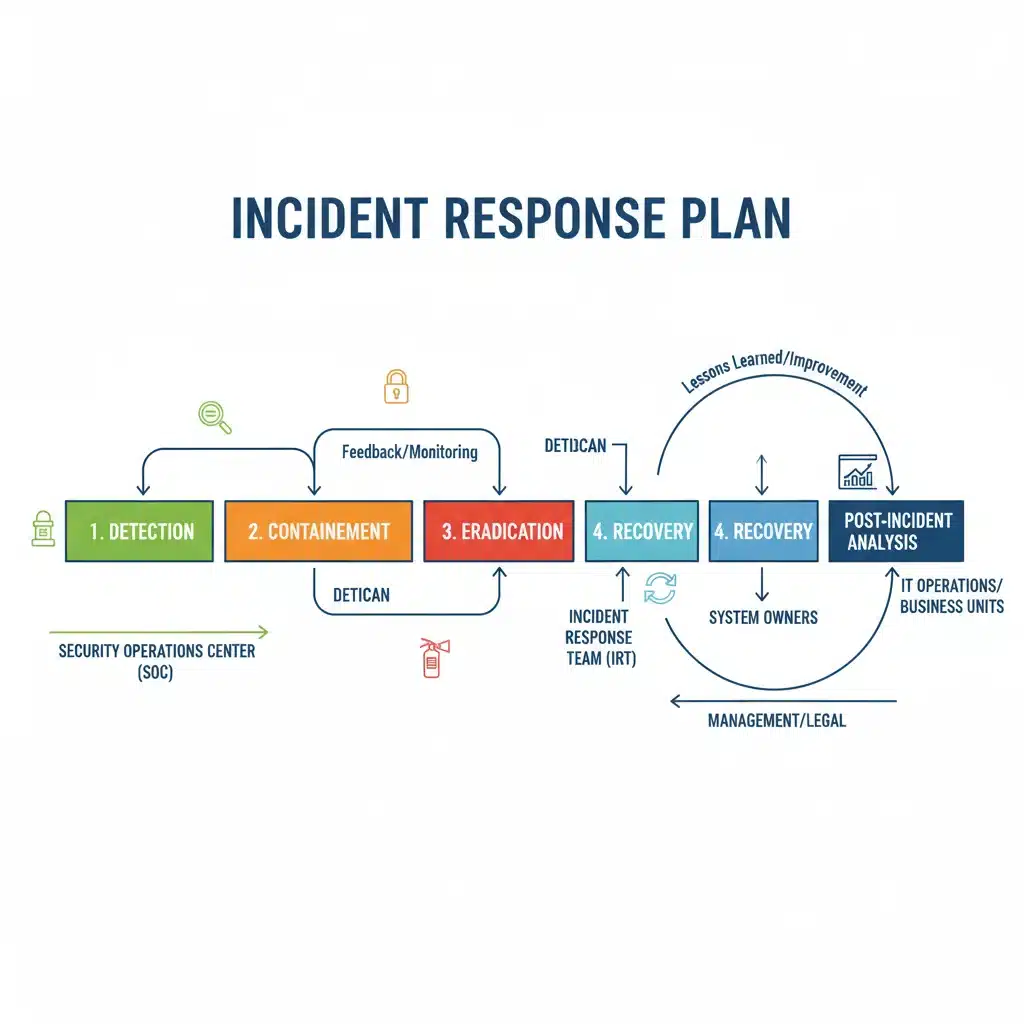
No matter how strong a business’s preventative measures are, the reality is that a cyberattack is not a matter of ‘if’ but ‘when.’ Therefore, having a well-defined, regularly tested, and adaptable incident response plan (IRP) is a cornerstone of effective US Business Cybersecurity. By 2026, organizations that can rapidly detect, contain, eradicate, and recover from cyber incidents will significantly minimize damage, reduce downtime, and maintain stakeholder trust.
The Core Elements of an Effective IRP:
- Preparation: This is the most crucial phase. It involves:
- Team Formation: Establishing a dedicated incident response team with clearly defined roles and responsibilities, including IT, legal, HR, communications, and executive leadership.
- Tools and Resources: Ensuring the availability of necessary tools (e.g., forensic software, secure communication channels, backups) and external resources (e.g., third-party cybersecurity firms, legal counsel).
- Documentation: Creating detailed playbooks for various types of incidents (e.g., ransomware, data breach, denial-of-service) with step-by-step procedures.
- Communication Plan: Defining internal and external communication protocols, including who to notify (employees, customers, regulators, law enforcement) and what information to share.
- Legal and Regulatory Compliance: Understanding reporting obligations for specific data breaches under federal and state laws (e.g., HIPAA, CCPA, state breach notification laws) and industry regulations.
- Detection and Analysis: The ability to quickly identify an incident is paramount. This phase involves:
- Monitoring Systems: Utilizing SIEM, XDR, and other logging tools to detect anomalous activities.
- Alert Triage: Prioritizing alerts based on severity and potential impact.
- Initial Assessment: Determining the scope, nature, and severity of the incident.
- Forensic Collection: Preserving evidence for later analysis and legal purposes.
- Containment: Once an incident is detected, the immediate goal is to prevent further damage and spread. This may involve:
- Isolation: Disconnecting affected systems from the network.
- Segmentation: Using network segmentation to limit lateral movement.
- Blocking: Implementing firewall rules or intrusion prevention systems to block malicious traffic.
- Patching: Applying emergency patches if the incident is due to a known vulnerability.
- Eradication: After containment, the focus shifts to removing the threat entirely. This includes:
- Malware Removal: Deleting malicious software.
- System Cleaning: Restoring compromised systems from clean backups.
- Vulnerability Remediation: Addressing the root cause that allowed the incident to occur.
- Credential Reset: Changing compromised passwords and keys.
- Recovery: Bringing affected systems and services back online in a secure manner. This involves:
- Restoration: Recovering data and systems from backups.
- Validation: Thoroughly testing systems to ensure they are fully functional and secure.
- Monitoring: Increased vigilance to detect any resurgence of the threat.
- Post-Incident Activity: The incident isn’t truly over until a thorough review has been conducted.
- Lessons Learned: Conducting a post-mortem analysis to identify what worked, what didn’t, and how to improve the IRP.
- Reporting: Documenting the incident, actions taken, and outcomes for internal records and regulatory compliance.
- Plan Updates: Revising the IRP based on lessons learned and new threat intelligence.
The Importance of Regular Testing
An IRP is only as effective as its last test. Regular drills and tabletop exercises are vital to:
- Identify Gaps: Uncover weaknesses in the plan, team roles, or technical capabilities.
- Improve Coordination: Ensure that all team members understand their roles and can work effectively under pressure.
- Familiarize Staff: Build muscle memory for quick and decisive action during a real incident.
- Validate Tools: Confirm that security tools and backups function as expected.
For US Business Cybersecurity in 2026, an IRP must be a living document, continuously updated to reflect new threats, technologies, and organizational changes. By investing in a robust incident response capability, businesses can transform a potentially catastrophic event into a manageable disruption, demonstrating resilience and commitment to security.
4. Securing the Supply Chain and Third-Party Ecosystem
The interconnected nature of modern business means that an organization’s security posture is only as strong as its weakest link. By 2026, supply chain attacks are projected to be among the most pervasive and damaging threats, making the security of third-party vendors, partners, and suppliers a critical component of US Business Cybersecurity. A breach in a third-party system can have cascading effects, compromising data, disrupting operations, and damaging the reputation of the primary organization.
Understanding Supply Chain Risk
A supply chain attack occurs when an attacker compromises a less secure element in an organization’s supply chain to gain access to the target organization. This can involve:
- Software Supply Chain: Injecting malicious code into software updates, open-source libraries, or development tools (e.g., SolarWinds attack).
- Hardware Supply Chain: Tampering with hardware components during manufacturing or transit.
- Service Provider Compromise: Exploiting vulnerabilities in cloud providers, managed service providers (MSPs), or other vendors that have access to your systems or data.
- Data Supply Chain: Compromising partners who exchange sensitive data with your organization.
For US Business Cybersecurity, managing these risks requires a comprehensive and continuous approach.
Key Protections for Supply Chain Security:
- Thorough Vendor Risk Assessments: Before engaging with any third-party vendor, conduct comprehensive security assessments. This should include:
- Security Questionnaires: Using standardized questionnaires (e.g., SIG, CAIQ) to evaluate their security controls, policies, and compliance certifications.
- Audits and Certifications: Requesting independent audit reports (e.g., SOC 2, ISO 27001) or specific security certifications.
- Penetration Testing Reports: Reviewing results of their recent penetration tests.
- Financial Stability Check: Assessing their financial health, as financially distressed companies may neglect security.
- Robust Contractual Agreements: Incorporate strong cybersecurity clauses into all vendor contracts. These should specify:
- Security Requirements: Mandating specific security controls, data protection standards, and encryption protocols.
- Breach Notification: Clear requirements for timely notification in the event of a security incident.
- Right to Audit: Allowing your organization to audit the vendor’s security practices.
- Liability and Indemnification: Defining responsibilities and liabilities in case of a breach attributable to the vendor.
- Continuous Monitoring of Third Parties: Vendor risk management is not a one-time event. Implement continuous monitoring solutions that track vendors’ security posture over time. This includes:
- Security Ratings Services: Utilizing services that provide real-time security ratings for vendors based on publicly available data.
- Regular Reviews: Conducting periodic reviews of vendor security practices and compliance.
- Alerting: Receiving automated alerts for any significant changes in a vendor’s security profile or reported breaches.
- Supply Chain Software Integrity: For software-intensive supply chains:
- Software Bill of Materials (SBOM): Mandate SBOMs from software suppliers to understand all components (including open-source) in their products, enabling better vulnerability management.
- Code Signing and Verification: Ensure software is digitally signed and verify signatures to prevent tampering.
- Secure Development Practices: Encourage and verify that vendors follow secure software development lifecycle (SSDLC) practices.
- Least Privilege and Network Segmentation for Third-Party Access: If vendors require direct access to your systems:
- Dedicated Access Points: Provide access through secure, isolated channels.
- Least Privilege: Grant only the absolute minimum access required for their tasks.
- Multi-Factor Authentication (MFA): Enforce MFA for all third-party access.
- Session Monitoring: Monitor and log all third-party activities within your network.
- Incident Response Collaboration: Establish clear communication channels and protocols with vendors for incident response. Ensure their IRPs align with yours and that they can participate effectively in a joint response effort.
Securing the supply chain is a complex but indispensable aspect of modern US Business Cybersecurity. By implementing these protections, businesses can significantly reduce their exposure to third-party risks and build a more resilient and trustworthy ecosystem by 2026.
5. Cultivating a Security-Aware Culture Through Continuous Training
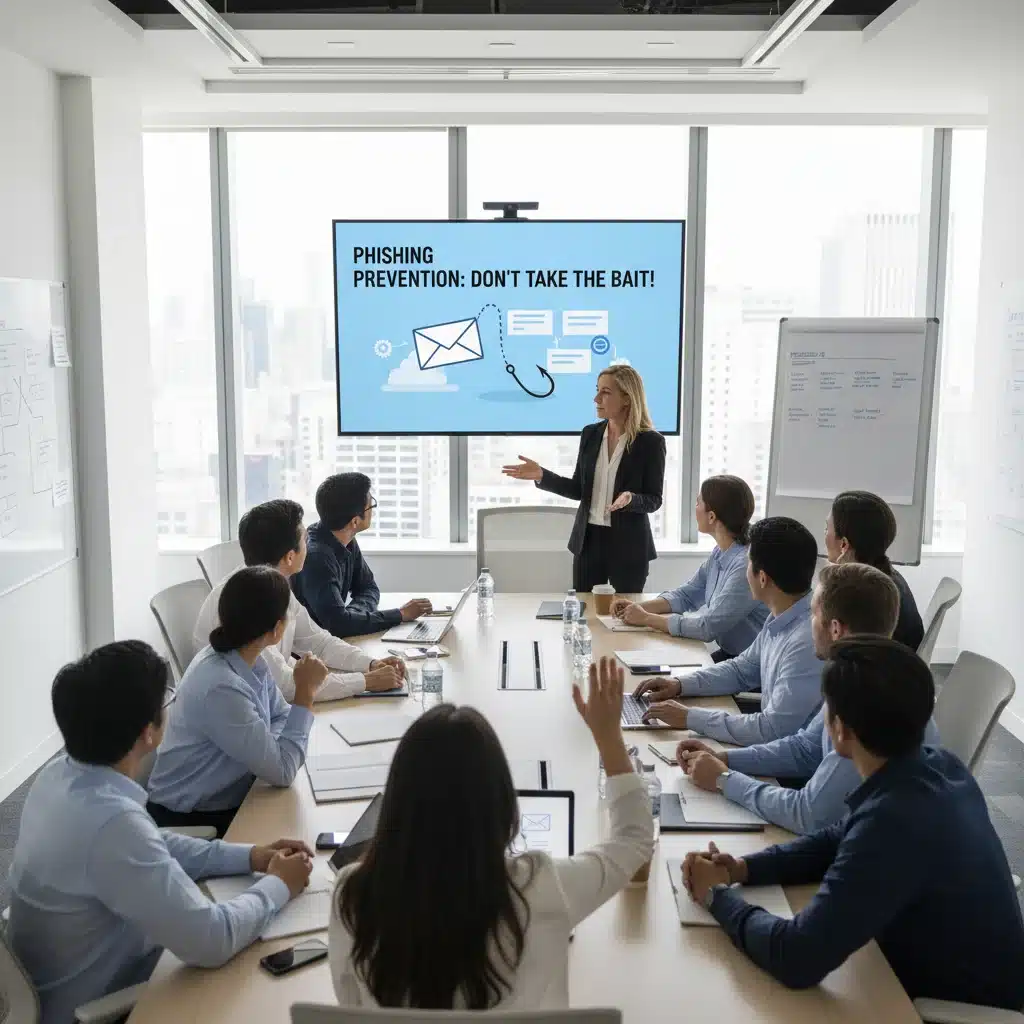
Technology and processes are only part of the cybersecurity equation. Human error remains one of the leading causes of security breaches. Phishing attacks, social engineering, and poor security practices by employees can bypass even the most advanced technical controls. Therefore, cultivating a strong security-aware culture through continuous and engaging training is a critical, often underestimated, pillar of effective US Business Cybersecurity, particularly as we approach 2026.
The "Human Firewall"
Employees are often referred to as the "human firewall." When properly educated and empowered, they can become the first line of defense against cyber threats. Conversely, a lack of awareness can turn them into an organization’s greatest vulnerability. The goal is to embed security consciousness into the everyday operations and mindset of every employee, from the CEO to the newest intern.
Key Components of a Continuous Security Awareness Program:
- Regular and Engaging Training Sessions:
- Beyond Annual Check-the-Box: Move beyond infrequent, generic training. Implement shorter, more frequent, and highly targeted modules throughout the year.
- Interactive Content: Utilize videos, gamification, quizzes, and real-world scenarios to make training engaging and memorable.
- Role-Specific Training: Tailor content to different departments and roles (e.g., HR handles sensitive personal data, finance deals with monetary transactions, IT has elevated privileges).
- New Hire Onboarding: Integrate cybersecurity awareness into the onboarding process for all new employees.
- Phishing Simulation Campaigns:
- Realistic Scenarios: Regularly conduct simulated phishing attacks that mimic real-world threats relevant to your industry and organization.
- Immediate Feedback and Remediation: Provide instant feedback to employees who fall for a phishing simulation, directing them to relevant training modules.
- Track Progress: Monitor click-through rates and reporting rates to assess improvement over time.
- Social Engineering Awareness:
- Educate on Tactics: Train employees to recognize common social engineering tactics, such as pretexting, baiting, quid pro quo, and tailgating.
- "Think Before You Click" and "Verify Before You Trust": Emphasize these core principles for emails, phone calls, and in-person interactions.
- Secure Practices Reinforcement:
- Password Hygiene: Emphasize the importance of strong, unique passwords and the use of password managers.
- Device Security: Train on securing personal and company-issued devices, including locking screens, reporting lost devices, and avoiding public Wi-Fi for sensitive work.
- Data Handling: Educate on proper data classification, storage, and sharing protocols, especially for sensitive information.
- Clean Desk Policy: Reinforce the importance of keeping physical workspaces secure.
- Reporting Mechanisms and Culture:
- Easy Reporting: Provide clear, easy-to-use channels for employees to report suspicious emails, activities, or potential incidents without fear of reprimand.
- Positive Reinforcement: Acknowledge and reward employees who actively contribute to security, such as by reporting phishing attempts.
- Leadership Buy-in: Ensure that senior leadership champions cybersecurity as a core value, leading by example and actively participating in training.
- Stay Updated: The threat landscape evolves, and so should your training. Regularly update content to reflect new threats, technologies, and organizational policies.
- Reduced Human Error: Significantly lowers the risk of breaches caused by employee mistakes.
- Enhanced Detection: A security-aware workforce is more likely to spot and report suspicious activity.
- Stronger Defense: Employees become an active part of the organization’s defense strategy.
- Improved Compliance: Helps meet regulatory requirements for employee training.
- Positive Security Culture: Fosters a collective responsibility for security, creating a more resilient organization.
Benefits for US Businesses:
By investing in continuous, engaging security awareness training, US businesses can transform their employees from potential vulnerabilities into formidable defenders, an essential aspect of robust US Business Cybersecurity for 2026.
Conclusion: A Proactive Stance for 2026 and Beyond
The digital frontier presents both immense opportunities and significant perils for US businesses. As cyber threats continue their relentless evolution, becoming more sophisticated, pervasive, and impactful, a reactive approach to cybersecurity is simply unsustainable. The year 2026 serves as a critical horizon, urging businesses to move beyond foundational security measures and embrace advanced, proactive strategies.
The five key protections outlined in this article – implementing advanced threat intelligence and proactive monitoring, strengthening Identity and Access Management with Zero Trust principles, developing and regularly testing a robust incident response plan, securing the supply chain and third-party ecosystem, and cultivating a security-aware culture through continuous training – together form a comprehensive framework for resilient US Business Cybersecurity. Each pillar addresses a distinct but interconnected aspect of modern digital defense, working in concert to create a robust shield against the multifaceted threats of tomorrow.
Adopting these measures is not merely about compliance or avoiding penalties; it is about safeguarding the very continuity and reputation of your business. It’s about protecting sensitive customer data, preserving intellectual property, ensuring operational stability, and maintaining the trust that is fundamental to success in the digital economy. Furthermore, a strong cybersecurity posture can be a competitive differentiator, attracting customers and partners who prioritize security.
The journey towards enhanced cybersecurity is continuous. It requires ongoing investment, vigilance, adaptation, and a commitment from every level of the organization. By prioritizing these five protections, US businesses can not only mitigate their risk exposure but also build a resilient foundation that will enable them to thrive securely in the face of an ever-changing threat landscape. The future of US Business Cybersecurity depends on the actions taken today. Be proactive, be prepared, and secure your future.