Cybersecurity Regulations 2026: 7 Steps to Protect Business Data and Avoid Penalties (RECENT UPDATES, PRACTICAL SOLUTIONS)

Anúncios
Cybersecurity Regulations 2026: 7 Steps to Protect Business Data and Avoid Penalties (RECENT UPDATES, PRACTICAL SOLUTIONS)
In an increasingly digital world, the threat landscape for businesses is constantly evolving. As we approach 2026, cybersecurity regulations are becoming more stringent, complex, and far-reaching. Non-compliance is no longer an option, with potential penalties that can cripple even the most robust organizations. From financial repercussions to reputational damage and loss of customer trust, the stakes have never been higher. This comprehensive guide will delve into the critical aspects of cybersecurity regulations 2026, offering practical solutions and outlining seven essential steps your business must take to protect its data, ensure compliance, and navigate this challenging regulatory environment successfully.
Understanding the nuances of these regulations is paramount. They are designed not just to punish, but to foster a culture of robust data protection and responsible information handling. Ignoring them is akin to leaving your digital doors wide open. By proactively addressing these requirements, businesses can transform potential liabilities into strategic advantages, building stronger trust with customers and partners, and fortifying their defenses against the relentless tide of cyber threats.
Anúncios
The Evolving Landscape of Cybersecurity Regulations 2026
The regulatory environment is a dynamic one, constantly adapting to new technologies, emerging threats, and shifts in global data flows. What was sufficient a few years ago might be woefully inadequate by 2026. Key drivers behind these stricter regulations include the exponential growth of data, the increasing sophistication of cyberattacks, and a heightened public awareness of data privacy issues. Governments and international bodies are responding with more comprehensive frameworks designed to protect individuals and organizations alike.
Globally, we are seeing a trend towards harmonization in some areas, yet also increased fragmentation in others. GDPR (General Data Protection Regulation) continues to set a high bar for data privacy in Europe, influencing legislation worldwide. In the United States, a patchwork of state-specific laws, like CCPA/CPRA in California and similar acts in Virginia, Colorado, Utah, and Connecticut, are pushing for more robust consumer data rights. Federal initiatives are also underway, aiming to create a more unified approach to cybersecurity and data protection. Furthermore, industry-specific regulations, such as HIPAA for healthcare and PCI DSS for payment card data, are being updated to reflect current best practices and threat models.
Anúncios
For businesses operating internationally, the challenge is compounded. Navigating multiple jurisdictions, each with its own set of rules and enforcement mechanisms, requires a sophisticated and adaptable compliance strategy. The focus is shifting from simply preventing breaches to demonstrating continuous vigilance, rapid response capabilities, and a proactive posture towards risk management. This necessitates not just technological solutions, but also a fundamental change in organizational culture and operational processes. Understanding these overarching trends is the first step in preparing for cybersecurity regulations 2026.
Why Compliance with Cybersecurity Regulations 2026 is Non-Negotiable
The consequences of non-compliance extend far beyond simple fines. While financial penalties can be substantial – often reaching millions of dollars or a significant percentage of global annual turnover – the damage to a business’s reputation can be even more devastating. A data breach or a regulatory violation can erode customer trust, lead to boycotts, and significantly impact brand loyalty, which can take years, if not decades, to rebuild.
Moreover, non-compliance can trigger legal action from affected individuals, leading to costly class-action lawsuits. Regulatory bodies are also increasingly exercising their powers to impose operational restrictions, demand corrective actions, and conduct extensive audits, all of which divert valuable resources and attention away from core business activities. In some sectors, repeated non-compliance can even lead to the revocation of licenses to operate. The competitive landscape also plays a role; businesses that demonstrate strong compliance and data protection practices gain a significant advantage in attracting and retaining customers who are increasingly concerned about their privacy.
Beyond these external pressures, robust cybersecurity and compliance practices offer internal benefits. They lead to improved operational efficiency, better data governance, and a clearer understanding of critical assets and vulnerabilities. By embedding compliance into the fabric of the organization, businesses can foster a more secure and resilient environment, better prepared to withstand the inevitable challenges of the digital age. Therefore, viewing compliance not as a burden but as an investment in the future resilience and success of your business is crucial for navigating cybersecurity regulations 2026.
7 Essential Steps to Master Cybersecurity Regulations 2026
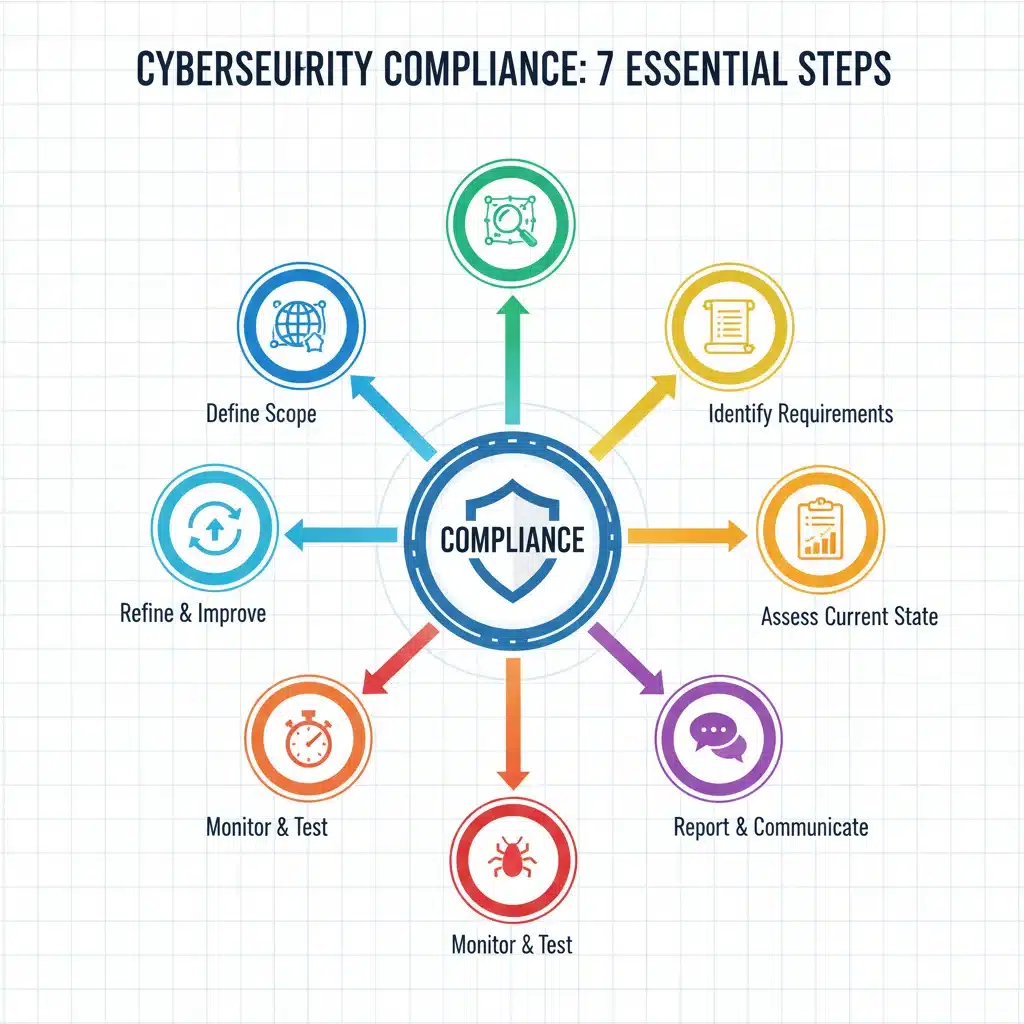
Proactive preparation is key to successfully navigating the complex world of cybersecurity regulations 2026. Here are seven practical steps your business can implement to protect data, ensure compliance, and mitigate risks effectively.
Step 1: Conduct a Comprehensive Data Audit and Risk Assessment
Before you can protect your data, you need to know what data you have, where it resides, and who has access to it. A thorough data audit is the foundational step. This involves identifying all data assets, classifying them by sensitivity (e.g., personal identifiable information (PII), financial data, intellectual property), and mapping data flows throughout your organization. Understand how data is collected, processed, stored, transmitted, and eventually disposed of.
Following the data audit, a robust risk assessment is crucial. This involves identifying potential threats (e.g., cyberattacks, insider threats, system failures, natural disasters) and vulnerabilities (e.g., unpatched software, weak passwords, insecure configurations). Evaluate the likelihood of each threat exploiting a vulnerability and the potential impact if such an event occurs. Prioritize risks based on their severity and develop strategies to mitigate them. This comprehensive understanding forms the bedrock of your compliance strategy for cybersecurity regulations 2026.
Step 2: Implement Strong Access Controls and Data Encryption
Limiting access to sensitive data on a ‘need-to-know’ basis is fundamental. Implement robust access control mechanisms, including multi-factor authentication (MFA) for all systems and applications, especially those containing critical data. Regularly review and update user permissions, ensuring that former employees or those who have changed roles no longer have access to unnecessary resources. Role-based access control (RBAC) can be highly effective in managing permissions at scale.
Data encryption is another cornerstone of data protection. Encrypt data both at rest (when stored on servers, databases, or devices) and in transit (when being transmitted across networks). This ensures that even if unauthorized parties gain access to your systems or intercept data, the information remains unreadable and unusable without the proper decryption keys. Staying abreast of the latest encryption standards and best practices is vital for meeting the requirements of cybersecurity regulations 2026.
Step 3: Develop and Enforce Robust Data Privacy Policies
Clear, comprehensive, and enforceable data privacy policies are essential. These policies should outline how your organization collects, uses, stores, and shares personal data, aligning with the principles of various regulations like GDPR, CCPA, and upcoming cybersecurity regulations 2026. Ensure your privacy notices are transparent, easily accessible, and clearly explain data subjects’ rights (e.g., right to access, rectification, erasure, portability).
Beyond external-facing policies, internal policies are equally important. These should cover data handling procedures, employee responsibilities, acceptable use of company resources, and incident response protocols. Regular training and awareness programs are necessary to ensure all employees understand and adhere to these policies. These policies should be living documents, reviewed and updated regularly to reflect changes in regulatory requirements and business practices.
Step 4: Establish a Robust Incident Response Plan
No security system is entirely impenetrable. Therefore, having a well-defined and regularly tested incident response plan (IRP) is critical. An IRP outlines the steps your organization will take in the event of a cybersecurity incident, from detection and containment to eradication, recovery, and post-incident analysis. Key components include:
- Detection and Analysis: Tools and processes for identifying security incidents quickly.
- Containment: Strategies to limit the damage and prevent further spread of the incident.
- Eradication: Removing the root cause of the incident.
- Recovery: Restoring affected systems and data to normal operations.
- Post-Incident Activity: Analyzing the incident to learn lessons and improve future defenses.
- Communication Protocols: Who needs to be informed (e.g., customers, regulators, law enforcement) and when, adhering to specific notification timelines stipulated by cybersecurity regulations 2026.
Regularly drill and test your IRP to ensure its effectiveness and identify any weaknesses. This proactive approach can significantly reduce the impact of a breach and demonstrate due diligence to regulators.
Step 5: Implement Regular Security Training and Awareness Programs
Human error remains one of the weakest links in cybersecurity. Employees are often the first line of defense, but they can also be the unwitting entry point for attackers. Comprehensive and ongoing security awareness training is therefore indispensable. This training should cover topics such as phishing detection, safe browsing habits, password hygiene, social engineering tactics, and the importance of reporting suspicious activities.
The training should be engaging, relevant to employees’ roles, and conducted regularly – not just a one-off annual event. Phishing simulations and other practical exercises can reinforce learning and help employees apply their knowledge in real-world scenarios. Fostering a security-conscious culture where every employee understands their role in protecting company data is a vital component of meeting cybersecurity regulations 2026.
Step 6: Conduct Regular Security Audits and Penetration Testing
To ensure your security controls are effective and to identify any new vulnerabilities, regular security audits and penetration testing are essential. Security audits involve a systematic review of your systems, networks, and applications to ensure they comply with internal policies and external regulations. This can include configuration reviews, vulnerability scans, and compliance checks.
Penetration testing (pen testing) goes a step further by simulating real-world cyberattacks. Ethical hackers attempt to exploit vulnerabilities in your systems to identify weaknesses that malicious actors could leverage. This provides invaluable insights into your organization’s actual resilience against attacks. Findings from audits and pen tests should be used to continuously improve your security posture and address identified gaps, ensuring ongoing compliance with cybersecurity regulations 2026.
Step 7: Partner with Trusted Vendors and Ensure Supply Chain Security
In today’s interconnected business ecosystem, your organization’s security is often only as strong as its weakest link in the supply chain. Third-party vendors, cloud service providers, and partners who have access to your data or systems represent potential attack vectors. It is crucial to vet all vendors thoroughly and ensure they meet your cybersecurity standards and comply with relevant regulations.
Implement robust vendor risk management programs that include due diligence, contractual agreements outlining security responsibilities, regular security assessments of vendors, and ongoing monitoring. Ensure that your contracts include provisions for data protection, incident notification, and audit rights. A single breach originating from a third-party vendor can have devastating consequences for your business, making supply chain security a critical focus for cybersecurity regulations 2026 compliance.

Recent Updates and What to Expect in 2026
The landscape of cybersecurity regulations 2026 is not static; it’s a living, breathing entity that responds to global events, technological advancements, and lessons learned from past breaches. Several key trends and potential updates are on the horizon that businesses should be aware of:
- Increased Focus on AI and Machine Learning Security: As AI becomes more integrated into business operations, regulations will likely emerge to address the unique security and privacy challenges posed by AI systems, including data bias, explainability, and the protection of AI models themselves.
- Enhanced Cross-Border Data Transfer Rules: Expect continued evolution and potentially stricter enforcement of rules governing the transfer of personal data across international borders, especially concerning data adequacy decisions and standard contractual clauses.
- Supply Chain Security Mandates: Following high-profile supply chain attacks, governments are increasingly pushing for regulations that mandate stronger security controls and risk management throughout the entire supply chain, extending liability beyond the immediate organization.
- Critical Infrastructure Protection: Sectors deemed critical infrastructure (e.g., energy, finance, healthcare, transportation) will likely face even more rigorous and sector-specific cybersecurity requirements, often with direct government oversight.
- Personal Accountability for Executives: There’s a growing trend towards holding individual executives personally accountable for cybersecurity failures, potentially leading to more stringent governance requirements and board-level involvement in cybersecurity strategy.
- Privacy-Enhancing Technologies (PETs): Regulations may start to encourage or even mandate the use of PETs, such as differential privacy and homomorphic encryption, to protect data while still allowing for analysis and innovation.
Staying informed about these potential shifts through industry news, legal counsel, and regulatory updates is crucial for maintaining compliance and adapting your strategies for cybersecurity regulations 2026.
Practical Solutions and Technologies for Compliance
Achieving compliance with cybersecurity regulations 2026 requires not just policy and process changes, but also strategic investment in the right technologies and solutions. Here are some practical tools and approaches:
- Data Loss Prevention (DLP) Solutions: DLP tools help identify, monitor, and protect sensitive data in use, in motion, and at rest. They can prevent unauthorized sharing or transfer of critical information.
- Security Information and Event Management (SIEM) Systems: SIEM solutions aggregate and analyze security events from various sources across your IT infrastructure, providing real-time insights into potential threats and enabling rapid incident detection.
- Identity and Access Management (IAM) Platforms: IAM systems centralize user identities and control access to resources, enforcing policies like strong authentication, least privilege, and regular access reviews.
- Cloud Security Posture Management (CSPM) and Cloud Workload Protection Platforms (CWPP): For businesses leveraging cloud services, these tools are essential for ensuring cloud configurations are secure, identifying misconfigurations, and protecting workloads running in the cloud.
- Endpoint Detection and Response (EDR) / Extended Detection and Response (XDR): These advanced solutions provide continuous monitoring and response capabilities for endpoints (laptops, servers) and across multiple security layers (email, network, cloud) to detect and neutralize sophisticated threats.
- Data Governance and Privacy Management Tools: Software solutions designed to help organizations manage data inventories, track data flows, automate privacy requests (e.g., data subject access requests), and generate compliance reports.
- Security Orchestration, Automation, and Response (SOAR): SOAR platforms help automate repetitive security tasks and orchestrate incident response workflows, improving efficiency and reducing response times.
Integrating these technologies into a holistic cybersecurity framework, guided by expert advice, will significantly bolster your organization’s ability to meet the demands of cybersecurity regulations 2026.
Building a Culture of Compliance and Security
Technology and policies alone are not enough. A truly resilient organization embeds security and compliance into its very culture. This means fostering an environment where:
- Leadership Commitment: Cybersecurity is championed from the top down, with executive buy-in and adequate resource allocation.
- Continuous Learning: Employees are continuously educated and updated on the latest threats and best practices.
- Open Communication: Employees feel empowered to report suspicious activities or concerns without fear of reprisal.
- Accountability: Clear roles and responsibilities for data protection and compliance are defined and enforced at all levels.
- Proactive Mindset: The organization anticipates potential threats and regulatory changes rather than reacting to them.
Building such a culture requires consistent effort, clear communication, and leading by example. It transforms cybersecurity from a mere IT function into a collective responsibility, significantly strengthening your defense against threats and ensuring sustained adherence to cybersecurity regulations 2026.
Conclusion: Your Path to Cybersecurity Compliance in 2026
The journey towards full compliance with cybersecurity regulations 2026 is ongoing and multifaceted. It demands a strategic, proactive, and adaptive approach. By implementing the seven essential steps outlined in this guide – from comprehensive data audits and robust access controls to continuous training and strong vendor partnerships – businesses can establish a resilient security posture that not only meets regulatory requirements but also protects their most valuable asset: their data.
Remember, compliance is not a one-time project but an continuous process of assessment, improvement, and adaptation. The regulatory landscape will continue to evolve, and so too must your security strategies. By investing in robust cybersecurity practices now, your business can mitigate risks, avoid penalties, build unwavering trust with customers, and secure its future in the increasingly digital and regulated world of 2026 and beyond. Start your preparation today to transform regulatory challenges into opportunities for growth and enhanced security.