Remote Work 2026: Business Model Comparison for US Companies
Anúncios
The Future of Remote Work: A 2026 Business Model Comparison for US Companies
The global pandemic irrevocably altered the landscape of professional life, thrusting remote work from a niche perk into a mainstream operational imperative. As we look towards 2026, the question for US companies is no longer if they should embrace remote work, but how. The strategic adoption of effective remote work models will be a critical differentiator, influencing everything from talent acquisition and retention to operational efficiency and corporate culture. This comprehensive guide delves into the various remote work models emerging as dominant forces, offering a comparative analysis to help US businesses navigate this evolving terrain and make informed decisions for a prosperous future.
Anúncios
Understanding the nuances of each model is paramount. What works for a tech startup might not suit a manufacturing giant, and vice versa. The goal is to identify a framework that not only aligns with your company’s core values and objectives but also empowers your workforce, fosters innovation, and ensures sustained growth. We’ll explore the fully remote, hybrid, and distributed models, examining their advantages, disadvantages, and the critical factors US companies must consider for successful implementation in 2026 and beyond.
The Fully Remote Model: Unleashing Global Talent and Flexibility
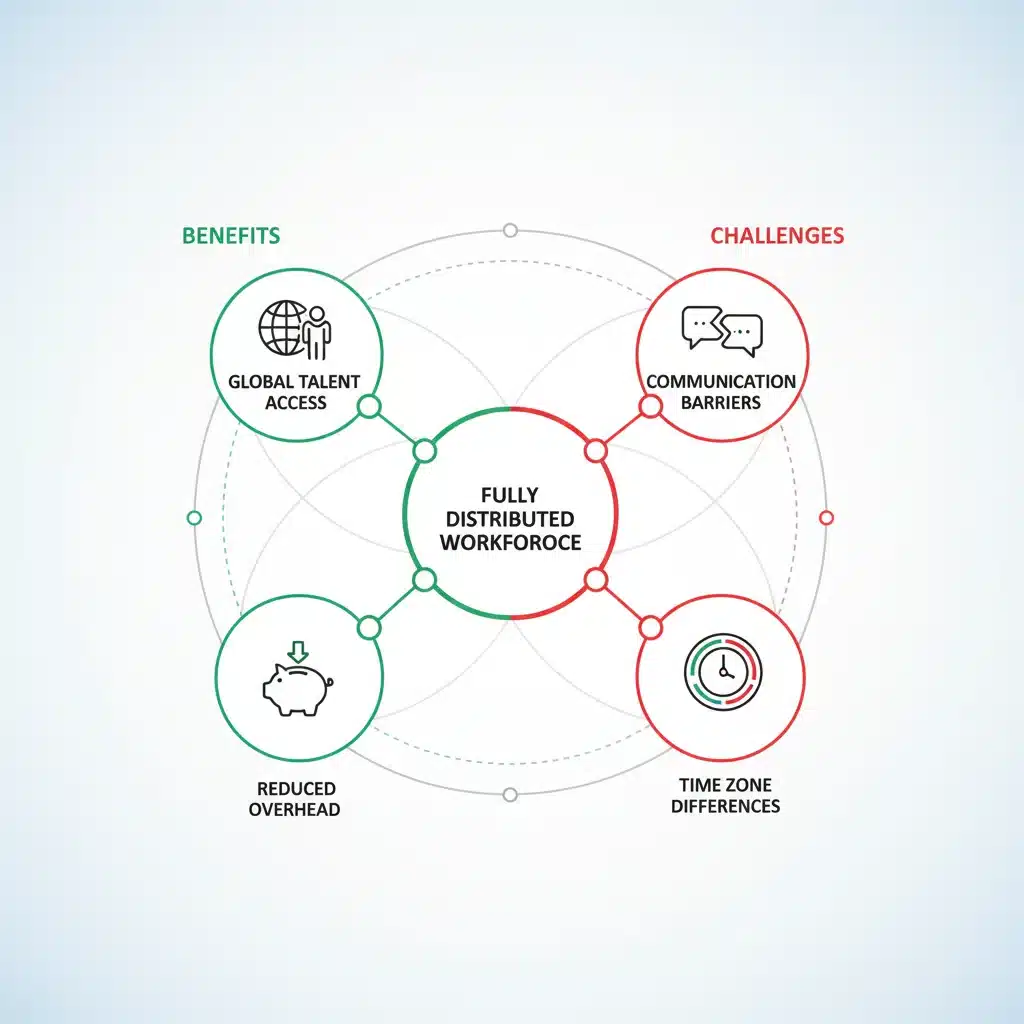
The fully remote model, where employees operate entirely outside a centralized office, has gained significant traction. Companies like Automattic (creators of WordPress) and Gitlab have championed this approach for years, demonstrating its viability and numerous benefits. In 2026, more US companies are expected to consider or fully adopt this model, driven by the desire to access a broader talent pool, reduce overhead costs, and offer unparalleled employee flexibility.
Anúncios
Advantages of Fully Remote Remote Work Models:
- Expanded Talent Pool: Geographic limitations are removed, allowing companies to recruit the best talent globally, not just locally. This is a significant competitive edge in a tight labor market.
- Reduced Overhead Costs: Eliminating or significantly downsizing physical office spaces can lead to substantial savings on rent, utilities, maintenance, and office supplies.
- Increased Employee Satisfaction and Retention: Flexibility in work location and schedule often leads to higher job satisfaction, reduced commute stress, and better work-life balance, translating to lower turnover rates.
- Enhanced Productivity: Many employees report fewer distractions and greater focus when working from home, leading to increased individual productivity.
- Business Continuity: A fully remote setup inherently builds resilience against disruptions like natural disasters or public health crises, as operations are not tied to a single physical location.
Challenges and Considerations for Fully Remote Models:
- Maintaining Company Culture: Fostering a cohesive culture and sense of belonging can be challenging without in-person interactions. Companies must invest heavily in virtual team-building and communication strategies.
- Communication and Collaboration: Ensuring seamless communication across different time zones and without spontaneous in-person interactions requires robust digital tools and clear communication protocols.
- Employee Isolation: Some employees may experience feelings of isolation or loneliness. Companies need to provide resources and support systems to combat this.
- Cybersecurity Risks: Managing security across a distributed network of home offices presents unique challenges, requiring strong IT infrastructure and employee training.
- Regulatory and Compliance Issues: Operating across multiple states or even countries introduces complexities related to taxation, labor laws, and compliance.
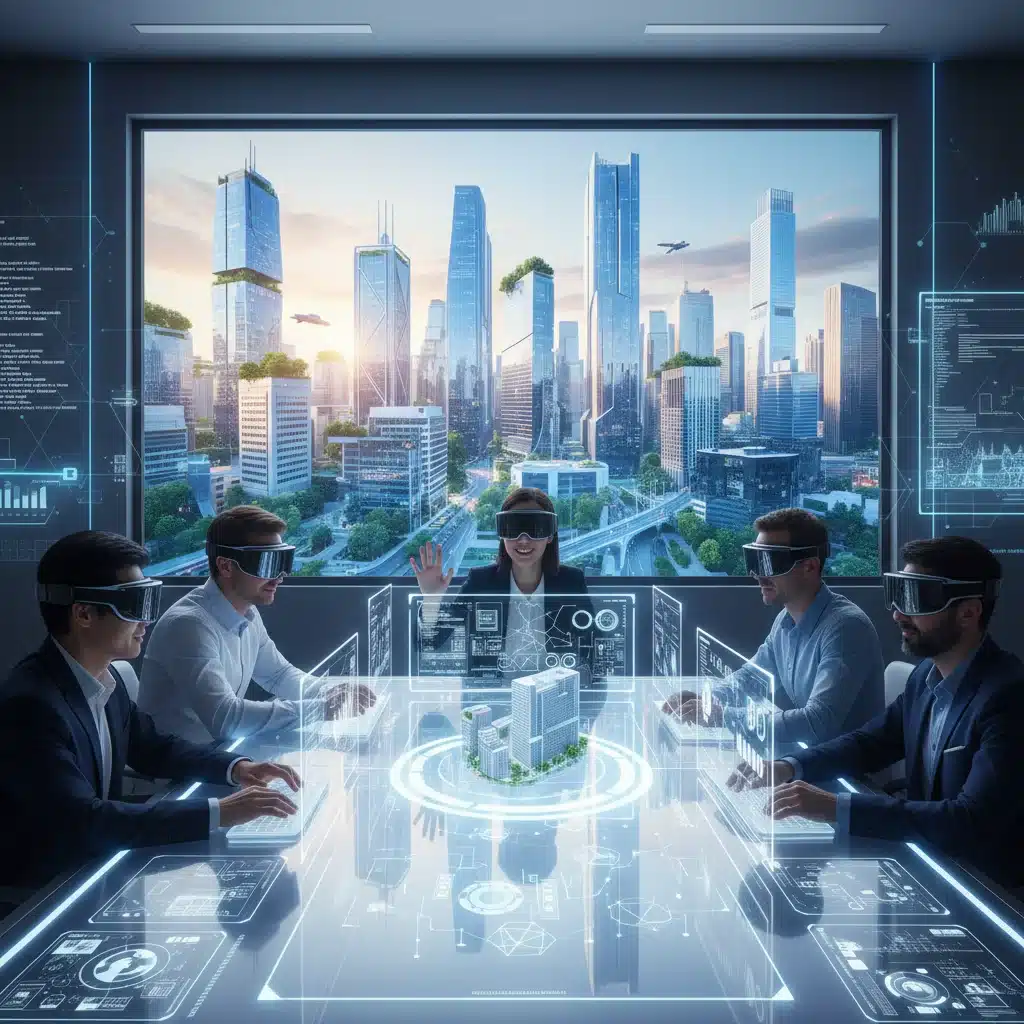
For US companies considering a fully remote model in 2026, a strong emphasis on asynchronous communication, clear documentation, and deliberate efforts to build virtual community will be crucial. Technology will continue to play an even more central role, with advancements in VR/AR for virtual meetings and sophisticated project management platforms becoming standard.
The Hybrid Model: Blending the Best of Both Worlds
Perhaps the most popular of the remote work models post-pandemic, the hybrid model offers a flexible approach where employees split their time between working remotely and in a physical office. This model attempts to capture the benefits of both in-person collaboration and remote flexibility. As 2026 approaches, many US companies are refining their hybrid strategies, experimenting with various configurations to find the optimal balance.
Variations of Hybrid Models:
- Fixed Hybrid: Employees work a set number of days in the office (e.g., Tuesday-Thursday) and remotely for the rest.
- Flexible Hybrid: Employees have more autonomy to choose when they come into the office, often based on team needs or specific projects.
- Team-Based Hybrid: Different teams or departments might have varying hybrid schedules based on their specific work requirements.
- Hub-and-Spoke Model: A central headquarters with smaller satellite offices closer to employee clusters.
Advantages of Hybrid Remote Work Models:
- Balanced Culture and Collaboration: Allows for essential in-person meetings, team building, and mentorship opportunities while retaining remote flexibility.
- Improved Work-Life Balance: Employees still benefit from reduced commutes and personal flexibility on remote days.
- Optimized Office Space: Companies can reduce their real estate footprint by implementing hot-desking or activity-based working, where desks are not assigned permanently.
- Enhanced Employee Engagement: Offers a middle ground that can appeal to a wider range of employees, including those who thrive in an office environment and those who prefer remote work.
- Easier Transition: For companies traditionally office-centric, a hybrid model offers a less drastic shift than going fully remote.
Challenges and Considerations for Hybrid Models:
- Maintaining Equity: A significant challenge is ensuring that remote employees do not feel like second-class citizens or miss out on opportunities available to their in-office counterparts. This includes access to information, career development, and informal networking.
- Office Utilization: Managing office space effectively can be complex, ensuring enough desks and resources are available on in-office days without having too much unused space on remote days.
- Communication Silos: Hybrid teams can inadvertently create ‘in-group’ and ‘out-group’ dynamics if communication isn’t intentionally inclusive of both remote and in-office participants.
- Technology Investment: Requires significant investment in technology that supports seamless collaboration, regardless of location (e.g., video conferencing, shared digital whiteboards, robust networks).
- Leadership Training: Managers need specific training to lead hybrid teams effectively, balancing autonomy with accountability and fostering inclusion.
\
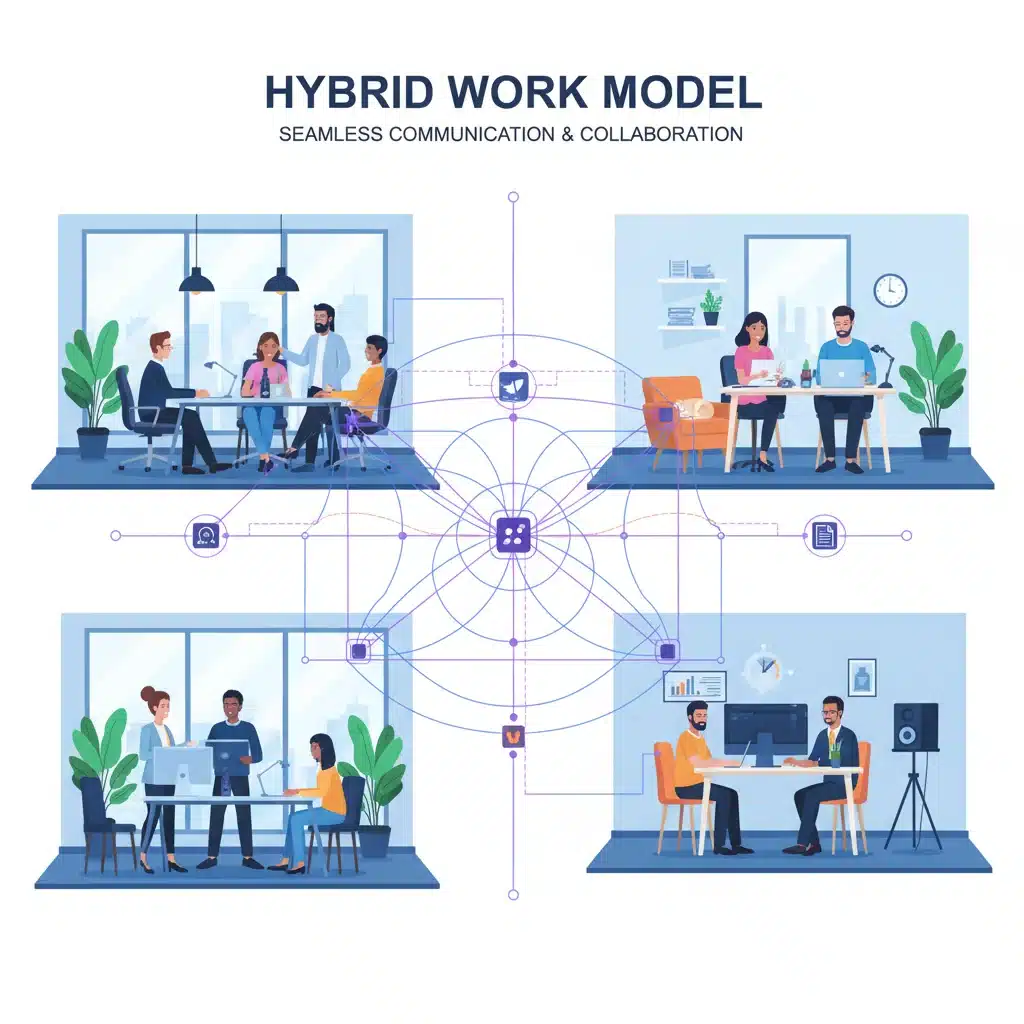
US companies adopting hybrid remote work models in 2026 must prioritize creating a truly equitable experience for all employees. This means investing in ‘hybrid-first’ meeting technologies, developing clear guidelines for in-office days, and fostering a culture where contributions are valued regardless of location.
The Distributed Model: A Strategic Approach to Global Presence
While often conflated with fully remote, the distributed model has a slightly different emphasis. It’s not just about employees working from home; it’s about strategically placing teams or individuals in different geographic locations, often across countries or continents, to leverage diverse talent pools, market access, or specific expertise. This model is particularly appealing for larger US companies with global ambitions or those seeking to build highly specialized teams.
Key Characteristics of Distributed Remote Work Models:
- Geographic Dispersion: Intentional distribution of teams across various cities, states, or countries.
- Localized Hubs: May involve small, localized offices or co-working spaces in different regions, rather than a single large headquarters.
- Global Talent Acquisition: Designed to tap into specific talent markets worldwide.
- Time Zone Management: Requires sophisticated strategies for managing collaboration across significant time differences.
Advantages of Distributed Remote Work Models:
- Access to Specialized Global Talent: Companies can hire the best individuals for specific roles, regardless of their location, filling skill gaps more effectively.
- Market Proximity: Placing teams closer to key markets can improve customer understanding, support, and regional responsiveness.
- Cost Arbitrage: Potential to reduce labor costs by hiring in regions with lower costs of living, although this should not be the sole driver.
- Increased Diversity and Inclusion: A geographically diverse workforce often leads to a greater variety of perspectives, fostering innovation and better decision-making.
- Enhanced Resilience: Distributing operations across different regions can provide redundancy and reduce risk associated with localized disruptions.
Challenges and Considerations for Distributed Models:
- Complex Legal and Tax Frameworks: Operating across multiple jurisdictions introduces significant legal, tax, and compliance challenges that require expert navigation.
- Time Zone Management: Coordinating meetings, projects, and urgent issues across vast time differences can be a major hurdle, requiring careful scheduling and asynchronous communication.
- Cultural Differences: Managing teams with diverse cultural backgrounds requires strong leadership, cultural sensitivity training, and clear communication to avoid misunderstandings.
- Infrastructure and IT Support: Ensuring consistent and reliable IT infrastructure and support for employees in various locations can be complex and costly.
- Building Cohesion: Creating a unified company culture and team cohesion across widely dispersed teams is arguably the most significant challenge.
For US companies eyeing distributed remote work models in 2026, a robust global HR strategy, sophisticated communication platforms, and a deep understanding of international compliance will be non-negotiable. The investment in these areas can yield significant returns in talent and market reach.
Key Factors for US Companies to Consider in 2026
Regardless of which of the remote work models a US company chooses, several overarching factors will dictate its success in 2026. These considerations are vital for strategic planning and successful execution.
1. Technology Infrastructure and Digital Tools
The backbone of any successful remote or hybrid operation is its technology. Companies must invest in:
- Robust Communication Platforms: Slack, Microsoft Teams, Zoom, Google Meet for real-time and asynchronous communication.
- Project Management Software: Asana, Trello, Jira, Monday.com to track progress and assign tasks.
- Collaboration Tools: Miro, Mural for virtual whiteboarding and brainstorming.
- Secure Cloud-Based Systems: For file sharing, data storage, and application access.
- Cybersecurity Measures: VPNs, multi-factor authentication, endpoint detection and response, and regular employee training on security best practices.
The seamless integration of these tools and consistent access for all employees, regardless of location, is paramount.
2. Leadership and Management Training
Managing remote or hybrid teams requires a different skill set than managing in-person teams. Leaders need training in:
- Trust and Empowerment: Shifting from a ‘presenteeism’ mindset to one focused on outcomes and trust.
- Effective Virtual Communication: Mastering asynchronous communication, conducting engaging virtual meetings, and providing clear instructions.
- Performance Management: Setting clear expectations, providing regular feedback, and evaluating performance based on results.
- Employee Well-being: Recognizing signs of burnout or isolation and providing support.
- Fostering Inclusion: Ensuring all team members, regardless of location, feel heard, valued, and have equal opportunities.
3. Culture and Employee Engagement
Building and maintaining a strong company culture remotely requires intentional effort. Strategies include:
- Virtual Team Building: Online social events, virtual coffee breaks, and non-work-related chat channels.
- Clear Values and Mission: Regularly reinforcing company values and mission to create a shared sense of purpose.
- Recognition and Rewards: Implementing systems to acknowledge and reward remote contributions.
- Open Communication: Encouraging feedback, transparency from leadership, and creating psychological safety.
- In-Person Touchpoints (for Hybrid/Distributed): Occasional company retreats or team meetups can significantly boost morale and strengthen bonds.
4. Legal, Compliance, and HR Considerations
Navigating the legal and HR landscape of remote work models is complex, especially for US companies operating across states or internationally. Key areas include:
- State-Specific Labor Laws: Minimum wage, overtime, leave policies, and workers’ compensation vary significantly by state.
- Tax Implications: Corporate income tax, sales tax, and payroll tax obligations based on employee location.
- Data Privacy: Adhering to various data protection regulations (e.g., CCPA, GDPR if applicable).
- Equipment and Expense Reimbursement: Clear policies on providing equipment and reimbursing home office expenses.
- Benefits and Compensation: Ensuring equitable and compliant benefits packages, which may need to be adjusted based on location.
5. Real Estate Strategy
The choice of remote work models directly impacts real estate needs. Companies must:
- Re-evaluate Office Space: Determine if current office size is appropriate for hybrid models, or if a fully remote model allows for significant downsizing.
- Consider Flexible Spaces: Explore co-working memberships or smaller, agile offices instead of traditional long-term leases.
- Design for Collaboration: If retaining an office, design it to be a destination for collaboration, innovation, and social connection rather than just individual workstations.
The Economic and Social Impact of Evolving Remote Work Models in the US
Beyond internal company operations, the widespread adoption of various remote work models is having profound economic and social impacts across the United States. In 2026, these impacts will be even more pronounced, shaping urban development, regional economies, and even national policies.
Shifting Demographics and Regional Development
The ability to work remotely has empowered a significant portion of the workforce to relocate from expensive urban centers to more affordable suburban or rural areas. This trend, often referred to as ‘zoom towns,’ is:
- Revitalizing Smaller Communities: Bringing new residents, businesses, and tax revenues to areas that previously experienced population decline.
- Increasing Housing Demand: Leading to rising housing costs in these previously affordable regions, creating new challenges for long-term residents.
- Reshaping Urban Centers: Major cities are grappling with reduced demand for commercial real estate and a need to reinvent their downtown cores to attract residents and new forms of commerce.
US companies embracing flexible remote work models contribute directly to these demographic shifts, and understanding these broader implications can inform decisions about where to establish satellite offices or focus recruitment efforts.
Environmental Benefits
A significant reduction in daily commutes, particularly in large metropolitan areas, leads to:
- Decreased Carbon Emissions: Fewer cars on the road mean less pollution and a positive impact on air quality.
- Reduced Energy Consumption: While home energy use increases, the overall reduction in large office building energy consumption can be substantial, especially if offices are optimized for lower occupancy.
For environmentally conscious US companies, promoting remote work models aligns with corporate social responsibility goals.
The Future of Transportation and Infrastructure
Less commuting impacts public transportation systems, road infrastructure, and even the automotive industry. Governments and urban planners are already reassessing investment priorities, considering:
- Redesigning Public Transit: Adapting to different peak hours and potentially lower ridership.
- Investing in Broadband: The need for reliable, high-speed internet across all regions becomes even more critical, driving infrastructure investment.
Companies adopting remote work models indirectly influence these large-scale infrastructure decisions.
Impact on Local Businesses
The movement of workers away from traditional office hubs affects local businesses that relied on daily foot traffic from office workers (e.g., downtown restaurants, coffee shops, dry cleaners). Conversely, businesses in residential areas are seeing a boost. This requires a re-evaluation of business models for service industries across the country.
Conclusion: Strategic Adaptation is Key for US Companies in 2026
The evolution of remote work models is not a passing fad; it is a fundamental shift in how work is conducted. For US companies navigating 2026 and beyond, the ability to strategically adapt, innovate, and optimize their chosen model will be a cornerstone of their success. Whether fully remote, hybrid, or distributed, each model presents a unique set of opportunities and challenges.
The key lies in a holistic approach: understanding your organizational culture, investing in the right technology, empowering and training your leadership, and meticulously addressing legal and HR complexities. The future of work is flexible, global, and digitally driven. By carefully considering the insights presented here, US companies can harness the power of remote work models to build resilient, productive, and thriving workforces that are prepared for whatever the future holds.
The journey towards optimal remote work models is continuous, requiring ongoing evaluation, feedback, and refinement. Those companies that embrace this iterative process with an open mind and a commitment to their people will be the ones that lead the way in the dynamic business landscape of 2026 and beyond.