Debt Consolidation 2026: Lower Payments by 15% with Smart Strategies

Anúncios
In an ever-evolving financial landscape, managing debt effectively has become a paramount concern for millions. As we look towards 2026, the strategies and tools available for debt consolidation are becoming more sophisticated, offering real opportunities to alleviate financial burdens. This comprehensive guide will delve into the intricacies of Debt Consolidation 2026, exploring how you can potentially lower your monthly payments by a significant 15% or even more, while providing practical solutions and a clear understanding of the financial impact. Whether you’re grappling with credit card debt, personal loans, or a mix of various liabilities, understanding the nuances of debt consolidation can be your pathway to financial freedom.
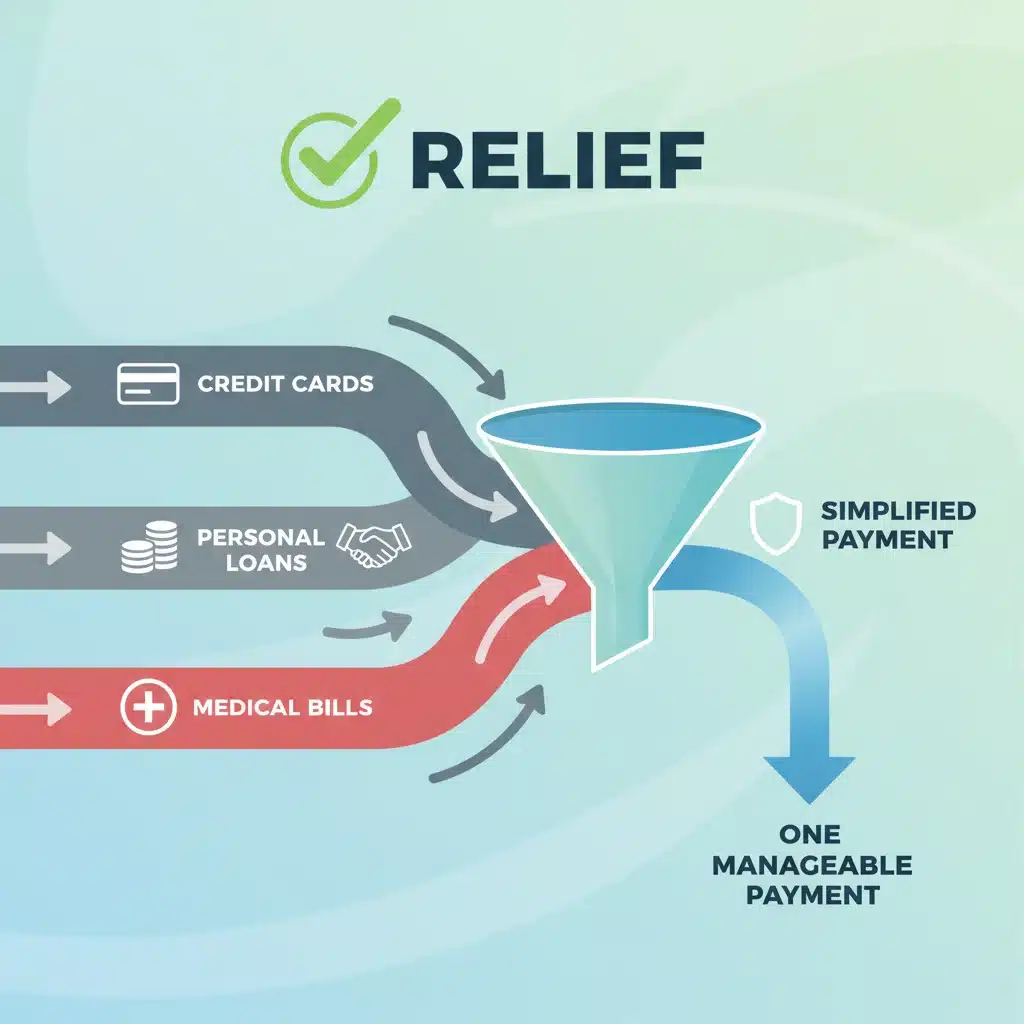
The concept of debt consolidation is simple yet powerful: combine multiple debts into a single, more manageable payment, often with a lower interest rate. This not only simplifies your financial life but can also significantly reduce the total amount you pay over time and free up cash flow. In 2026, with advancements in financial technology and a broader range of lending products, the options are more diverse and accessible than ever before. Let’s embark on this journey to transform your financial future.
Anúncios
Understanding the Landscape of Debt in 2026
Before diving into solutions, it’s crucial to understand the current debt environment. Consumer debt continues to be a significant challenge for many households. High-interest credit card debt, escalating personal loan balances, and other forms of unsecured debt can create a vicious cycle, making it difficult to make progress. The economic forecasts for 2026 suggest a continued need for prudent financial management, making proactive strategies like Debt Consolidation 2026 more relevant than ever.
The Impact of High-Interest Debt
High-interest debt is insidious. A seemingly small balance can balloon over time due to compounding interest, leading to minimum payments that barely touch the principal. This creates a feeling of being trapped, with a significant portion of your income going towards interest rather than reducing the actual debt. By consolidating, you aim to replace these high-interest obligations with a single loan that carries a lower interest rate, thus accelerating your path to debt freedom.
Anúncios
Why 2026 is a Pivotal Year for Debt Consolidation
Several factors make 2026 a particularly opportune time for considering debt consolidation:
- Technological Advancements: Fintech companies are continually innovating, offering faster approvals, personalized loan options, and more user-friendly platforms.
- Competitive Lending Market: Lenders are increasingly competitive, leading to a wider array of products and potentially better interest rates for qualified borrowers.
- Increased Awareness: More resources and educational materials are available, empowering consumers to make informed decisions about their debt.
Navigating these options requires a clear understanding of your current financial situation and a willingness to explore the various avenues available. The goal is not just to reduce payments, but to create a sustainable financial plan for the future.
The Core Principle of Debt Consolidation: Simplify and Save
At its heart, debt consolidation is about simplifying your financial obligations and saving money. Instead of juggling multiple due dates, interest rates, and minimum payments, you consolidate them into one. This simplification reduces the risk of missed payments and late fees, which can further damage your credit score and add to your debt burden.
How Debt Consolidation Works
The process typically involves taking out a new loan to pay off several existing debts. The new loan usually has a lower interest rate and a more favorable repayment term than the combined original debts. This results in a single, fixed monthly payment that is often lower than the sum of your previous individual payments. The 15% reduction in monthly payments mentioned in our title is a realistic and achievable goal for many individuals who strategically approach Debt Consolidation 2026.
Benefits Beyond Lower Payments
- Improved Credit Score: Consistently making a single, on-time payment can positively impact your credit score over time.
- Reduced Stress: Managing fewer bills and seeing a clearer path to debt freedom can significantly reduce financial stress.
- Fixed Repayment Schedule: Many consolidation loans come with a fixed interest rate and a predictable repayment schedule, making budgeting easier.
- Potential for Early Debt Freedom: With a lower interest rate, more of your payment goes towards the principal, allowing you to pay off your debt faster.
These benefits collectively contribute to a more stable and secure financial future, which is the ultimate aim of any debt management strategy.
Practical Solutions for Debt Consolidation in 2026
There are several popular methods for consolidating debt, each with its own advantages and considerations. Choosing the right option depends on your credit score, the amount of debt you have, and your financial goals. Let’s explore the primary avenues for Debt Consolidation 2026.
1. Personal Loans for Debt Consolidation
A personal loan is one of the most common and straightforward ways to consolidate debt. You apply for an unsecured loan from a bank, credit union, or online lender, use the funds to pay off your existing high-interest debts, and then make a single monthly payment to the personal loan lender. The interest rates on personal loans are typically lower than those on credit cards, especially for individuals with good credit.
Key Considerations for Personal Loans:
- Credit Score: Lenders evaluate your creditworthiness to determine eligibility and interest rates. A higher score usually translates to better terms.
- Interest Rates: Shop around for the best rates. Online lenders often offer competitive rates due to lower overheads.
- Loan Terms: Consider the repayment period. Longer terms mean lower monthly payments but potentially more interest paid overall.
2. Balance Transfer Credit Cards
Balance transfer credit cards allow you to move high-interest credit card balances to a new card, often with an introductory 0% APR period. This can be an excellent strategy if you can pay off the consolidated debt before the promotional period ends, effectively saving you a significant amount on interest.
Key Considerations for Balance Transfer Cards:
- Promotional Period: Understand when the 0% APR period expires and what the standard APR will be afterward.
- Balance Transfer Fees: Most cards charge a fee (typically 3-5% of the transferred amount) for this service. Factor this into your savings calculation.
- Credit Limit: Ensure the new card’s credit limit is sufficient to cover your existing balances.
- Avoid New Debt: It’s crucial to avoid accumulating new debt on the old cards or the new balance transfer card during the promotional period.
3. Home Equity Loans or Lines of Credit (HELOCs)
If you own a home, you might be able to use your home equity to consolidate debt. Home equity loans provide a lump sum, while HELOCs offer a revolving line of credit. Both typically come with lower interest rates than unsecured loans because your home serves as collateral.
Key Considerations for Home Equity Options:
- Risk of Foreclosure: Your home is collateral, meaning if you default on payments, you could lose your home.
- Closing Costs: These loans often involve closing costs similar to a mortgage.
- Interest Rates: While generally lower, HELOCs often have variable interest rates, which can fluctuate.
This option should be approached with caution and a clear understanding of the risks involved. It’s best suited for those with stable income and a disciplined approach to repayment.
4. Debt Management Plans (DMPs)
Offered by non-profit credit counseling agencies, DMPs involve working with counselors who negotiate with your creditors to potentially lower interest rates and waive fees. You then make a single monthly payment to the agency, which distributes the funds to your creditors. This is not a loan, but a structured repayment plan.
Key Considerations for DMPs:
- Non-Profit Agencies: Ensure you work with a reputable, non-profit credit counseling agency.
- Impact on Credit: While DMPs can help, they may be noted on your credit report, and you might have to close credit card accounts.
- Discipline Required: Adhering to the payment schedule is crucial for success.
DMPs are particularly useful for individuals struggling with significant credit card debt who may not qualify for other consolidation loans due to a lower credit score.
The Financial Impact: Lowering Payments by 15% (and Beyond)
Achieving a 15% reduction in your monthly debt payments is not only feasible but often a conservative estimate for many individuals who successfully implement Debt Consolidation 2026 strategies. The actual savings can be even greater, depending on your initial interest rates, the new consolidated rate, and the loan term.
Calculating Your Potential Savings
To illustrate, let’s consider a hypothetical scenario:
- Current Debts:
- Credit Card 1: $5,000 at 22% APR, minimum payment $120
- Credit Card 2: $3,000 at 20% APR, minimum payment $75
- Personal Loan: $7,000 at 15% APR, minimum payment $150
- Total Current Debt: $15,000
- Total Current Monthly Payments: $345 ($120 + $75 + $150)
Now, let’s assume you consolidate this $15,000 into a new personal loan with a 10% APR over a 60-month (5-year) term. A quick calculation shows that your new monthly payment would be approximately $318.71.
- New Monthly Payment: $318.71
- Monthly Savings: $345 – $318.71 = $26.29
- Percentage Reduction: ($26.29 / $345) * 100 ≈ 7.62%
While this example shows a 7.62% reduction, this is a conservative estimate. If your original credit card interest rates were higher, or if you secured an even lower consolidation loan interest rate, the savings could easily exceed 15%. For instance, if you had a higher proportion of debt at 25% or more and secured a 10% consolidation loan, the reduction would be far more substantial. Furthermore, the psychological benefit of one lower payment should not be underestimated.
Long-Term Financial Benefits
- Reduced Total Interest Paid: By lowering your interest rate, you pay less in interest over the life of the loan, saving thousands of dollars.
- Faster Debt Payoff: More of your payment goes towards the principal, helping you become debt-free sooner.
- Improved Financial Discipline: A single, manageable payment can foster better budgeting habits and financial discipline.
These benefits contribute to a stronger financial foundation, enabling you to save for future goals, invest, or simply enjoy greater peace of mind.
Steps to Successfully Implement Debt Consolidation in 2026
Embarking on a debt consolidation journey requires careful planning and execution. Here’s a step-by-step guide to help you navigate the process effectively for Debt Consolidation 2026:
Step 1: Assess Your Current Debt Situation
Gather all your debt statements. List every debt you have, including the creditor, outstanding balance, interest rate, and minimum monthly payment. This comprehensive overview will give you a clear picture of what you’re dealing with.
Step 2: Check Your Credit Score
Your credit score is a crucial factor in determining the interest rates you’ll qualify for. Obtain your credit report from all three major credit bureaus (Experian, Equifax, TransUnion) and check your score. Dispute any inaccuracies. A good credit score will open doors to better consolidation options.
Step 3: Research and Compare Consolidation Options
Based on your credit score and debt profile, research the various consolidation methods discussed earlier. Get quotes from multiple lenders for personal loans, check balance transfer card offers, and if applicable, explore home equity options. Compare interest rates, fees, terms, and repayment schedules.
Step 4: Choose the Best Option for You
Select the option that offers the lowest overall cost and the most manageable monthly payment, aligning with your financial goals. Don’t just focus on the lowest monthly payment; consider the total interest paid over the life of the loan.
Step 5: Apply for the Consolidation Product
Once you’ve made your choice, complete the application process. Be prepared to provide financial documentation, such as income verification, bank statements, and potentially tax returns.
Step 6: Pay Off Your Old Debts
Once approved and funded, use the new loan to pay off your existing high-interest debts immediately. It’s critical to ensure all old accounts are paid in full and closed, if appropriate, to prevent accumulating new debt.
Step 7: Stick to Your New Payment Plan
This is arguably the most important step. Make your consolidated loan payments on time, every time. Create a budget to ensure you can comfortably meet your new payment obligations. Avoid taking on new debt. The goal is to break the debt cycle, not just temporarily shuffle it around.

Avoiding Common Pitfalls in Debt Consolidation
While Debt Consolidation 2026 offers a promising path to financial relief, it’s not without its potential pitfalls. Being aware of these can help you avoid common mistakes:
1. Accumulating New Debt
The biggest risk is using the newly freed-up credit or taking on new debt after consolidating. This can leave you in a worse position than before, with a consolidated loan plus new debt. Discipline and a strong budget are essential.
2. High Fees and Hidden Costs
Always read the fine print. Some consolidation loans or balance transfer cards come with origination fees, balance transfer fees, or other hidden costs that can negate some of the savings. Ensure you understand all charges upfront.
3. Not Addressing Spending Habits
Debt consolidation is a tool, not a magic bullet. If underlying spending habits are not addressed, you risk falling back into debt. Use this opportunity to reassess your budget, cut unnecessary expenses, and build healthier financial habits.
4. Choosing the Wrong Loan Term
A longer loan term might offer lower monthly payments, but it often means paying more interest over the life of the loan. Conversely, a shorter term has higher monthly payments but saves on interest. Find a balance that is both affordable and financially efficient for you.
5. Falling for Debt Relief Scams
Be wary of companies promising unrealistic results or demanding upfront fees before providing services. Always research companies thoroughly and check their credentials with organizations like the Better Business Bureau.
The Future of Debt Management: Beyond 2026
As we navigate Debt Consolidation 2026, it’s also worth considering the broader trends in personal finance that will shape debt management in the years to come. Artificial intelligence and machine learning are increasingly being used by financial institutions to offer personalized loan products and financial advice. Budgeting apps are becoming more sophisticated, helping individuals track spending and manage their finances with greater precision.
The emphasis will continue to be on financial literacy and proactive planning. Consumers who understand their financial situation, leverage available tools, and make informed decisions will be best positioned to achieve and maintain financial well-being. Debt consolidation is not just a one-time fix; it’s a strategic move within a larger financial plan designed to empower you for the long term.
Conclusion: Your Path to Financial Freedom in 2026
Debt can feel overwhelming, but with the right strategies, it is a challenge that can be overcome. Debt Consolidation 2026 presents a powerful opportunity to take control of your finances, potentially lowering your monthly payments by 15% or more, simplifying your financial life, and accelerating your journey to becoming debt-free. By understanding the various consolidation options, carefully planning your approach, and committing to disciplined financial habits, you can transform your financial future.
Remember, the goal is not just to consolidate debt but to build a sustainable financial foundation that supports your long-term aspirations. Take the first step today: assess your debt, explore your options, and embark on a path towards greater financial stability and peace of mind. The tools and opportunities are there; it’s up to you to seize them and redefine your relationship with money.