
Biotech Sector Innovations 2026: R&D Growth Companies to Watch
Anúncios
The biotechnology sector is a dynamic landscape, constantly pushing the boundaries of what’s possible in medicine, agriculture, and industrial processes. As we look towards 2026, the pace of innovation is only accelerating, driven by unprecedented levels of research and development (R&D) investment. Identifying companies that are significantly increasing their R&D spending, particularly those with over 20% growth, offers a unique lens through which to spot future leaders and potential market disruptors. This article provides insider knowledge and a comprehensive analysis of the biotech R&D growth phenomenon, highlighting key players and emerging trends that are shaping the future of health and science.
The Engine of Progress: Understanding Biotech R&D Growth
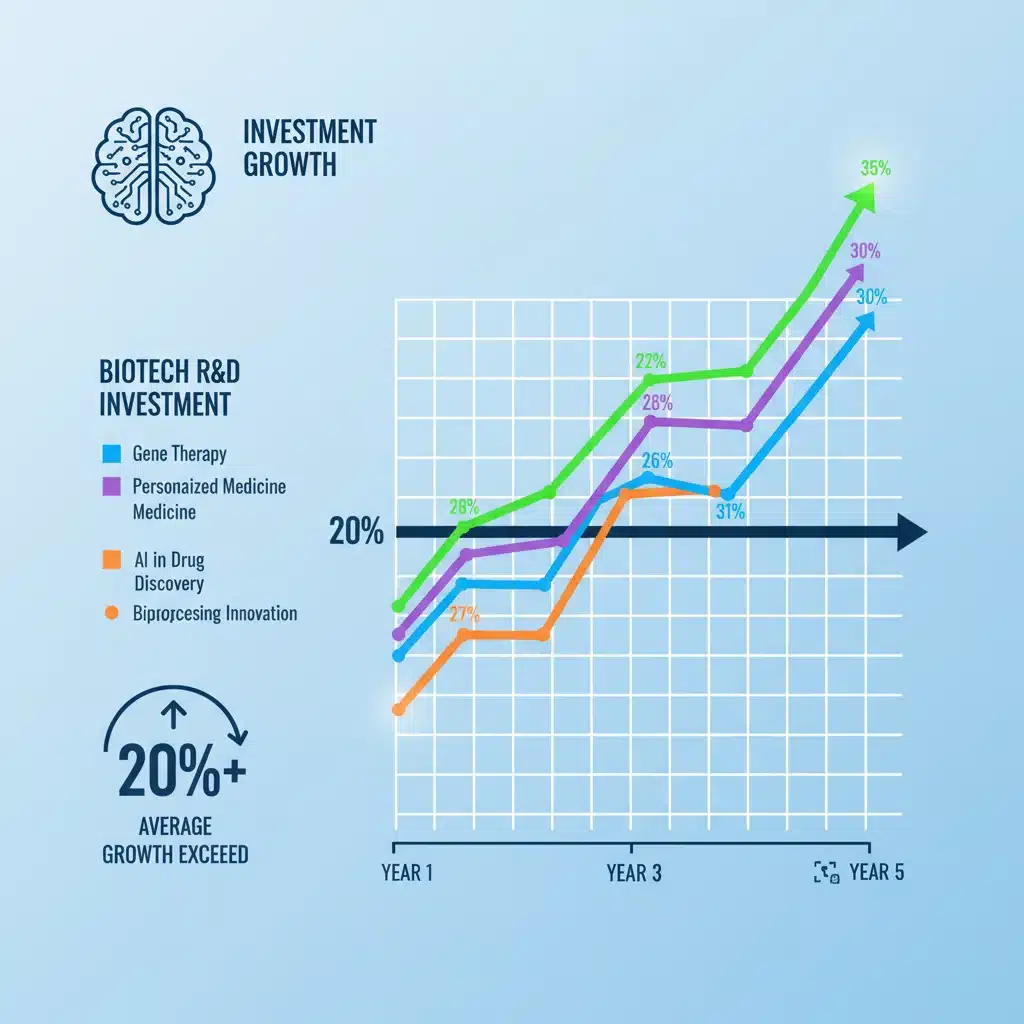
At its core, biotechnology is about discovery and application. This necessitates substantial and sustained investment in R&D. Companies that consistently dedicate a significant portion of their resources to R&D are often those at the forefront of scientific breakthroughs, developing novel therapies, diagnostics, and sustainable solutions. A 20% or higher year-over-year growth in R&D investment is not just a number; it’s a strong indicator of a company’s commitment to innovation, its belief in its pipeline, and its aggressive pursuit of market leadership.
This aggressive investment strategy is fueled by several factors. Firstly, the increasing complexity of biological systems requires more sophisticated and resource-intensive research methods. Secondly, competitive pressures within the biotech industry compel companies to constantly innovate to maintain an edge. Thirdly, a favorable regulatory environment in certain areas, coupled with increasing demand for personalized medicine and advanced treatments, creates lucrative opportunities that justify substantial R&D outlays. Understanding these drivers is crucial for anyone looking to comprehend the nuances of biotech R&D growth.
Anúncios
Why 20% R&D Growth Matters for Biotech Companies
When a biotech company demonstrates over 20% growth in its R&D budget, it signals a strategic pivot or an intensification of existing efforts. This level of increase often indicates:
- Expansion of Research Pipeline: More funds mean more projects, allowing companies to explore a wider range of therapeutic areas or develop multiple candidates for a single indication.
- Investment in Cutting-Edge Technologies: High growth in R&D often correlates with adoption of advanced technologies like CRISPR gene editing, AI-driven drug discovery platforms, or sophisticated bioinformatics tools.
- Talent Acquisition: A larger R&D budget enables companies to attract and retain top scientific talent, which is critical for groundbreaking research.
- Accelerated Clinical Trials: Increased funding can expedite the various phases of clinical trials, bringing potential treatments to market faster.
- Strategic Partnerships and Acquisitions: Companies with robust R&D spending are often attractive partners for collaborations or acquisition targets, further fueling their growth and innovation capabilities.
For investors, such companies represent high-growth potential, albeit with inherent risks associated with early-stage development. For industry observers, they are bellwethers for future trends and scientific advancements within the biotech sector.
Key Trends Driving Biotech R&D Investment in 2026
Several overarching trends are dictating where biotech companies are channeling their increased R&D investments. These trends are not isolated but often intersect, creating a rich ecosystem for innovation.
Personalized Medicine and Gene Therapy
The promise of personalized medicine, tailoring treatments to an individual’s genetic makeup, is becoming a reality. Gene therapies, once a distant dream, are now approved for various conditions, and the pipeline is robust. Companies investing heavily in this area are focusing on:
- CRISPR and Gene Editing Technologies: Refining precision and delivery methods for gene editing.
- Cellular Therapies: Developing advanced CAR-T cell therapies and other cell-based treatments for cancer and autoimmune diseases.
- Bioinformatics and AI: Utilizing big data and artificial intelligence to identify genetic markers and predict treatment responses.
The complexity and specificity of these treatments necessitate significant R&D, making this a prime area for companies exhibiting strong biotech R&D growth.
AI and Machine Learning in Drug Discovery
Artificial intelligence and machine learning are revolutionizing every stage of drug discovery and development. From identifying potential drug candidates to optimizing clinical trial design, AI is dramatically shortening timelines and increasing success rates. Biotech companies are pouring R&D funds into:
- In Silico Drug Design: Using AI to simulate molecular interactions and predict drug efficacy.
- Target Identification: Machine learning algorithms sifting through vast genomic and proteomic data to pinpoint disease targets.
- Biomarker Discovery: AI-powered analysis to uncover novel biomarkers for diagnostics and prognostics.
This integration of technology is a game-changer, and companies with high biotech R&D growth are at the forefront of this digital transformation.
Advanced Biomanufacturing and Synthetic Biology
Beyond drug development, biotech is impacting how we produce materials and food. Synthetic biology, the design and construction of new biological parts, devices, and systems, is opening doors to sustainable manufacturing and novel products. R&D in this space includes:
- Cell-Based Meat and Dairy: Developing scalable and efficient processes for cultured food products.
- Biofuels and Bioplastics: Engineering microorganisms to produce sustainable alternatives to fossil fuels and plastics.
- Biosensors and Diagnostics: Creating highly sensitive and specific biological sensors for environmental monitoring and disease detection.
The potential for these innovations to address global challenges is immense, attracting significant biotech R&D growth from forward-thinking companies.
Identifying Companies with Over 20% R&D Investment Growth
Pinpointing these high-growth biotech entities requires a meticulous examination of financial reports, investor presentations, and scientific publications. While specific company names will fluctuate, the methodology for identifying them remains consistent. Here’s how to approach this analysis:
Financial Statement Analysis
The primary source of information is a company’s financial statements, particularly the income statement and cash flow statement. Investors and analysts should look for:
- Year-over-Year R&D Expenditure: Calculate the percentage change in R&D spending from one fiscal year to the next. Focus on companies consistently showing growth above 20%.
- R&D as a Percentage of Revenue: While not directly indicating growth, a high and increasing ratio suggests a strong commitment to innovation.
- Cash Flow from Operations: Healthy cash flow indicates a company can internally fund its R&D, reducing reliance on external financing.
It’s important to differentiate between organic R&D growth and increases due to acquisitions, though both can be positive indicators if strategically sound.
Pipeline Strength and Clinical Trial Progress
A company’s R&D investment is only as good as the output it generates. Assess:
- Number and Diversity of Candidates: A robust pipeline across different therapeutic areas or indications reduces risk.
- Clinical Trial Phases: Progressing candidates through Phase I, II, and III trials is a strong sign of R&D effectiveness.
- Regulatory Approvals: While not a direct measure of R&D growth, successful approvals validate past investments and open doors for future revenue that can be reinvested.
Companies with a deep and advancing pipeline are often those making significant investments in biotech R&D growth.
Strategic Partnerships and Collaborations
Biotech innovation often thrives on collaboration. Companies with strong R&D are frequently sought after by larger pharmaceutical firms or academic institutions. Look for:
- Licensing Agreements: Out-licensing of intellectual property can validate a company’s research and provide non-dilutive funding.
- Joint Ventures: Collaborations on specific research projects can share risk and leverage complementary expertise.
- Academic Partnerships: Tapping into cutting-edge university research can accelerate discovery.
These partnerships can be a strong indicator that a company’s biotech R&D growth is yielding promising results that others want to be a part of.
Case Studies: Exemplars of Biotech R&D Growth (Hypothetical Examples for 2026)
While specific companies will emerge and shift, we can illustrate the characteristics of firms likely to show significant biotech R&D growth in 2026 through hypothetical examples:
GeneCure Therapeutics: Leading in Precision Gene Editing
Hypothetical Profile: GeneCure Therapeutics, a mid-cap biotech firm specializing in in vivo gene editing for rare genetic disorders. For the past three years, GeneCure has consistently reported over 25% year-over-year R&D expenditure growth. This surge is primarily directed towards refining their proprietary non-viral delivery systems for CRISPR-based therapies and expanding their pipeline into neurological and metabolic diseases.
R&D Focus: Their increased investment has allowed them to initiate two new Phase I/II clinical trials for previously untreatable conditions and to establish a new state-of-the-art biomanufacturing facility, ensuring control over their therapeutic production. They have also heavily invested in AI platforms for target identification and off-target effect prediction, significantly improving the safety profile of their candidates.
Impact: GeneCure’s aggressive biotech R&D growth strategy positions them as a potential leader in the precision gene editing space, attracting attention from major pharmaceutical partners looking to license their advanced delivery technology.
BioSynth Innovations: Pioneering Sustainable Bioproduction
Hypothetical Profile: BioSynth Innovations, a privately held startup backed by significant venture capital, focuses on synthetic biology applications for sustainable industrial chemicals and materials. Their R&D budget has seen an astounding 40% growth in 2025, projected to continue into 2026, as they scale up their bioreactor technology and optimize microbial strains for enhanced output.
R&D Focus: The substantial investment is being channeled into automation and robotics for high-throughput strain engineering, as well as process development for their bio-based plastics and specialty chemicals. They are also exploring novel enzyme discovery through metagenomics to unlock new synthetic pathways. Their R&D efforts are aimed at drastically reducing production costs to compete with petroleum-based counterparts.
Impact: BioSynth’s rapid biotech R&D growth indicates a strong belief in the commercial viability of their sustainable solutions, potentially disrupting traditional chemical manufacturing and offering environmentally friendly alternatives.
NeuroLink AI: Revolutionizing Neurodegenerative Drug Discovery
Hypothetical Profile: NeuroLink AI is a specialized biotech company leveraging advanced artificial intelligence and machine learning to accelerate drug discovery for neurodegenerative diseases like Alzheimer’s and Parkinson’s. Their R&D investment has grown by 30% annually, primarily in data science teams, high-performance computing infrastructure, and experimental validation labs.
R&D Focus: Their increased budget is enabling the development of sophisticated predictive models for disease progression, identification of novel therapeutic targets from vast datasets of patient omics data, and the screening of billions of compounds virtually. They are also investing in robotic wet labs to rapidly synthesize and test promising AI-generated candidates.
Impact: NeuroLink AI’s significant biotech R&D growth is positioning them to potentially overcome the historically high failure rates in neurodegenerative drug development, offering new hope for patients and substantial returns for early investors.

Challenges and Risks Associated with High R&D Growth
While robust R&D investment is a positive sign, it’s not without its challenges and risks. Investors and stakeholders must be aware of these factors:
High Burn Rate and Funding Needs
Aggressive R&D comes with a high burn rate. Companies with significant biotech R&D growth often require substantial capital, which can lead to frequent fundraising rounds, potentially diluting existing shareholders. The ability to secure continued funding is paramount for these companies.
Clinical Trial Failures
The drug development process is fraught with failure. Even with increased R&D, many promising candidates do not make it past clinical trials due to efficacy or safety concerns. A single late-stage trial failure can severely impact a company’s valuation and future prospects.
Intellectual Property (IP) Risks
Protecting novel discoveries is crucial in biotech. Companies with high R&D growth must continuously invest in robust IP strategies, including patent applications and legal defense, to safeguard their innovations from competitors.
Market Acceptance and Commercialization
Even successful therapies face challenges in market adoption. Pricing pressures, reimbursement issues, and competitive landscapes can hinder the commercial success of a breakthrough product. R&D investment must eventually translate into marketable and profitable solutions.
The Future Outlook for Biotech R&D Growth
Looking ahead to 2026 and beyond, the trajectory for biotech R&D growth appears strong. Several factors suggest a sustained period of innovation and investment:
- Global Health Challenges: The ongoing need for new treatments for infectious diseases, chronic conditions, and age-related ailments will continue to drive research.
- Technological Convergence: The synergy between biotechnology, AI, nanotechnology, and engineering will unlock previously unimaginable possibilities.
- Increased Public and Private Funding: Governments and private investors recognize the strategic importance of biotech, leading to continued capital infusion.
- Aging Global Population: The demographic shift towards an older population creates a growing demand for advanced healthcare solutions.
Companies that strategically navigate these factors, demonstrating consistent and impactful biotech R&D growth, will be the ones that define the next era of scientific advancement.
Conclusion: Investing in Innovation
The biotech sector in 2026 is a fertile ground for innovation, particularly among companies exhibiting over 20% R&D investment growth. These firms are not just spending more; they are investing strategically in the technologies and talent that will shape the future of medicine, sustainability, and beyond. While the path of innovation is never without risk, the potential rewards – both in terms of human benefit and financial returns – are substantial.
For investors, identifying these high-growth R&D companies requires diligence, a deep understanding of scientific trends, and an appreciation for the long-term nature of biotech development. For industry professionals and enthusiasts, observing these companies offers a glimpse into the cutting edge of scientific discovery. As we move further into the 21st century, the companies that prioritize and aggressively pursue biotech R&D growth will undoubtedly be the ones leading the charge towards a healthier, more sustainable future.