AI Integration Boosts US Business Productivity: A 3-Month Analysis

Anúncios
The Impact of AI Integration on US Business Productivity: A 3-Month Analysis of Early Adopters
In the rapidly evolving landscape of global commerce, Artificial Intelligence (AI) has emerged not merely as a technological advancement but as a transformative force reshaping the very fabric of business operations. The discourse around AI has shifted from theoretical potential to tangible implementation, with US businesses increasingly at the forefront of this integration. This article presents a comprehensive 3-month analysis of early AI adopters within the United States, meticulously examining the profound impact of AI integration on US business productivity. Our goal is to provide a granular view of the benefits reaped, the challenges encountered, and the strategic implications for enterprises navigating this new technological frontier.
The journey of AI integration is multifaceted, touching upon various aspects of an organization, from optimizing routine tasks to revolutionizing strategic decision-making. For early adopters, the initial three months are often a critical period, revealing immediate efficiencies and highlighting areas requiring further refinement. This analysis distills key findings from a diverse set of US businesses across different sectors, offering insights into how AI is not just changing how work is done, but fundamentally enhancing the output and efficiency of the American workforce.
Anúncios
Understanding the Landscape of AI Adoption in US Businesses
The embrace of AI by US businesses is a testament to the technology’s perceived value proposition. From Silicon Valley startups to established industrial giants, companies are investing heavily in AI solutions to gain a competitive edge. This proactive adoption is driven by a desire to automate repetitive tasks, extract actionable insights from vast datasets, enhance customer experiences, and foster innovation. The early adopters, in particular, are paving the way, demonstrating the practical applications and measurable returns on investment (ROI) that AI can deliver.
Our 3-month analysis focuses on a cohort of businesses that initiated significant AI integration projects within the last year. These companies represent a cross-section of industries, including finance, healthcare, manufacturing, retail, and technology services. The diversity of this sample allows for a robust examination of how AI impacts different operational contexts and business models. The initial phase of AI integration often involves proof-of-concept projects, pilot programs, and the deployment of AI tools for specific functions, such as customer service chatbots, predictive analytics for sales forecasting, or AI-powered automation in manufacturing.
Anúncios
The enthusiasm for AI is palpable, yet it is accompanied by a pragmatic understanding of the complexities involved. Companies are not merely deploying AI; they are strategically integrating it into their existing IT infrastructure and workflows, necessitating careful planning, significant investment in talent, and a culture open to technological change. This foundational understanding is crucial for appreciating the nuanced impact observed during our 3-month study of AI business productivity.
Quantifying Productivity Gains: A Deep Dive into Early Adopters
The most compelling aspect of AI integration for businesses is its potential to significantly boost productivity. Our 3-month analysis reveals several key areas where early adopters have experienced measurable improvements. These gains are not uniform across all sectors or applications but demonstrate a consistent trend towards enhanced operational efficiency and output.
Automation of Repetitive Tasks
One of the most immediate and widespread impacts of AI has been the automation of repetitive, manual tasks. In administrative functions, AI-powered tools are handling data entry, scheduling, and email management, freeing up human employees to focus on more complex and strategic activities. For example, a financial services firm in our study reported a 20% reduction in time spent on compliance documentation review thanks to AI-driven natural language processing (NLP) tools. This direct contribution to AI business productivity is a cornerstone of its appeal.
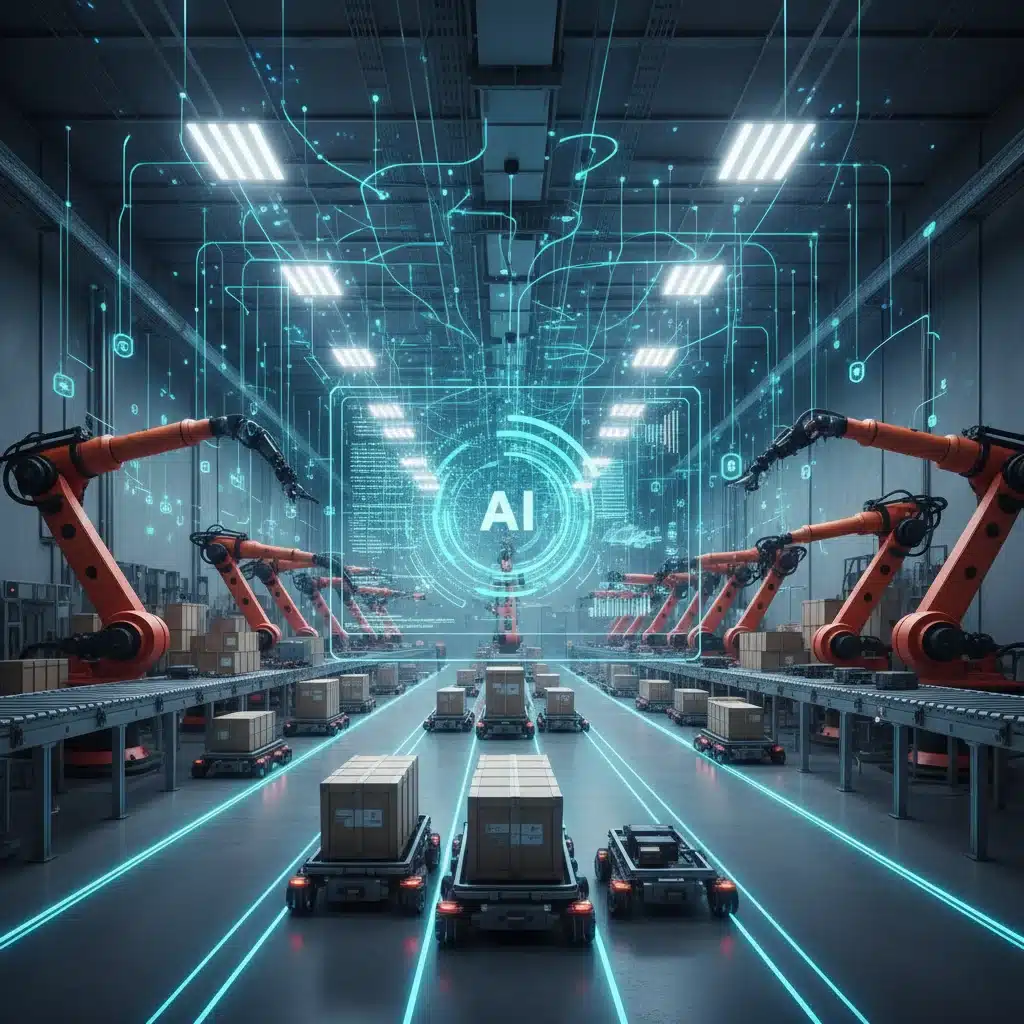
In manufacturing, robotic process automation (RPA) combined with AI has streamlined assembly lines, quality control, and inventory management. A manufacturing company specializing in automotive parts saw a 15% increase in production throughput and a 10% decrease in error rates within the three-month period, directly attributable to AI-powered predictive maintenance and automated quality checks. These efficiencies translate directly into cost savings and increased capacity.
Enhanced Data Analysis and Insights
AI’s ability to process and analyze vast quantities of data at speeds impossible for humans has revolutionized decision-making. Businesses are leveraging AI for predictive analytics, market trend forecasting, and customer behavior analysis. A retail giant in our cohort utilized AI to analyze purchase patterns and personalize product recommendations, leading to a 5% increase in conversion rates and a significant improvement in customer satisfaction metrics within the initial 90 days. This sophisticated use of AI for data insights is a powerful driver of AI business productivity.
Healthcare providers are using AI to analyze patient data, assisting in diagnosis, treatment planning, and even predicting disease outbreaks. One hospital system reported a faster turnaround time for diagnostic imaging analysis, enabling earlier intervention and better patient outcomes. The ability to derive actionable insights quickly and accurately is a critical factor in enhancing overall organizational effectiveness.
Improved Customer Experience and Engagement
AI-powered chatbots and virtual assistants are transforming customer service. These tools provide instant support, answer frequently asked questions, and route complex queries to human agents more efficiently. A telecommunications company observed a 25% reduction in average customer wait times and a 10% improvement in customer satisfaction scores after deploying an AI-driven chatbot for initial customer interactions. This not only improves the customer journey but also optimizes resource allocation within customer service departments, further contributing to AI business productivity.
Personalized marketing campaigns, driven by AI algorithms that understand individual customer preferences and behaviors, have also shown remarkable results. A software-as-a-service (SaaS) provider reported a substantial increase in lead generation and customer retention through AI-optimized engagement strategies.
Streamlined Operations and Supply Chain Management
Beyond individual tasks, AI is optimizing entire operational workflows and supply chains. Predictive analytics helps businesses anticipate demand fluctuations, optimize inventory levels, and prevent potential disruptions. A logistics company utilized AI to optimize delivery routes, resulting in a 12% reduction in fuel consumption and a 8% increase in on-time deliveries within the three-month observation period. This holistic approach to optimization significantly enhances AI business productivity across the entire value chain.
In agriculture, AI-powered sensors and drones are monitoring crop health, predicting yields, and optimizing irrigation, leading to more efficient resource utilization and higher crop outputs. These examples underscore the diverse applications and profound impact of AI on core business functions.

Challenges and Considerations for Early Adopters
While the benefits of AI integration are compelling, early adopters have also encountered a unique set of challenges. Understanding these hurdles is crucial for any business contemplating its own AI journey and for maximizing AI business productivity.
Data Quality and Availability
AI models are only as good as the data they are trained on. Many businesses struggle with poor data quality, siloed data sources, and insufficient data volumes. Cleaning, structuring, and integrating data from disparate systems proved to be a significant upfront investment for many companies in our study. A healthcare organization, for instance, spent the majority of its initial three months on data standardization before seeing substantial AI-driven benefits.
Talent Gap and Skill Development
The scarcity of AI talent, including data scientists, machine learning engineers, and AI strategists, remains a major impediment. Businesses often find it challenging to recruit and retain individuals with the necessary expertise. Furthermore, upskilling existing employees to work alongside AI tools requires significant investment in training programs. Several companies reported that the initial learning curve for their workforce impacted the pace of AI adoption and the realization of immediate AI business productivity gains.
Integration Complexities and Infrastructure
Integrating new AI systems with legacy IT infrastructure can be a complex and costly endeavor. Compatibility issues, security concerns, and the need for robust computing power often require substantial upgrades to existing systems. A manufacturing firm noted that the technical challenges of integrating AI into its decades-old operational technology (OT) systems were more significant than initially anticipated, requiring specialized vendor support.
Ethical Considerations and Bias
As AI becomes more pervasive, ethical considerations surrounding data privacy, algorithmic bias, and accountability come to the forefront. Businesses must ensure that their AI systems are fair, transparent, and compliant with evolving regulations. One financial institution faced scrutiny over potential biases in its AI-powered loan approval system, highlighting the importance of continuous monitoring and auditing of AI algorithms.
Cost of Implementation and Maintenance
The initial investment in AI technologies, including software licenses, hardware infrastructure, and talent acquisition, can be substantial. Beyond implementation, the ongoing costs of maintaining, updating, and fine-tuning AI models also need to be factored in. While the long-term ROI is often positive, the upfront financial commitment can be a barrier for some organizations, impacting the immediate perception of AI business productivity.
Future Outlook and Strategic Implications for US Businesses
The 3-month analysis of early AI adopters clearly indicates that AI is not a fleeting trend but a fundamental shift in how businesses operate. The insights gathered provide a roadmap for other US companies looking to embark on their own AI integration journeys and to harness the full potential of AI business productivity.
Continued Investment in AI Research and Development
To stay competitive, US businesses will need to continue investing in AI research and development, exploring new applications and refining existing ones. This includes collaborating with academic institutions, partnering with AI startups, and fostering internal innovation hubs. The pace of AI innovation is accelerating, and continuous engagement is key to leveraging cutting-edge solutions.
Focus on Data Governance and Quality
Recognizing that high-quality data is the lifeblood of effective AI, businesses must prioritize robust data governance strategies. This involves establishing clear policies for data collection, storage, security, and usage, ensuring data integrity and accessibility across the organization. A strong data foundation is paramount for maximizing AI business productivity.
Upskilling and Reskilling the Workforce
The human element remains critical in the age of AI. Companies must invest in comprehensive training programs to upskill their existing workforce, enabling employees to work effectively alongside AI tools. This includes developing AI literacy across all levels of the organization and fostering a culture of continuous learning. The goal is not to replace human workers but to augment their capabilities, enhancing overall AI business productivity.
Ethical AI Development and Deployment
As AI becomes more integrated into critical business functions, ethical considerations will only grow in importance. Businesses must adopt responsible AI practices, ensuring fairness, transparency, and accountability in their AI systems. This includes implementing robust auditing mechanisms and establishing clear ethical guidelines for AI development and deployment. Building trust in AI is essential for its long-term success and societal acceptance.
Strategic Partnerships and Ecosystem Development
No single company can master all aspects of AI. Strategic partnerships with AI vendors, cloud providers, and specialized consultancies will be crucial for successful integration. Building a robust AI ecosystem allows businesses to leverage external expertise, access cutting-edge tools, and scale their AI initiatives more effectively, thereby boosting AI business productivity on a larger scale.
Conclusion
The 3-month analysis of early AI adopters in US businesses paints a clear picture: AI integration is a powerful catalyst for enhanced productivity. While challenges such as data quality, talent gaps, and integration complexities exist, the measurable gains in automation, data analysis, customer experience, and operational efficiency are undeniable. For US businesses looking to thrive in the competitive global market, embracing AI is no longer an option but a strategic imperative. The insights from these early adopters provide invaluable lessons, highlighting the importance of strategic planning, continuous investment in talent and technology, and a steadfast commitment to ethical AI practices. As AI continues to evolve, its impact on US business productivity will only deepen, ushering in an era of unprecedented efficiency, innovation, and growth.
The journey of AI integration is continuous, demanding adaptability and foresight. By learning from the experiences of early adopters, other US businesses can navigate this transformative period more effectively, unlocking the full potential of AI to drive sustainable competitive advantage and reshape the future of work. The future of AI business productivity in the US is bright, promising a landscape of smarter operations, more informed decisions, and ultimately, a more prosperous economy.