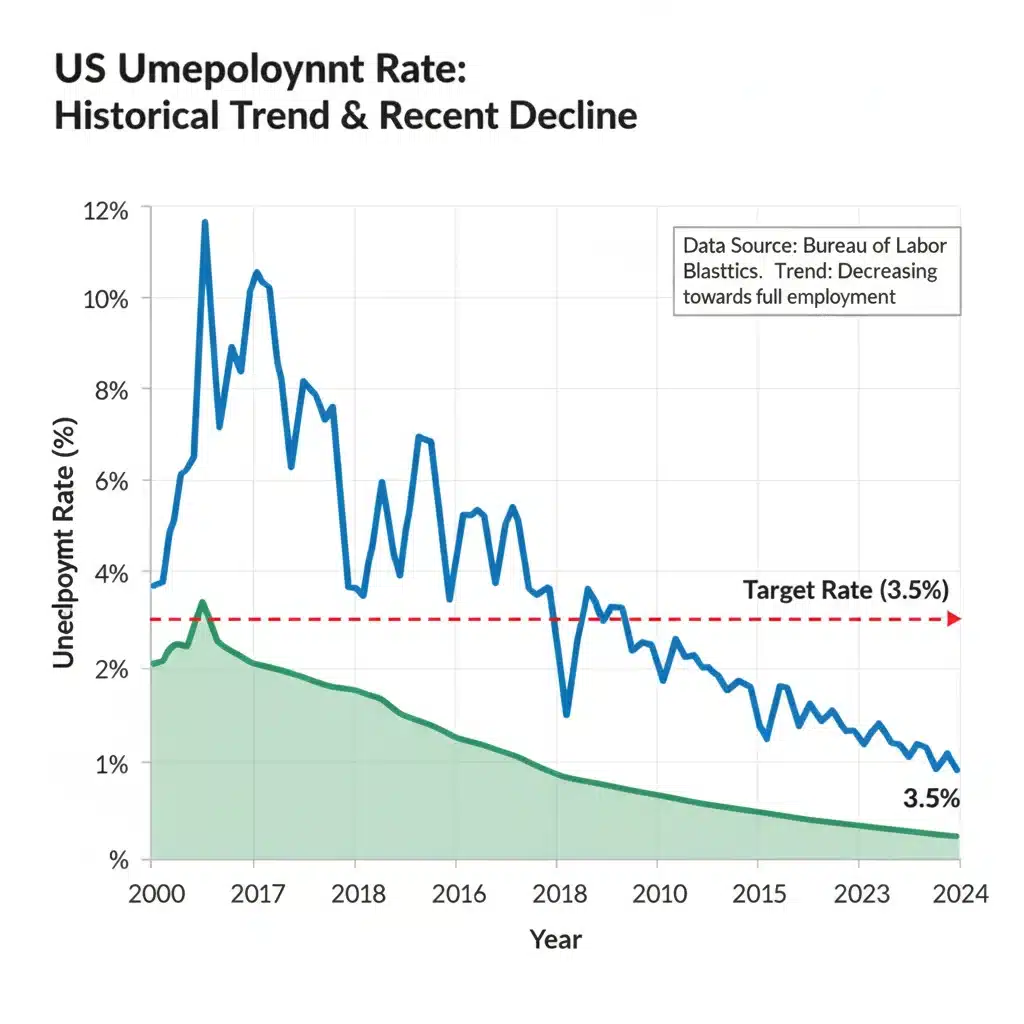
The United States economy has been on a remarkable trajectory, characterized by a persistently low unemployment rate that has hovered around 3.5% for an extended period. This robust US Labor Market signifies a period of significant opportunity and unique challenges for businesses across all sectors. Understanding the nuances of this tight labor market is not just an academic exercise; it’s a strategic imperative for any organization aiming to thrive, innovate, and retain top talent. This comprehensive article delves deep into the current state of the US labor market, explores the underlying factors contributing to the 3.5% unemployment rate, and, most importantly, provides actionable insights into how US businesses are effectively adapting to and leveraging these dynamic conditions.
Anúncios
A 3.5% unemployment rate is historically low, indicating that virtually everyone who wants a job can find one. While this is excellent news for job seekers and a sign of a healthy economy, it simultaneously creates a highly competitive environment for employers. Companies are no longer just competing on product or service; they are fiercely competing for human capital. This paradigm shift demands a re-evaluation of traditional recruitment, retention, and workforce development strategies. Businesses must become more agile, innovative, and employee-centric to succeed in this landscape. The implications extend beyond merely filling open positions; they touch upon wage growth, benefits packages, employee engagement, skill development, and the overall organizational culture.
This article will guide you through the complexities of the current US Labor Market, offering a panoramic view of the trends, challenges, and successful adaptation strategies. We will examine the economic forces at play, the demographic shifts influencing the workforce, and the technological advancements that are reshaping the nature of work itself. By the end of this read, you will have a clearer understanding of how US businesses are not just surviving but thriving in an environment defined by exceptionally low unemployment.
The Current State of the US Labor Market: A Deep Dive into 3.5% Unemployment
The 3.5% unemployment rate is more than just a statistic; it reflects a vibrant and dynamic economic environment. To fully grasp its significance, we must unpack what it means for various stakeholders. For job seekers, it translates to increased bargaining power, better wages, and a wider array of opportunities. For employers, it means a scarcity of readily available talent, necessitating more proactive and creative approaches to attraction and retention. This low unemployment rate is a testament to sustained economic growth, robust consumer demand, and, in many sectors, a rebound from previous economic downturns.
Anúncios
Several key factors contribute to this historically low rate. Firstly, strong economic policies and fiscal stimulus measures have played a role in bolstering demand for goods and services, which in turn fuels the need for labor. Secondly, the lingering effects of the pandemic, while initially disruptive, have also led to a significant reallocation of labor, with some sectors experiencing rapid growth and others facing ongoing adjustments. Thirdly, demographic shifts, such as an aging population and changing participation rates, also play a subtle but important role in shaping the labor supply. Understanding these underlying drivers is crucial for businesses to anticipate future trends and formulate effective strategies.
The impact of a tight US Labor Market is multifaceted. Wage growth, for instance, tends to accelerate as employers compete for talent, which can be a double-edged sword: good for workers but potentially challenging for businesses’ profit margins if not managed effectively. Furthermore, the demand for specific skills intensifies, leading to skill gaps that businesses must address through training and development. The psychological impact on employees is also notable; a tight labor market often empowers workers to seek better conditions, work-life balance, and career advancement opportunities, placing greater pressure on employers to create attractive work environments.
Challenges Faced by US Businesses in a Tight Labor Market
While a low unemployment rate signals a strong economy, it also presents a unique set of challenges for US businesses. The most prominent challenge is undoubtedly talent acquisition. With fewer available candidates, companies must work harder and smarter to attract qualified individuals. This often means investing more in recruitment marketing, enhancing employer branding, and streamlining the hiring process to be more efficient and appealing to candidates.
Talent Scarcity and Skill Gaps
The scarcity of talent is particularly acute in industries requiring specialized skills, such as technology, healthcare, and skilled trades. Businesses are finding it increasingly difficult to fill positions that demand specific technical expertise or advanced qualifications. This phenomenon, known as the skill gap, necessitates a strategic response. Companies must either invest heavily in upskilling and reskilling their existing workforce or compete aggressively for a limited pool of external talent.
Wage Inflation and Compensation Pressure
Another significant challenge is wage inflation. As competition for talent intensifies, employers are often forced to offer higher salaries and more attractive benefits packages to attract and retain employees. While beneficial for workers, this can squeeze profit margins for businesses, especially smaller enterprises or those in industries with traditionally lower margins. Managing compensation pressure requires a delicate balance between remaining competitive and maintaining financial sustainability. Businesses need to conduct thorough market analyses to ensure their compensation structures are aligned with industry standards and employee expectations.
Employee Retention and Engagement
In a tight US Labor Market, employee retention becomes paramount. When job opportunities are abundant, employees are more likely to explore other options if they feel undervalued, underpaid, or disengaged. Businesses must therefore prioritize creating a positive work environment, fostering a strong company culture, and offering opportunities for career growth and development. High employee turnover can be incredibly costly, impacting productivity, morale, and the overall success of the organization. Effective retention strategies go beyond just salary; they encompass recognition, professional development, work-life balance initiatives, and a sense of belonging.
Burnout and Workforce Strain
A tight labor market can also lead to increased workload and stress for existing employees. With fewer hands to do the work, those who remain might be stretched thin, leading to burnout and decreased productivity. Businesses must be mindful of this potential strain and implement strategies to support employee well-being, such as flexible work arrangements, mental health resources, and fair workload distribution. Ignoring these issues can lead to a vicious cycle of turnover and further strain on the remaining workforce.
How US Businesses Are Adapting to the 3.5% Unemployment Rate
Despite the challenges, many US businesses are demonstrating remarkable adaptability and innovation in navigating the tight US Labor Market. Their strategies often involve a multi-pronged approach that addresses recruitment, retention, and workforce development simultaneously. These adaptations are not just reactive; they are often proactive measures designed to build resilient and agile workforces for the future.
Rethinking Recruitment Strategies
Traditional recruitment methods are often insufficient in a 3.5% unemployment environment. Businesses are adopting more creative and aggressive approaches. This includes leveraging social media for recruitment, implementing sophisticated applicant tracking systems (ATS), and utilizing data analytics to identify optimal talent pools. Employee referral programs are also gaining traction, as they often yield high-quality candidates who are a good cultural fit. Furthermore, companies are expanding their search beyond traditional geographical boundaries, embracing remote work opportunities to tap into a wider talent pool.
Investing in Employee Development and Upskilling
Recognizing the prevalence of skill gaps, many businesses are making significant investments in their existing workforce. Internal training programs, tuition reimbursement, certifications, and mentorship initiatives are becoming commonplace. Upskilling and reskilling employees not only addresses immediate skill shortages but also boosts employee morale and loyalty, as it demonstrates a commitment to their professional growth. This approach transforms employees into valuable, long-term assets, reducing the need for constant external recruitment in a competitive market.
Enhancing Compensation and Benefits Packages
While not the only factor, competitive compensation remains crucial. Businesses are not only raising base salaries but also enriching their benefits packages. This includes offering comprehensive health insurance, retirement plans, paid time off, and increasingly, unique perks such as student loan repayment assistance, wellness programs, and childcare support. The trend is towards holistic compensation packages that address employees’ financial, physical, and mental well-being, making the overall offer more attractive in a tight market.
Embracing Flexibility and Work-Life Balance
The demand for flexibility has surged, particularly in the post-pandemic era. Businesses that offer remote work options, hybrid models, flexible hours, and compressed workweeks are often more successful in attracting and retaining talent. Acknowledging the importance of work-life balance is no longer a perk but a necessity. Companies are realizing that empowering employees to manage their personal and professional lives effectively leads to higher job satisfaction, increased productivity, and reduced turnover.

Fostering a Positive Company Culture and Employee Engagement
A strong, positive company culture is a powerful differentiator in a competitive US Labor Market. Businesses are actively working to create inclusive, supportive, and engaging environments where employees feel valued and heard. This involves transparent communication, opportunities for feedback, recognition programs, and initiatives that promote diversity, equity, and inclusion (DEI). High employee engagement translates to greater productivity, lower absenteeism, and a stronger desire to remain with the organization.
Leveraging Technology and Automation
To mitigate the impact of labor shortages, some businesses are strategically investing in technology and automation. Automating repetitive or low-skill tasks can free up existing employees to focus on higher-value activities, improving overall efficiency and reducing the strain on the workforce. While not a replacement for human talent, automation can be a valuable tool in optimizing resource allocation and addressing specific labor challenges. This also presents an opportunity to reskill workers into roles that manage and interact with these new technologies.
Long-Term Implications and Future Outlook for the US Labor Market
The current state of the US Labor Market, characterized by a 3.5% unemployment rate, is likely to have lasting implications for how businesses operate and how individuals pursue their careers. These shifts are not temporary adjustments but rather fundamental changes that will shape the economic landscape for years to come. Understanding these long-term implications is crucial for strategic planning and sustainable growth.
Continued Focus on Employee-Centric Policies
The power shift towards employees, driven by labor scarcity, is expected to continue. Businesses will need to maintain and even enhance their employee-centric policies, focusing on well-being, flexibility, and career development. Companies that fail to adapt to these evolving employee expectations risk falling behind in the competition for talent. This means that HR departments will continue to play a more strategic role, becoming central to business success rather than merely administrative functions.
The Evolution of Work Models
Hybrid and remote work models are likely to become more entrenched. While some companies may push for a return to full-time office work, the flexibility offered by these models is a significant draw for many employees. Businesses that can effectively manage and integrate these diverse work arrangements will have a distinct advantage in attracting and retaining a broader talent pool. This also necessitates investments in robust technological infrastructure and effective communication tools to ensure seamless collaboration across distributed teams.
Persistent Demand for Skilled Labor
The demand for skilled labor, particularly in technology, green energy, and specialized healthcare, is expected to remain high. This will put continued pressure on educational institutions and businesses to provide relevant training and upskilling opportunities. The concept of lifelong learning will become even more critical, as individuals will need to continuously adapt their skills to remain competitive in an evolving job market. Governments and private sectors will likely collaborate more closely to address these critical skill gaps.
Automation and AI Integration
The integration of automation and artificial intelligence (AI) into various industries will accelerate. This will lead to a redefinition of job roles, with some tasks being fully automated and others requiring human oversight and collaboration with AI systems. While concerns about job displacement exist, the more likely scenario is a transformation of roles, requiring workers to develop new skills related to AI management, data analysis, and complex problem-solving. Businesses must strategically plan for this integration, ensuring their workforce is prepared for the jobs of the future.
Increased Focus on Diversity, Equity, and Inclusion (DEI)
DEI initiatives will continue to be a priority, not just for ethical reasons but also as a strategic business imperative. A diverse workforce brings a wider range of perspectives, fosters innovation, and enhances problem-solving capabilities. In a tight labor market, actively recruiting from diverse talent pools also expands the available candidate base. Companies that authentically embrace DEI will be more attractive to a broader range of job seekers and better positioned for long-term success.
Strategies for Businesses to Thrive in the Current US Labor Market
Thriving in a US Labor Market with 3.5% unemployment requires more than just reactive measures; it demands a proactive and comprehensive strategy. Businesses that can successfully navigate this environment will not only secure the talent they need but also build a resilient and engaged workforce that drives innovation and growth.
Build a Strong Employer Brand
In a competitive market, your company’s reputation as an employer is critical. Invest in building a strong employer brand that highlights your unique culture, values, and employee benefits. Use social media, employee testimonials, and career pages to showcase what makes your organization a great place to work. A positive employer brand can significantly reduce recruitment costs and attract passive candidates.
Prioritize Candidate Experience
The hiring process itself is a crucial touchpoint. Ensure a positive candidate experience from application to onboarding. Be responsive, transparent, and respectful of candidates’ time. A streamlined, efficient, and personalized hiring process can make a significant difference in securing top talent, especially when candidates have multiple offers.
Invest in Continuous Learning and Development
To combat skill gaps and improve retention, establish robust programs for continuous learning and development. Offer opportunities for employees to acquire new skills, pursue certifications, and advance their careers within the organization. This not only benefits the company by having a highly skilled workforce but also boosts employee morale and loyalty.
Foster a Culture of Recognition and Appreciation
Employees want to feel valued. Implement programs that recognize and reward employees for their contributions. This can range from formal awards to informal gestures of appreciation. A culture of recognition significantly enhances employee engagement and reduces the likelihood of turnover in a tight labor market.
Leverage Data Analytics for Workforce Planning
Utilize data analytics to gain insights into workforce trends, identify potential skill shortages, and optimize recruitment and retention strategies. Data can help businesses make informed decisions about compensation, training needs, and future staffing requirements, allowing for more strategic workforce planning.
Explore Non-Traditional Talent Pools
Look beyond traditional recruitment channels. Consider hiring individuals with non-traditional backgrounds, offering apprenticeships, or partnering with vocational schools and community colleges. Explore opportunities to hire individuals returning to the workforce, veterans, or those with disabilities. Tapping into diverse talent pools can uncover valuable skills and perspectives that might otherwise be overlooked.
Optimize Onboarding Processes
A strong onboarding process is crucial for new hire retention. Ensure that new employees feel welcomed, supported, and quickly integrated into the team and culture. Provide clear expectations, necessary training, and mentorship to help them succeed in their roles. Effective onboarding can significantly reduce early turnover.
Conclusion: Navigating the Future of the US Labor Market
The US Labor Market, with its remarkably low 3.5% unemployment rate, presents both significant opportunities and formidable challenges for businesses. While the competition for talent is intense, companies that embrace innovative strategies are not just surviving but thriving. The key lies in understanding the evolving landscape, adapting recruitment and retention efforts, investing in workforce development, and fostering a positive, employee-centric culture.
As we look to the future, the trends suggest a continued emphasis on flexibility, skill development, and the strategic integration of technology. Businesses that are agile, forward-thinking, and committed to their people will be best positioned to navigate the complexities of a tight labor market and emerge stronger. The current economic climate demands a proactive and holistic approach to human capital management, recognizing that a motivated, skilled, and engaged workforce is the ultimate driver of sustained success in the modern economy. By continuously monitoring trends, listening to employee needs, and embracing innovation, US businesses can not only adapt but also lead in this dynamic era of low unemployment.