
Navigating the New 2026 Tax Brackets: 7 Strategies to Optimize Your Personal Income Tax Savings
As the calendar pages turn, so too do the complexities of our financial lives, especially when it comes to taxes. With 2026 on the horizon, understanding the potential shifts in the 2026 tax brackets is not just a matter of compliance, but a critical component of savvy financial planning. For many, tax season brings a mixture of dread and confusion, but with proactive strategies, it can become an opportunity for significant savings. This comprehensive guide aims to demystify the upcoming tax landscape, focusing on the changes to the 2026 tax brackets and providing you with seven actionable strategies to optimize your personal income tax savings.
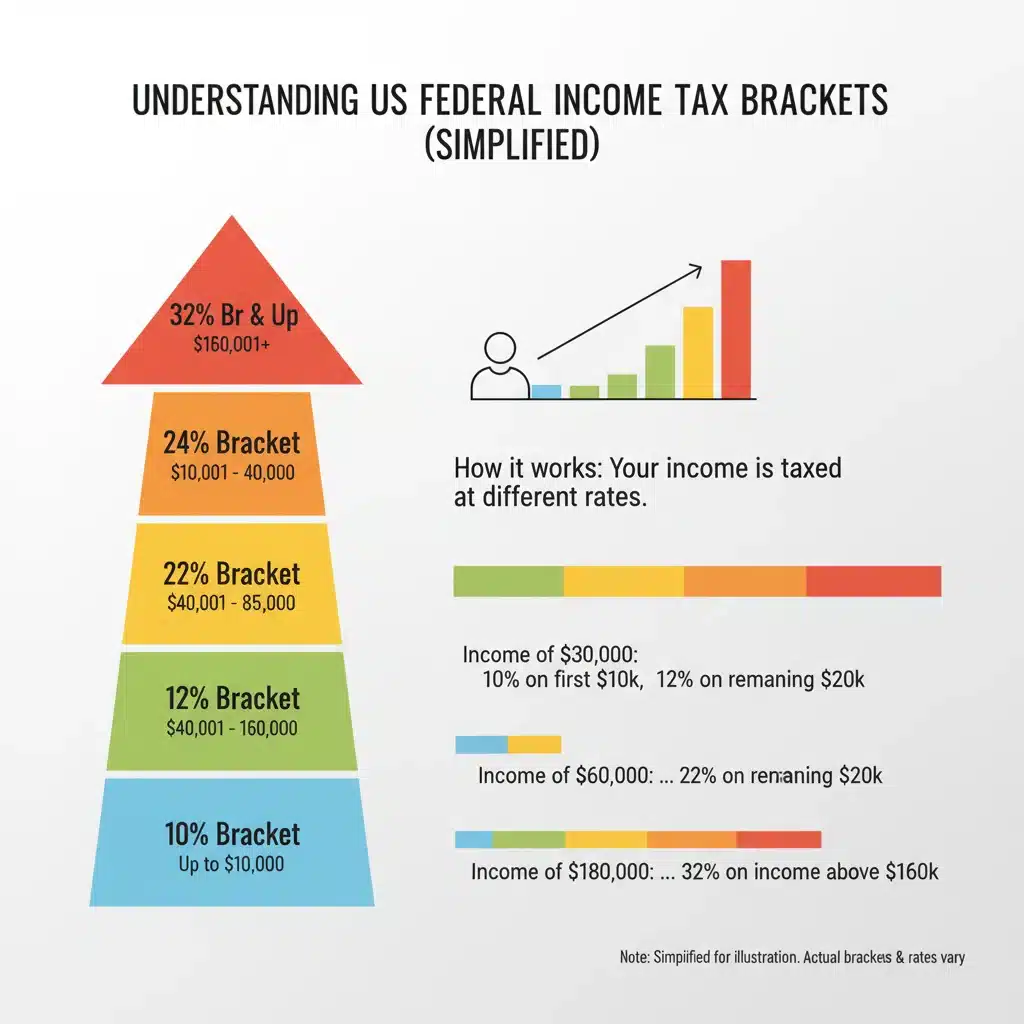
The federal income tax system in the United States is progressive, meaning different portions of your income are taxed at different rates. These rates are organized into what are known as tax brackets. While the core structure of these brackets often remains consistent year-to-year, the income thresholds that define them, along with certain deductions and credits, are subject to annual adjustments due to inflation and legislative changes. The year 2026 is particularly significant as it marks the expiration of several provisions from the Tax Cuts and Jobs Act (TCJA) of 2017, which could lead to notable alterations in the tax brackets and other key tax parameters. Preparing for these potential changes now is paramount to safeguarding your financial well-being.
Anúncios
Our goal is to equip you with the knowledge and tools to not only understand the 2026 tax brackets but to leverage that understanding into tangible tax savings. From maximizing retirement contributions to strategically managing investments, each strategy presented here is designed to be practical and impactful. Let’s dive into how you can effectively navigate the evolving tax environment and ensure you’re not leaving money on the table.
Understanding the 2026 Tax Bracket Landscape
Before we delve into specific strategies, it’s crucial to grasp the foundational elements of the 2026 tax brackets. Although the official 2026 tax bracket figures will be released closer to the end of 2025, we can anticipate the general framework and potential adjustments based on current tax law and economic projections. The seven federal income tax brackets (10%, 12%, 22%, 24%, 32%, 35%, and 37%) are expected to remain, but the income ranges for each bracket are likely to be adjusted for inflation. More importantly, the expiration of certain TCJA provisions could revert some marginal tax rates to pre-TCJA levels for higher earners, and could also impact the standard deduction and various itemized deduction limitations.
Anúncios
For individuals and married couples, understanding where your income falls within these brackets is the first step in effective tax planning. Your taxable income is your gross income minus deductions. It’s important to remember that only the portion of your income that falls within a specific bracket is taxed at that bracket’s rate. This progressive system means that even if you move into a higher tax bracket, only the income above the previous bracket’s threshold is taxed at the higher rate, not your entire income. This nuance is often misunderstood but is fundamental to understanding how to optimize your tax position.
Staying informed about these potential changes is not just for tax professionals; it’s for anyone who wants to manage their personal finances effectively. The strategies we will discuss are evergreen principles, but their application will be particularly pertinent given the anticipated shifts in the 2026 tax brackets. Being prepared means you can make informed decisions about your income, investments, and expenses, ultimately leading to greater financial security.
Key Considerations for the 2026 Tax Year
Several factors will influence the exact structure of the 2026 tax brackets and associated tax rules. Inflation adjustments, as mandated by law, will likely increase the income thresholds for each bracket, potentially pushing some taxpayers into lower brackets or at least preventing them from moving into higher ones due to cost-of-living increases. However, the expiration of TCJA provisions could counteract some of these inflationary benefits, particularly for higher-income individuals.
Another significant consideration is the potential for legislative action. While the current tax law dictates the expiration of TCJA provisions, future legislative efforts could extend, modify, or even replace these provisions. This uncertainty underscores the importance of flexible tax planning. Consulting with a qualified financial advisor or tax professional is always recommended to get personalized advice tailored to your specific financial situation and to stay abreast of the latest legislative developments.
Strategy 1: Maximize Retirement Contributions
One of the most effective and often overlooked strategies for reducing your taxable income and optimizing your position within the 2026 tax brackets is to maximize your contributions to tax-advantaged retirement accounts. This includes 401(k)s, 403(b)s, Traditional IRAs, and potentially SEP IRAs or SIMPLE IRAs if you are self-employed.
Contributions to these accounts are typically made with pre-tax dollars, meaning they reduce your adjusted gross income (AGI) for the current tax year. A lower AGI can not only reduce your current tax liability but can also impact your eligibility for certain tax credits and deductions that are AGI-dependent. Furthermore, the money grows tax-deferred until withdrawal in retirement, allowing for compounding growth without annual tax drag.
For example, if you contribute $22,500 to your 401(k) (the 2023 limit, which is likely to increase by 2026 due to inflation) and you are in the 24% tax bracket, you effectively save $5,400 in taxes in the current year. This is a direct reduction in your tax bill and a significant step towards long-term financial security. Don’t forget employer matching contributions – these are essentially free money and further amplify the benefits of retirement savings.
Strategy 2: Utilize Health Savings Accounts (HSAs)
For those enrolled in a high-deductible health plan (HDHP), a Health Savings Account (HSA) offers a triple tax advantage that is hard to beat. Contributions are tax-deductible (reducing your AGI), the money grows tax-free, and withdrawals for qualified medical expenses are also tax-free. This makes HSAs an incredibly powerful tool for both healthcare savings and long-term investment, especially when considering the 2026 tax brackets.
Think of an HSA as an investment account with unparalleled tax benefits. If you don’t use the funds for medical expenses, they can continue to grow and be used in retirement for any purpose, albeit with ordinary income tax if not used for qualified medical expenses after age 65. This flexibility, combined with the immediate tax deduction, makes HSAs a must-consider for eligible individuals looking to optimize their tax situation.
Maximizing your HSA contributions can significantly reduce your taxable income. For instance, if the individual contribution limit for 2026 is, say, $4,150 (projected from 2024 limits), and you contribute the maximum while in the 22% tax bracket, you save over $900 in taxes. Over years, these savings compound, making a substantial difference to your overall financial health.
Strategy 3: Strategic Tax-Loss Harvesting
For investors, strategic tax-loss harvesting is a sophisticated yet effective way to offset capital gains and even a portion of ordinary income, thereby reducing your overall tax burden, particularly as the 2026 tax brackets might shift. This strategy involves selling investments at a loss to offset capital gains realized from other investments. If your capital losses exceed your capital gains, you can use up to $3,000 of the remaining loss to offset your ordinary income each year.
Any unused capital losses can be carried forward indefinitely to offset future capital gains or ordinary income. This strategy is particularly valuable in volatile market conditions or when you have realized significant gains from other investments. It requires careful planning and adherence to IRS rules, such as the wash-sale rule, which prevents you from buying a substantially identical security within 30 days before or after the sale.
By actively managing your investment portfolio with tax efficiency in mind, you can minimize the tax impact of your investment gains, keeping more of your returns working for you. This becomes even more critical if the capital gains tax rates are adjusted or if your income pushes you into a higher bracket in 2026, making the offset of losses even more valuable.
Strategy 4: Optimize Itemized Deductions vs. Standard Deduction
The Tax Cuts and Jobs Act significantly increased the standard deduction, leading many taxpayers to opt for it over itemizing. However, with the potential expiration of TCJA provisions in 2026, or simply with changes in your personal financial situation, it’s crucial to re-evaluate whether itemizing deductions could be more beneficial for you. The choice between the standard deduction and itemizing depends on your specific circumstances and the aggregate amount of your eligible itemized deductions.
Common itemized deductions include state and local taxes (SALT, capped at $10,000 under TCJA, which may change), mortgage interest, charitable contributions, and certain medical expenses exceeding a percentage of your AGI. As 2026 approaches, monitor any legislative discussions around these deductions. If the SALT cap is adjusted or removed, or if other deduction limits change, itemizing could become a more attractive option for a wider range of taxpayers.
To make an informed decision, keep meticulous records of all potential deductible expenses throughout the year. At tax time, compare your total itemized deductions against the standard deduction for your filing status. Choosing the higher of the two will directly reduce your taxable income and consequently, your tax liability within the 2026 tax brackets. This is a foundational step in personal tax planning that should not be overlooked.
Strategy 5: Strategic Charitable Giving
Charitable contributions offer a dual benefit: they support causes you care about and can provide a tax deduction. For those who itemize, cash contributions to qualified charities can be deducted, often up to 60% of your AGI. Appreciated assets, such as stocks or mutual funds held for more than a year, can be even more tax-efficient. By donating appreciated securities, you can deduct the fair market value of the assets and avoid paying capital gains tax on the appreciation.
Consider a Donor-Advised Fund (DAF) for a highly effective charitable giving strategy. A DAF allows you to make a charitable contribution, receive an immediate tax deduction, and then recommend grants to your favorite charities over time. This is particularly useful if you have a high-income year and want to front-load your charitable deductions, even if you plan to distribute the funds to charities over several years. This strategy can help you manage your taxable income and stay within optimal 2026 tax brackets.
Another often-overlooked strategy for individuals aged 70½ or older is the Qualified Charitable Distribution (QCD) from an IRA. A QCD allows you to directly transfer up to $100,000 annually from your IRA to a qualified charity. This distribution counts towards your Required Minimum Distribution (RMD) but is not included in your taxable income, which can be immensely beneficial for managing your AGI and avoiding higher tax brackets.
Strategy 6: Education Tax Credits and Deductions
Investing in education, whether for yourself, your spouse, or your dependents, can come with significant tax benefits. The American Opportunity Tax Credit (AOTC) and the Lifetime Learning Credit (LLC) are two primary tax credits that can directly reduce your tax liability. The AOTC offers a maximum annual credit of $2,500 per eligible student for the first four years of higher education, while the LLC provides up to $2,000 per tax return for undergraduate, graduate, or professional degree courses.
Beyond credits, you might also be eligible for deductions related to education, such as the student loan interest deduction, which allows you to deduct up to $2,500 in student loan interest paid annually. While not as impactful as a credit, a deduction still lowers your taxable income. Additionally, 529 plans, while not offering a federal tax deduction for contributions, provide tax-free growth and tax-free withdrawals for qualified education expenses. Many states also offer a tax deduction or credit for contributions to their 529 plans.
Understanding and utilizing these education-related tax benefits is crucial, especially if you or your family members are pursuing higher education. These can significantly reduce your tax burden and help you optimize your financial position relative to the 2026 tax brackets. Ensure you meet all eligibility requirements and keep thorough records of education expenses.

Strategy 7: Proactive Financial Planning and Professional Guidance
The most overarching and perhaps most critical strategy for navigating the 2026 tax brackets is proactive financial planning and, when necessary, seeking professional guidance. Tax laws are complex and constantly evolving. What works one year might not be the most advantageous strategy the next. A comprehensive financial plan considers your income, expenses, assets, liabilities, and long-term goals, integrating tax efficiency into every aspect.
Working with a qualified financial advisor or tax professional can provide invaluable insights. They can help you understand the nuances of the 2026 tax brackets as they become clearer, identify personalized deduction and credit opportunities, and structure your investments and savings in the most tax-efficient manner. They can also assist with more advanced strategies such as Roth conversions, managing capital gains, and estate planning, all of which have significant tax implications.
Furthermore, staying informed about legislative changes is paramount. Subscribe to reputable financial news sources, attend webinars, and regularly review updates from the IRS. This proactive approach ensures you’re never caught off guard by new regulations or changes to existing ones. Remember, tax planning isn’t a once-a-year event; it’s an ongoing process that requires continuous attention and adaptation.
The Importance of Roth Conversions
A Roth conversion involves moving pre-tax money from a traditional IRA or 401(k) into a Roth account. While you pay income tax on the converted amount in the year of conversion, all future qualified withdrawals from the Roth account are tax-free. This strategy can be particularly powerful if you anticipate being in a higher tax bracket in retirement than you are currently. If the 2026 tax brackets suggest that your future tax rates will be higher due to legislative changes or increased income, a Roth conversion could be a smart move to lock in current tax rates.
However, Roth conversions require careful analysis. The immediate tax hit can be substantial, so it’s essential to have funds available to pay the taxes without dipping into the converted amount. A financial advisor can help you determine if a Roth conversion makes sense for your specific situation and how to execute it most efficiently to minimize the impact on your current year’s tax liability and position within the 2026 tax brackets.
Conclusion: Empowering Your 2026 Tax Strategy
The prospect of new 2026 tax brackets and the expiration of key tax provisions might seem daunting, but with a well-thought-out strategy, you can turn potential challenges into opportunities for significant personal income tax savings. By proactively maximizing retirement contributions, utilizing HSAs, engaging in tax-loss harvesting, optimizing deductions, planning charitable giving, leveraging education benefits, and seeking professional guidance, you can build a robust financial plan that withstands the test of changing tax landscapes.
Remember, the key to successful tax optimization is not just about reacting to changes but anticipating them and implementing strategies well in advance. Start reviewing your financial situation today, consult with experts, and educate yourself on the evolving tax environment. The effort you put in now will pay dividends when it comes to keeping more of your hard-earned money and achieving your long-term financial goals. Don’t let the 2026 tax brackets catch you off guard; instead, empower yourself with knowledge and action.
The financial world is dynamic, and tax laws are a significant part of that dynamism. By embracing these seven strategies, you are not just preparing for the 2026 tax year; you are cultivating a mindset of continuous financial vigilance and optimization that will serve you well for years to come. Take control of your tax future, and secure your financial prosperity.