Achieving Personal Financial Goals in 2026: A Smart Goal-Setting Framework for Success

Anúncios
Achieving Personal Financial Goals in 2026: A Smart Goal-Setting Framework for Success
As we approach 2026, many of us are reflecting on our financial standing and envisioning a more secure and prosperous future. Setting personal financial goals is a critical step towards achieving this vision. However, merely wishing for financial success isn’t enough; it requires a strategic, disciplined, and actionable approach. This comprehensive guide will walk you through a proven framework to set and achieve your financial goals 2026, ensuring you’re well-equipped for long-term success.
Anúncios
Why Setting Financial Goals for 2026 is More Important Than Ever
The economic landscape is constantly evolving, presenting both challenges and opportunities. From inflation concerns to fluctuating interest rates and technological advancements, understanding and adapting to these changes is paramount. By setting clear financial goals 2026, you gain clarity, motivation, and a roadmap to navigate these complexities. It’s not just about accumulating wealth; it’s about building resilience, securing your future, and gaining financial freedom. Without well-defined goals, it’s easy to drift, make impulsive decisions, and ultimately fall short of your financial aspirations. This proactive approach ensures you’re in control of your financial destiny, rather than being a passive observer.
The Foundation: Understanding Your Current Financial Health
Before you can chart a course for where you want to be, you must first understand where you stand. This foundational step involves a thorough assessment of your current financial health. Think of it as a comprehensive financial check-up.
1. Calculate Your Net Worth
Your net worth is a snapshot of your financial health at a specific point in time. It’s calculated by subtracting your total liabilities (what you owe) from your total assets (what you own). Assets include cash, savings accounts, investments, real estate, and valuable possessions. Liabilities encompass mortgages, car loans, student loans, credit card debt, and other outstanding bills. Knowing this figure provides a baseline and allows you to track your progress over time. A positive and growing net worth is a strong indicator of financial progress.
Anúncios
2. Review Your Income and Expenses
Understanding where your money comes from and where it goes is fundamental. Create a detailed budget that tracks all your income sources and every single expense. Categorize your expenses into fixed (rent, loan payments) and variable (groceries, entertainment). This exercise often reveals surprising insights into spending habits and identifies areas where you can cut back or optimize. Tools like budgeting apps, spreadsheets, or even a simple notebook can be incredibly effective.
3. Analyze Your Debt
Not all debt is created equal. Understanding the types of debt you carry (e.g., high-interest credit card debt versus a low-interest mortgage) and their respective interest rates is crucial. Prioritizing the repayment of high-interest debt can save you a significant amount of money over time and accelerate your journey towards achieving your financial goals 2026. Develop a debt repayment strategy, such as the snowball or avalanche method, to tackle your liabilities systematically.
4. Assess Your Savings and Investments
Evaluate your current savings rate and the performance of your investments. Do you have an emergency fund that covers 3-6 months of living expenses? Are your investments diversified and aligned with your risk tolerance and long-term objectives? This assessment helps you identify gaps and opportunities for growth. Understanding your investment portfolio’s composition and performance is key to making informed decisions for the future.
The SMART Framework for Setting Your Financial Goals 2026
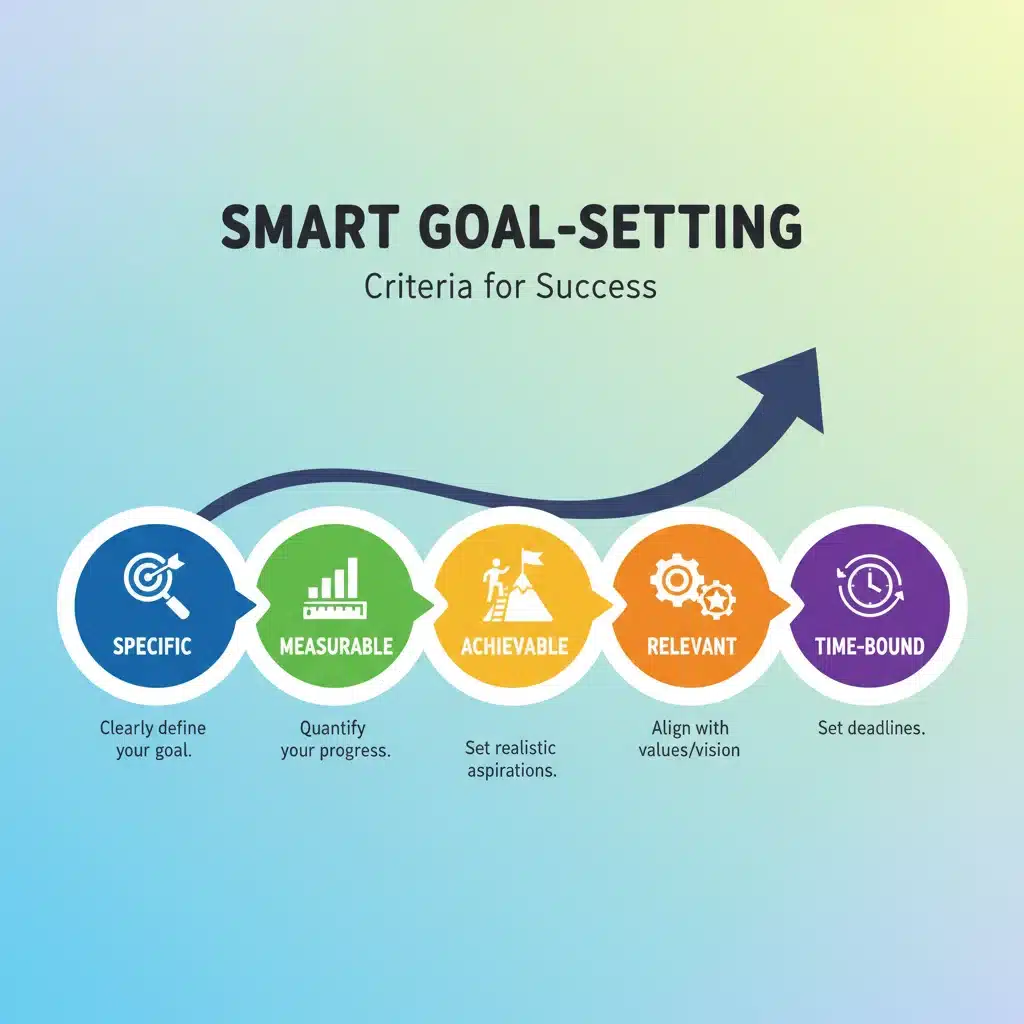
Once you have a clear picture of your current financial situation, it’s time to set your financial goals 2026 using the renowned SMART framework. This ensures your goals are well-defined, actionable, and achievable.
S: Specific
Vague goals like ‘save more money’ are difficult to track and achieve. Instead, make your goals specific. For example, instead of ‘save more money,’ aim for ‘save $10,000 for a down payment on a house by December 2026’ or ‘reduce credit card debt by $5,000 by June 2026.’ The more precise your goal, the clearer your path to achieving it.
M: Measurable
How will you know if you’ve achieved your goal? Your goal must have quantifiable metrics. Using numbers makes it measurable. For example, ‘increase my investment portfolio by 15%,’ or ‘pay off student loan X by making an extra $200 payment each month.’ Measurable goals allow you to track your progress and stay motivated.
A: Achievable
While it’s good to aim high, your goals should also be realistic and attainable given your current financial situation, income, and resources. Setting unrealistic goals can lead to frustration and demotivation. For instance, if your current income is $3,000 per month, saving $2,000 of it might be a stretch if your expenses are high. Ensure your goals challenge you but are not out of reach.
R: Relevant
Your financial goals 2026 should align with your broader life values and long-term aspirations. Are they important to you? Do they contribute to your overall financial well-being and personal happiness? For example, saving for a child’s education would be highly relevant if you have children, whereas saving for a luxury car might not be if your priority is early retirement. Ensure your goals resonate deeply with your personal vision for the future.
T: Time-bound
Every goal needs a deadline. A target date creates a sense of urgency and helps you prioritize. ‘Save $5,000’ is less effective than ‘Save $5,000 by October 31, 2026.’ Breaking down long-term goals into smaller, time-bound milestones can also make them more manageable. For instance, to save $10,000 in a year, you need to save approximately $833 each month.
Key Areas for Your Financial Goals 2026
Let’s delve into specific areas where you can set your financial goals 2026. Remember to apply the SMART framework to each one.
1. Debt Management and Reduction
High-interest debt can be a significant drag on your financial progress. Prioritizing debt reduction is often one of the most impactful financial goals you can set. Consider:
- Credit Card Debt: Aim to pay off specific credit card balances by certain dates.
- Student Loans: Explore refinancing options or commit to making extra payments to reduce the principal faster.
- Personal Loans: Develop a clear repayment plan.
Example SMART Goal: ‘I will pay off my highest-interest credit card balance of $3,000 by September 30, 2026, by allocating an extra $250 from my monthly income towards it.’
2. Building and Strengthening Your Emergency Fund
An emergency fund is your financial safety net, protecting you from unexpected expenses like job loss, medical emergencies, or car repairs. A robust emergency fund should cover 3-6 months of essential living expenses. If you haven’t built one yet, make it a top priority for your financial goals 2026.
Example SMART Goal: ‘I will build an emergency fund of $7,500 (equivalent to 3 months of living expenses) by July 31, 2026, by saving $625 each month in a high-yield savings account.’
3. Savings for Major Purchases or Life Events
Whether it’s a down payment for a house, a new car, a wedding, or a dream vacation, setting specific savings goals for these events is crucial.
- House Down Payment: Determine the target amount and timeline.
- New Vehicle: Research costs and establish a savings plan.
- Education Funds: Start or contribute more to a 529 plan or similar savings vehicle.
Example SMART Goal: ‘I will save $20,000 for a down payment on a new home by December 31, 2026, by contributing $1,667 monthly to a dedicated savings account.’
4. Retirement Planning and Investments
The sooner you start saving and investing for retirement, the more time your money has to grow through compounding. Even if retirement seems far off, 2026 is an excellent time to assess and adjust your retirement strategy.
- Increase Contributions: Boost your contributions to your 401(k), IRA, or other retirement accounts.
- Diversify Portfolio: Review your investment portfolio to ensure it aligns with your risk tolerance and long-term goals.
- Learn About Investing: Educate yourself on different investment vehicles and strategies.
Example SMART Goal: ‘I will increase my 401(k) contributions from 8% to 10% of my salary by March 1, 2026, to maximize employer matching and accelerate retirement savings.’
5. Income Growth and Career Advancement
Increasing your income directly impacts your ability to achieve your financial goals 2026. This could involve professional development, negotiating a raise, or starting a side hustle.
- Skill Development: Acquire new skills that lead to higher earning potential.
- Negotiate Salary: Prepare to negotiate a raise or promotion.
- Side Hustle: Start a part-time venture to generate additional income.
Example SMART Goal: ‘I will earn an additional $500 per month through a freelance writing side hustle by June 30, 2026, by dedicating 10 hours per week to client projects.’
Strategies for Achieving Your Financial Goals 2026
Setting goals is only half the battle; the real work lies in executing your plan. Here are actionable strategies to help you achieve your financial goals 2026:
1. Create a Detailed Budget and Stick to It
A budget isn’t about restricting yourself; it’s about giving every dollar a job. It helps you prioritize your spending and ensures you’re allocating funds towards your goals. Regularly review and adjust your budget as your income or expenses change. Consider the 50/30/20 rule (50% needs, 30% wants, 20% savings/debt repayment) as a starting point, but customize it to fit your unique situation. Automation is your friend here – set up automatic transfers to savings and investment accounts immediately after payday.
2. Automate Your Savings and Investments
One of the most effective ways to ensure you meet your savings and investment goals is to automate them. Set up automatic transfers from your checking account to your savings, investment, and retirement accounts on a regular basis (e.g., weekly, bi-weekly, or monthly). This ‘pay yourself first’ approach removes the temptation to spend the money before it reaches your goals.
3. Track Your Progress Regularly
Consistency is key. Regularly review your progress towards your financial goals 2026. This could be weekly, monthly, or quarterly. Seeing your progress can be incredibly motivating, and it allows you to identify any roadblocks early on so you can make necessary adjustments. Use budgeting apps, spreadsheets, or even a simple journal to track your income, expenses, and goal progress.
4. Cut Unnecessary Expenses
Take a critical look at your spending habits. Are there subscriptions you don’t use? Can you reduce your dining out expenses? Even small cuts can add up significantly over time. Reallocate these savings directly towards your financial goals. Challenge yourself to a ‘no-spend’ week or month to identify areas where you can save more.
5. Increase Your Income Streams
Beyond your primary job, explore opportunities to increase your income. This could be through a side hustle, freelancing, selling unused items, or investing in income-generating assets. The more income you have, the faster you can achieve your financial goals 2026. Consider developing a skill that can be monetized outside of your regular employment.
6. Educate Yourself Continuously
The world of personal finance is vast and ever-changing. Continuously educate yourself on topics like investing, tax strategies, debt management, and economic trends. Read books, listen to podcasts, follow reputable financial blogs, and consider consulting with a financial advisor. Knowledge empowers you to make smarter financial decisions.
7. Stay Flexible and Adaptable
Life is unpredictable, and your financial situation may change. Be prepared to review and adjust your financial goals 2026 as circumstances evolve. A sudden job change, a new family member, or an unexpected expense might require you to pivot your strategy. Flexibility doesn’t mean abandoning your goals; it means adapting your approach to stay on track.
Overcoming Common Obstacles to Achieving Financial Goals
The path to financial success isn’t always smooth. You’re likely to encounter obstacles, but recognizing and preparing for them can make all the difference.
1. Lack of Motivation
Financial goals can sometimes feel distant, leading to a dip in motivation. To combat this, break down your larger goals into smaller, more manageable milestones. Celebrate small victories along the way. Remind yourself regularly of ‘why’ you set these goals – your future self will thank you.
2. Unexpected Expenses
This is precisely why an emergency fund is critical. If an unexpected expense arises, dip into your emergency fund rather than derailing your progress on other goals or incurring new debt. Once the emergency is handled, replenish your fund.
3. Impulse Spending
Modern society makes impulse buying incredibly easy. To counter this, implement a ‘cooling-off period’ before making non-essential purchases. Wait 24-48 hours before buying something. This often helps you differentiate between a want and a need. Unsubscribe from marketing emails that tempt you with deals.
4. Analysis Paralysis
Sometimes, too much information or too many options can lead to inaction. Don’t let the fear of making a less-than-perfect decision prevent you from making any decision at all. Start small, learn as you go, and remember that progress, not perfection, is the goal. If overwhelmed, consider seeking advice from a qualified financial planner.
The Role of Technology in Achieving Your Financial Goals 2026
In today’s digital age, technology offers powerful tools to help you manage your finances and stay on track with your financial goals 2026. Leverage these resources to your advantage:
- Budgeting Apps: Apps like Mint, YNAB (You Need A Budget), Personal Capital, or Simplifi can help you track spending, categorize transactions, and visualize your financial progress.
- Investment Platforms: Robo-advisors (e.g., Betterment, Wealthfront) offer automated investment management, while traditional brokerage platforms provide tools for self-directed investing.
- High-Yield Savings Accounts: Online banks often offer higher interest rates on savings accounts, helping your emergency fund and other savings grow faster.
- Debt Management Tools: Some apps and websites offer strategies and tools to help you visualize and accelerate debt repayment.
Embracing these technological aids can simplify financial management, save you time, and provide valuable insights into your money habits.

Revisiting and Adjusting Your Financial Goals
Setting your financial goals 2026 is not a one-time event. It’s an ongoing process that requires regular review and adjustment. Life happens, and your priorities, income, or expenses may change. Schedule quarterly or bi-annual financial reviews to:
- Assess Progress: Are you on track to meet your goals?
- Identify Challenges: What obstacles have you encountered, and how can you overcome them?
- Adjust Goals: Do your goals still align with your current life situation and aspirations? Perhaps you’ve achieved one goal and can now focus on another, or an unexpected event requires a reprioritization.
- Update Strategies: Are your current strategies still effective, or do you need to try a different approach?
This iterative process ensures that your financial plan remains relevant and effective, keeping you aligned with your long-term vision for financial success.
Conclusion: Your Path to Financial Freedom in 2026 and Beyond
Achieving your financial goals 2026 is entirely within your reach with the right mindset, a clear plan, and consistent effort. By understanding your current financial health, applying the SMART framework to your goals, and implementing effective strategies, you are laying a solid foundation for a prosperous future. Remember, financial success is a journey, not a destination. It requires patience, discipline, and a willingness to learn and adapt.
Start today by taking that first step: assess your finances, set your SMART goals, and commit to the process. The financial freedom and security you desire for 2026 and beyond are not just dreams; they are achievable realities waiting for your determined action. Take control of your money, empower your future, and make 2026 your most financially successful year yet!