Decoding Market Reactions: A Historical Look at Post-Election Stock Performance
Anúncios
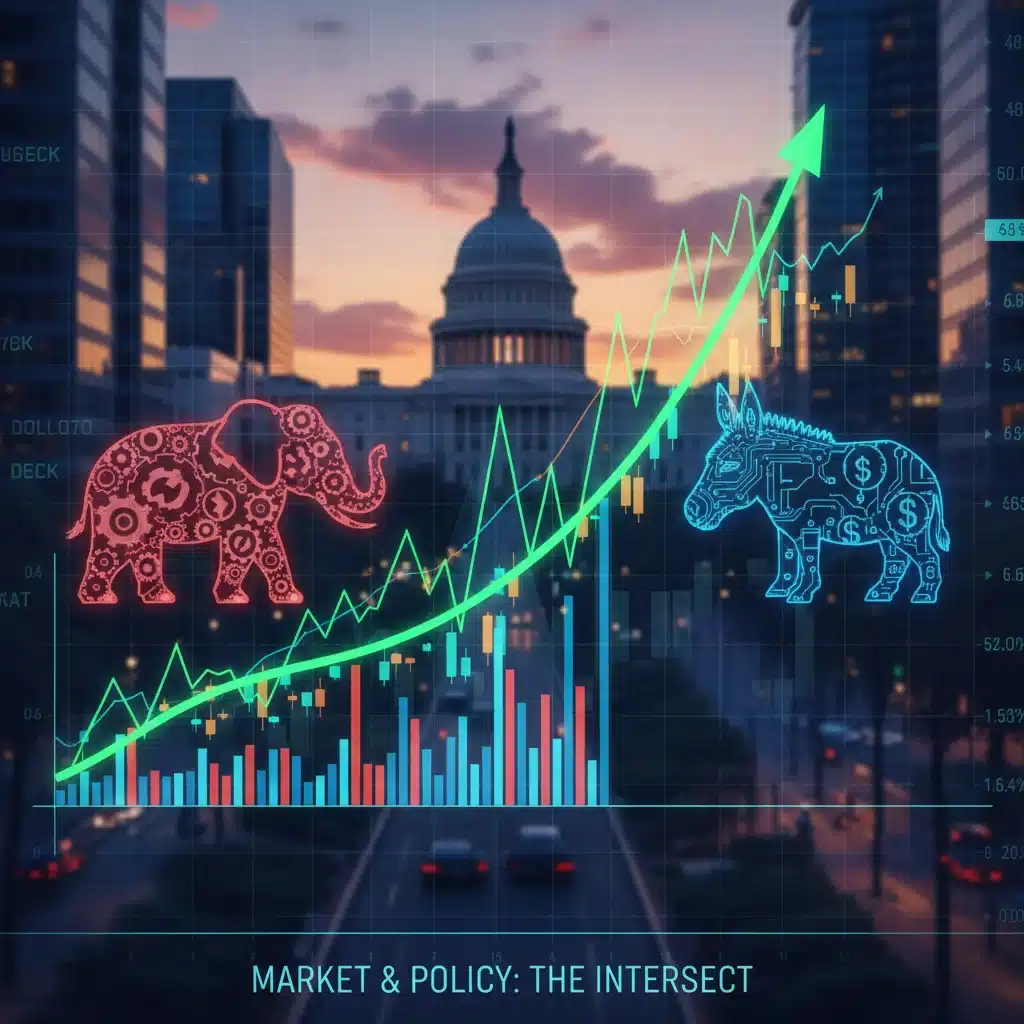
The intersection of politics and finance is a complex and often unpredictable landscape. Every election cycle, particularly the crucial midterm elections, brings with it a wave of speculation and anxiety about its potential impact on the economy and, by extension, the stock market. Investors, analysts, and everyday citizens alike keenly observe these political shifts, attempting to discern patterns and predict future market movements. Understanding the historical context of market post-election stocks performance is not just an academic exercise; it’s a vital tool for informed decision-making and strategic planning.
Anúncios
The year 2026, while still a few years away, will inevitably bring another round of midterm elections. These elections, often seen as a referendum on the sitting president’s first half-term, can significantly alter the political landscape of Washington D.C. A shift in congressional control, whether in the House, Senate, or both, can lead to changes in legislative priorities, fiscal policy, regulatory frameworks, and international relations. Each of these factors has the potential to ripple through various sectors of the economy, influencing corporate earnings, consumer confidence, and ultimately, stock valuations.
This comprehensive article delves into a historical analysis of market post-election stocks performance, specifically focusing on U.S. midterm elections. We will examine past trends, identify recurring patterns, and explore the underlying economic and political factors that have historically shaped market reactions. By looking back at decades of data, we aim to provide a clearer perspective on what investors might anticipate as the 2026 midterms approach. While past performance is never a guarantee of future results, understanding historical precedents can offer valuable insights and help investors navigate the inherent uncertainties of political cycles.
Our journey will cover various aspects, including how different political outcomes (e.g., divided government vs. unified government) have historically affected market sentiment, which sectors tend to be more sensitive to political shifts, and what economic indicators often correlate with post-election market behavior. We will also discuss the psychological impact of elections on investor behavior, the role of media, and the importance of a long-term investment perspective amidst short-term political volatility. Ultimately, the goal is to equip readers with a more nuanced understanding of the intricate dance between democracy and the dollar, enabling them to make more informed investment decisions.
Anúncios
Understanding Midterm Elections and Their Economic Significance
Midterm elections, occurring two years into a president’s four-year term, are often perceived as a gauge of public sentiment regarding the current administration. Unlike presidential elections, which capture global attention, midterms typically focus more on domestic issues and local races, yet their impact on national policy can be profound. A shift in congressional power can lead to legislative gridlock or, conversely, open the door for new policy initiatives that were previously stalled. For instance, a change in party control of Congress could lead to different approaches to taxation, healthcare, energy policy, or infrastructure spending, all of which have direct implications for various industries and the broader economy.
Historically, midterm elections have often resulted in a divided government, where one party controls the presidency while the other controls one or both houses of Congress. This scenario is frequently cited as a factor that can lead to legislative gridlock, making it difficult for either party to enact significant policy changes. While some argue that divided government can create uncertainty, others contend that it fosters a more stable environment by preventing radical policy shifts, which the market often prefers. The market’s reaction to such outcomes is not always straightforward and can depend heavily on the specific policy proposals at stake and the overall economic climate.
Beyond policy, the rhetoric and political campaigning leading up to midterms can also influence market sentiment. Uncertainty is a significant driver of market volatility, and the period before an election is often characterized by heightened uncertainty. Investors may adopt a ‘wait-and-see’ approach, leading to reduced trading volumes or increased caution. Once the election results are clear, this uncertainty often dissipates, potentially leading to a ‘relief rally’ regardless of the outcome, simply because a known quantity, even if undesirable to some, is often preferred over an unknown one.
The economic significance of midterms extends to investor confidence. Businesses and consumers often react to the perceived stability or instability of the political environment. If businesses anticipate favorable regulatory or tax policies, they might increase investment and hiring. Conversely, concerns about unfavorable policies could lead to reduced capital expenditure and a more cautious approach. These collective decisions, driven by confidence, can significantly impact economic growth and, consequently, the performance of market post-election stocks.
Historical Performance of Market Post-Election Stocks: A Deep Dive
To understand what might happen in 2026, a historical review of market post-election stocks performance is essential. Numerous studies and analyses have been conducted on this topic, and while there’s no ironclad rule, some patterns emerge. One frequently cited observation is that the stock market, particularly the S&P 500, tends to perform better in the year following midterm elections. This phenomenon is sometimes referred to as the ‘midterm election year rally’ or the ‘third year of the presidential cycle effect.’
For example, historical data often shows that the third year of a presidential term (which follows a midterm election) has, on average, yielded the strongest stock market returns compared to the other three years. This trend has been observed across various administrations, regardless of which party controls Congress or the White House. Several theories attempt to explain this. One theory suggests that after midterms, presidents often become more pragmatic, focusing on policies that can garner bipartisan support to build a legacy for their final two years, which can be market-friendly. Another perspective is that a divided government, a common outcome of midterms, can limit extreme policy changes, providing a more predictable environment for businesses.
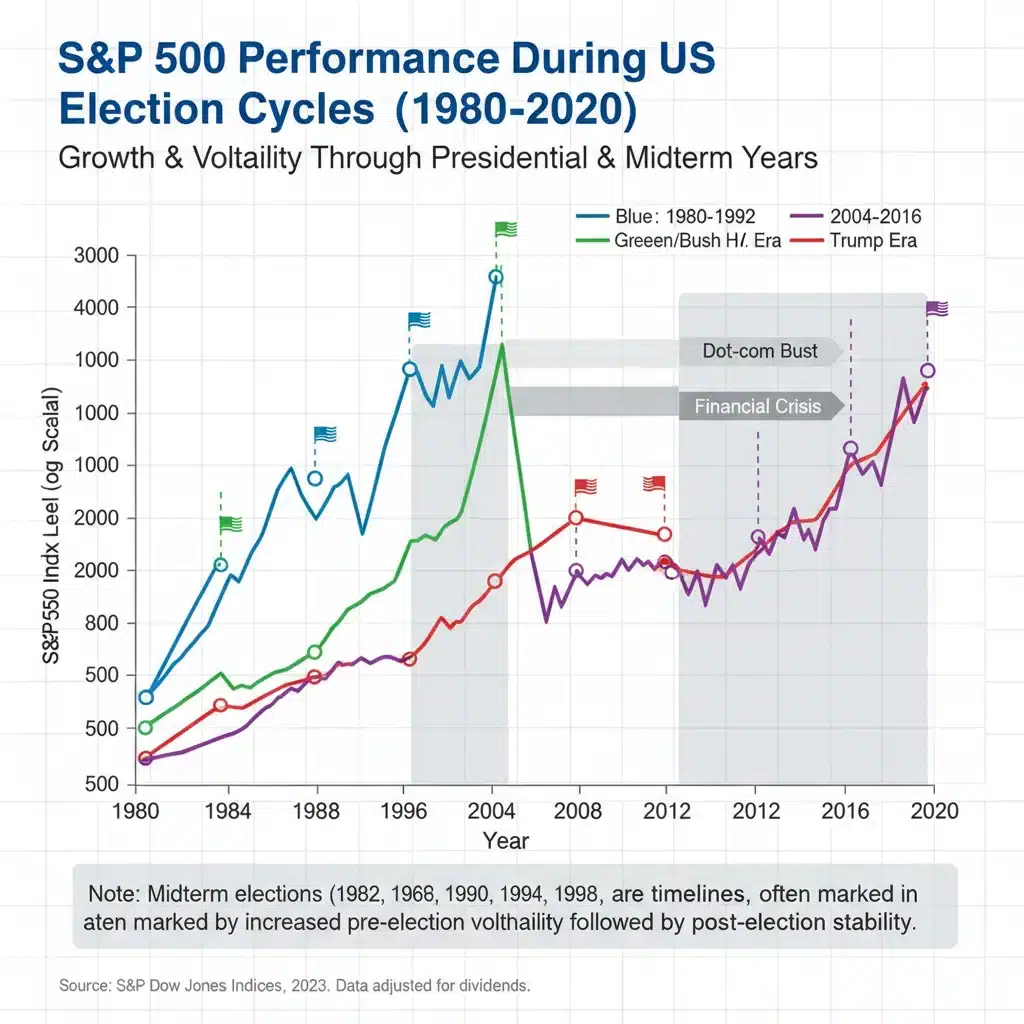
Let’s consider some historical examples. Following the 2010 midterms, which saw a significant shift in congressional power to the Republican party, the market experienced a period of robust growth. Similarly, after the 2014 midterms, where Republicans gained control of both the House and Senate, the market continued its upward trajectory. Even in more recent history, the immediate aftermath of midterms has often been followed by periods of positive market performance, though with varying degrees of volatility.
However, it’s crucial to acknowledge that correlation does not imply causation. Many other factors influence stock market performance, including global economic conditions, corporate earnings, interest rates, and technological advancements. Attributing market movements solely to election outcomes would be an oversimplification. The market is a complex adaptive system, and political events are just one of many inputs it processes.
The Impact of Divided Government vs. Unified Government
One of the most discussed aspects of midterm election outcomes is whether they result in a unified government (the same party controls the presidency and both houses of Congress) or a divided government. Conventional wisdom often suggests that a unified government can lead to more efficient policy implementation, which might be seen as positive for the market if those policies are growth-oriented. However, it also carries the risk of more radical policy shifts that could be disruptive.
Conversely, a divided government is often associated with legislative gridlock. While this can be frustrating for policymakers, it can be viewed positively by the market as it reduces the likelihood of significant, unpredictable policy changes. Many investors prefer predictability, even if it means slower policy progress. Historically, some analyses suggest that the market has performed slightly better under divided governments, perhaps due to this inherent stability. However, this is not a universal truth, and specific legislative priorities can always override this general tendency.
For instance, if a divided government is still able to pass critical legislation, such as infrastructure bills or tax reforms, that are perceived as beneficial to the economy, the market reaction could be very positive. The key is often the perceived impact of potential policies on corporate profitability and economic growth, rather than simply the party in power.
Sector-Specific Sensitivities to Political Shifts
While the overall market often responds to election outcomes, certain sectors are particularly sensitive to political and policy changes. Understanding these sensitivities is crucial for investors looking to position their portfolios ahead of the 2026 midterms.
- Healthcare: This sector is notoriously sensitive to political shifts, particularly changes in healthcare policy. Debates around drug pricing, insurance regulations, and the future of programs like Medicare and Medicaid can significantly impact pharmaceutical companies, hospitals, and health insurers. A shift in congressional control could signal a renewed push for certain reforms, leading to volatility in healthcare stocks.
- Energy: Environmental regulations, subsidies for renewable energy, and policies related to fossil fuel extraction directly affect the energy sector. A change in the political landscape could favor either traditional oil and gas companies or renewable energy firms, depending on the prevailing political agenda.
- Financials: Banks and other financial institutions are heavily regulated. Changes in monetary policy, banking regulations, and consumer protection laws can have a substantial impact on their profitability.
- Technology: While often seen as less directly impacted by traditional political shifts, the tech sector faces increasing scrutiny regarding antitrust issues, data privacy, and international trade policies. A new Congress could prioritize legislation in these areas, affecting major tech giants.
- Defense: Government spending on defense is directly tied to political decisions and geopolitical events. A change in congressional priorities or international relations could influence the budgets allocated to defense contractors.
- Infrastructure/Industrials: Proposals for large-scale infrastructure projects often gain traction after elections. Companies involved in construction, materials, and heavy machinery can see significant benefits from increased government spending in this area.
Investors should pay close attention to the specific policy stances of candidates and parties in the run-up to the 2026 midterms. Analyzing how these proposed policies might affect different sectors can help in making strategic adjustments to portfolios. It’s not just about who wins, but what policies they are likely to pursue.
Economic Indicators and Post-Election Market Behavior
Beyond the political outcome itself, broader economic indicators play a crucial role in shaping market post-election stocks performance. The state of the economy—inflation, interest rates, employment figures, GDP growth—often dictates the market’s underlying strength or weakness, regardless of political shifts.
For instance, if an election occurs during a period of strong economic growth and low inflation, the market might be more resilient to political changes. Conversely, if the economy is facing headwinds such as high inflation or a looming recession, political uncertainty can exacerbate market downturns. The Federal Reserve’s monetary policy, which is largely independent of political cycles but responds to economic conditions, also significantly influences market direction.
Key economic indicators to monitor include:
- Inflation Rates: High inflation can erode purchasing power and corporate profits, leading to a more cautious market.
- Interest Rates: Rising interest rates can make bonds more attractive relative to stocks and increase borrowing costs for companies, potentially dampening stock valuations.
- Employment Data: Strong job growth and low unemployment typically signal a healthy economy, which is generally positive for stocks.
- GDP Growth: Robust economic growth provides a favorable environment for corporate earnings and stock market performance.
- Consumer Confidence: Optimistic consumers are more likely to spend, boosting economic activity.
- Corporate Earnings: Ultimately, stock prices are driven by corporate profitability. Economic conditions that support strong earnings are beneficial for the market.
Understanding the interplay between these economic factors and the political environment is key to developing a comprehensive investment strategy. The 2026 midterms will unfold against a specific economic backdrop, and that context will heavily influence how market post-election stocks react.
Investor Psychology and the Election Cycle
Human psychology plays a significant, albeit often irrational, role in financial markets. Elections, with their inherent drama and potential for change, can trigger strong emotional responses in investors. Fear and greed are powerful forces, and the uncertainty surrounding election outcomes can amplify these emotions, leading to irrational decision-making.
Before an election, anxiety can lead to a ‘risk-off’ sentiment, where investors sell riskier assets and move into safer havens. This pre-election jitters phenomenon can cause market dips. After the election, regardless of the winner, a sense of relief often sets in, as the uncertainty is resolved. This can lead to a rebound, even if the outcome is not what some investors had hoped for.
The media also plays a crucial role in shaping investor psychology. Constant news cycles, expert predictions, and political commentary can heighten emotions and influence perceptions of risk. It’s important for investors to distinguish between legitimate analysis and sensationalized reporting.
Behavioral finance studies have shown that investors often exhibit biases such as confirmation bias (seeking out information that confirms existing beliefs) and recency bias (overemphasizing recent events). These biases can be particularly pronounced during election cycles, leading investors to make decisions based on emotion rather than objective data. A disciplined approach, focusing on long-term goals and diversification, can help mitigate these psychological pitfalls.
Strategies for Navigating Post-Election Market Volatility
Given the historical trends and the inherent uncertainties, how should investors approach the 2026 midterms and their potential impact on market post-election stocks?
1. Maintain a Long-Term Perspective:
Perhaps the most crucial advice is to avoid making impulsive decisions based on short-term political events. Historically, the stock market has demonstrated a remarkable ability to overcome political turbulence and generate positive returns over the long run. Focusing on long-term financial goals and sticking to a well-diversified investment plan is often more effective than trying to time the market around elections.
2. Diversify Your Portfolio:
Diversification across different asset classes (stocks, bonds, real estate), geographies, and sectors can help mitigate risk. If one sector is particularly vulnerable to a specific political outcome, diversification ensures that your entire portfolio isn’t overly exposed. This strategy helps buffer against unexpected political or economic shocks.
3. Rebalance Regularly:
Periodically rebalancing your portfolio back to your target asset allocation can help you buy low and sell high. For example, if a particular sector or asset class experiences a significant dip due to election-related concerns, rebalancing might involve buying more of those assets at a lower price, aligning with your long-term strategy.
4. Focus on Fundamentals:
Ultimately, stock prices are driven by the underlying health and profitability of companies. During periods of political noise, it’s essential to focus on company fundamentals: strong balance sheets, consistent earnings growth, competitive advantages, and effective management. Companies with solid fundamentals are often more resilient to political fluctuations.
5. Consider Sector-Specific Plays (with caution):
While avoiding impulsive moves, informed investors might identify sectors that could benefit or be negatively impacted by specific policy outcomes. For example, if a particular party’s platform strongly favors renewable energy, companies in that sector might see increased investment. However, this strategy requires thorough research and an understanding of the risks involved.
6. Stay Informed, Not Overwhelmed:
Keep abreast of political developments and economic data, but avoid getting caught up in the 24/7 news cycle’s emotional swings. Filter information critically and rely on credible sources. Understand the potential implications of policy proposals without letting them dictate your entire investment strategy.

Looking Ahead to the 2026 Midterms
As we look towards the 2026 midterm elections, the landscape will undoubtedly be shaped by the prevailing economic conditions, geopolitical events, and the performance of the current administration. While historical patterns offer valuable guidance, each election cycle has its unique characteristics. The specific issues dominating the political discourse – be it inflation, climate change, social policies, or international conflicts – will all play a role in how voters cast their ballots and, subsequently, how the market reacts.
It’s important to remember that the stock market is a forward-looking mechanism. It often discounts future events, including potential election outcomes, well in advance. Therefore, by the time election day arrives, much of the anticipated impact may already be priced into stocks. The real surprise, and thus the potential for significant market movement, often comes from unexpected results or unforeseen policy shifts post-election.
Investors should begin to monitor the political climate in the lead-up to 2026, paying attention to polling data, key policy debates, and the economic performance during the preceding year. Understanding the potential scenarios – whether it’s a continuation of the current political balance, a shift towards a unified government, or an even more divided Congress – can help in anticipating the types of policies that might emerge.
Furthermore, global events will continue to exert influence. International trade relations, global supply chain stability, and geopolitical tensions can sometimes overshadow domestic political outcomes in terms of market impact. A holistic view that integrates both domestic political analysis and international economic trends is essential for a comprehensive investment strategy.
Conclusion: Navigating the Interplay of Politics and Markets
The relationship between U.S. midterm elections and market post-election stocks performance is multifaceted and complex. While historical data suggests certain tendencies, particularly the often-observed ‘third year rally,’ it’s crucial to avoid oversimplification. The market is influenced by a myriad of factors, with political outcomes being just one piece of a much larger puzzle.
Investors who approach the 2026 midterms with a clear understanding of historical precedents, combined with a focus on fundamental analysis, diversification, and a long-term perspective, are better positioned to navigate potential volatility. Avoiding emotional reactions to political headlines and adhering to a disciplined investment strategy are paramount.
Ultimately, the health of the economy, corporate profitability, and global stability often exert a more enduring influence on stock market performance than the short-term political machinations of Washington D.C. By staying informed, remaining patient, and focusing on sound investment principles, individuals can continue to build wealth regardless of who wins the next election. The 2026 midterms will undoubtedly bring their share of political drama, but for the savvy investor, they also present an opportunity to apply a well-thought-out strategy to the ever-evolving financial landscape.