Supply Chain Resilience 2026: 15% Disruption Reduction & Manufacturing Stock Boost

Anúncios
Supply Chain Resilience in 2026: A 15% Reduction in Disruptions Bolsters Manufacturing Stocks
The global economy has been a rollercoaster for businesses, with supply chain disruptions becoming an almost constant threat. However, a significant shift is on the horizon. Projections indicate a remarkable 15% reduction in supply chain disruptions by 2026, a development set to profoundly impact manufacturing stocks and global economic stability. This isn’t merely an optimistic forecast; it’s a testament to concerted efforts in technology adoption, strategic planning, and collaborative frameworks designed to fortify the often-fragile links in our global production and distribution networks. Understanding the mechanisms behind this anticipated improvement in supply chain resilience is crucial for investors, manufacturers, and policymakers alike. The financial implications are substantial, promising a more predictable and profitable landscape for the manufacturing sector.
Anúncios
The Genesis of Enhanced Supply Chain Resilience
The lessons learned from recent global events, from pandemics to geopolitical shifts and natural disasters, have been harsh but invaluable. These events exposed critical vulnerabilities in traditional supply chain models, prompting an urgent re-evaluation and a push towards greater supply chain resilience. Businesses, once focused primarily on cost efficiency, have now shifted their priorities to include robustness, adaptability, and redundancy. This paradigm shift is the bedrock of the projected 15% reduction in disruptions.
Several key factors are converging to create this more resilient future. Firstly, there’s a massive investment in digital transformation. Artificial intelligence (AI), machine learning (ML), blockchain, and the Internet of Things (IoT) are no longer buzzwords but essential tools for real-time visibility, predictive analytics, and automated decision-making. These technologies allow companies to anticipate potential disruptions before they escalate, enabling proactive mitigation strategies. For instance, AI-powered demand forecasting can better predict market shifts, reducing overstocking or stockouts, while IoT sensors can monitor the condition and location of goods in transit, flagging potential issues instantly.
Anúncios
Secondly, diversification of sourcing and manufacturing locations is gaining traction. The ‘just-in-time’ model, while efficient, proved brittle when single points of failure emerged. Companies are now adopting ‘just-in-case’ strategies, establishing alternative suppliers and production facilities across different geographies. This geographical dispersion reduces reliance on any single region, insulating operations from localized shocks. This strategic decoupling is a cornerstone of building robust supply chain resilience.
Thirdly, enhanced collaboration and data sharing across the supply chain ecosystem are becoming standard practice. From raw material suppliers to manufacturers, logistics providers, and retailers, a more integrated approach fosters collective problem-solving. Platforms that allow secure and transparent data exchange are facilitating this, creating a network effect where early warnings can be shared, and collective responses can be coordinated more effectively. This collaborative spirit is vital for systemic supply chain resilience.
Technological Advancements Driving the 15% Disruption Reduction
The projected 15% reduction in disruptions is heavily reliant on the intelligent application of technology. Let’s delve deeper into how specific innovations are contributing to this enhanced supply chain resilience:
- AI and Machine Learning for Predictive Analytics: AI algorithms can analyze vast datasets, including historical disruption data, weather patterns, geopolitical news, and economic indicators, to predict potential supply chain vulnerabilities. This allows companies to take pre-emptive action, such as rerouting shipments or activating alternative suppliers, long before a disruption materializes. This predictive capability is a game-changer for maintaining supply chain resilience.
- Blockchain for Transparency and Traceability: Blockchain technology offers an immutable and transparent ledger for all transactions and movements within the supply chain. This enhanced traceability means that the origin, journey, and status of every product can be verified instantly. In the event of a recall, quality issue, or ethical concern, blockchain can pinpoint the exact source of the problem, reducing the scope and impact of disruptions. This level of transparency significantly boosts supply chain resilience.
- Internet of Things (IoT) for Real-time Monitoring: IoT devices, embedded in products, vehicles, and warehouses, provide real-time data on location, temperature, humidity, and other critical parameters. This continuous monitoring allows for immediate alerts if conditions deviate from norms, enabling rapid intervention to prevent spoilage, theft, or delays. The granular visibility offered by IoT is indispensable for operational supply chain resilience.
- Digital Twins for Simulation and Optimization: Creating digital replicas of physical supply chains allows companies to simulate various disruption scenarios and test different mitigation strategies without impacting real-world operations. This ‘what-if’ analysis helps optimize inventory levels, identify bottlenecks, and refine contingency plans, ultimately strengthening supply chain resilience.
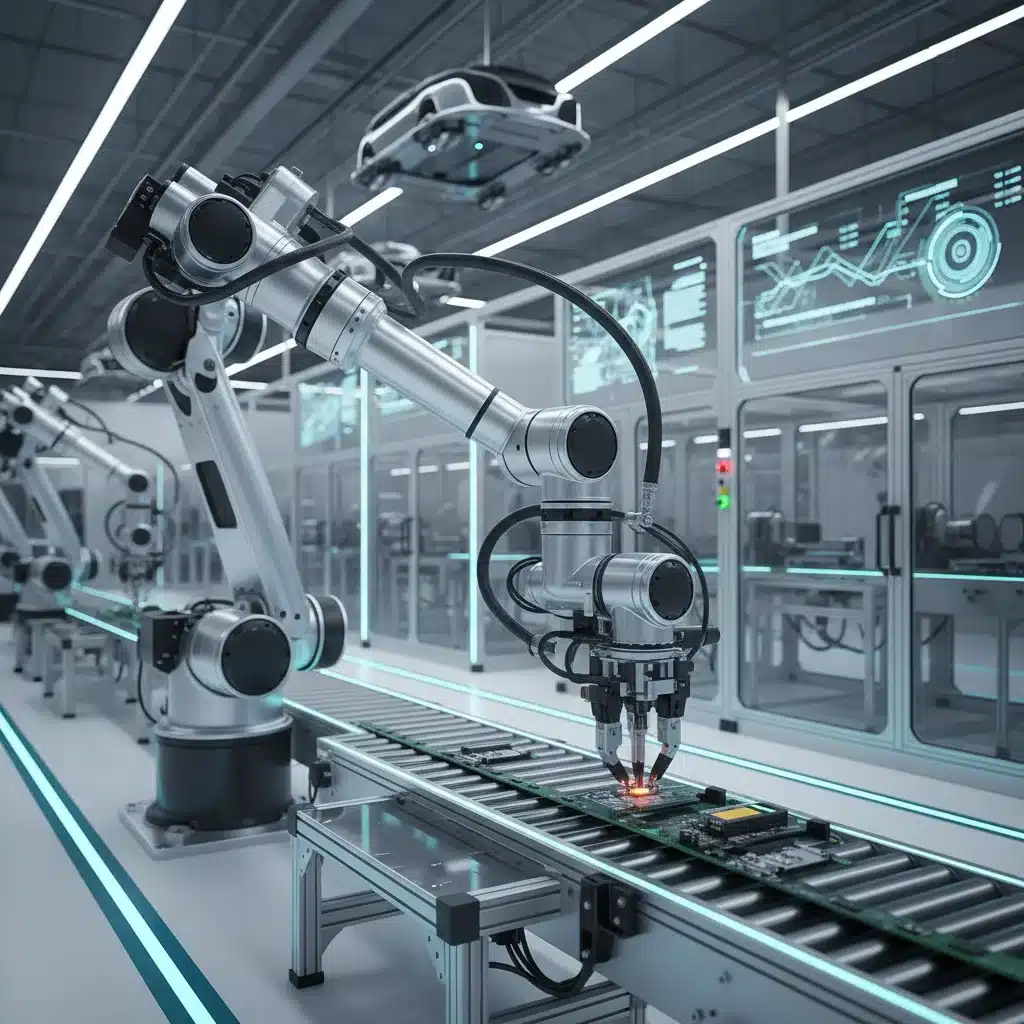
- Advanced Robotics and Automation: In manufacturing and logistics, robotics and automation are reducing reliance on manual labor, which can be susceptible to workforce shortages or health crises. Automated warehouses and production lines can operate with greater consistency and speed, contributing to more stable and predictable supply flows. This automation is a key component of modern supply chain resilience.
Financial Impact: A Boost for Manufacturing Stocks
The direct correlation between reduced supply chain disruptions and improved financial performance, particularly for manufacturing stocks, is undeniable. When supply chains operate smoothly, manufacturers experience fewer production delays, lower expedited shipping costs, reduced inventory holding costs (due to more accurate forecasting), and improved customer satisfaction. This translates directly into higher revenues, better profit margins, and a stronger bottom line. The market rewards this stability and predictability, leading to an uplift in stock valuations.
A 15% reduction in disruptions is not a marginal improvement; it represents a substantial de-risking of the manufacturing sector. Investors often shy away from industries plagued by volatility and uncertainty. By demonstrating enhanced supply chain resilience, manufacturing companies become more attractive investment opportunities. This increased investor confidence can drive up stock prices, attract more capital for expansion and innovation, and create a positive feedback loop for growth.

Reduced Volatility and Enhanced Predictability
One of the most significant financial benefits of improved supply chain resilience is the reduction in earnings volatility. Disruptions often lead to unpredictable financial results, making it difficult for analysts to forecast performance accurately. With fewer disruptions, earnings become more stable and predictable, which is highly valued by investors. Companies with a history of consistent earnings tend to command higher valuations and are often seen as safer long-term investments. This newfound predictability will be a cornerstone of the manufacturing sector’s appeal by 2026.
Cost Savings and Efficiency Gains
The myriad costs associated with supply chain disruptions are staggering. These include lost sales due to stockouts, penalties for late deliveries, emergency logistics expenses, increased inventory holding costs (as companies build buffers against uncertainty), and reputational damage. A 15% reduction in disruptions directly translates to a significant reduction in these costs. For example, by optimizing inventory through better forecasting and real-time visibility, companies can reduce capital tied up in warehouses, freeing up funds for other investments or returning capital to shareholders. These efficiency gains directly impact profitability and bolster manufacturing stocks, enhancing overall supply chain resilience.
Improved Customer Satisfaction and Market Share
Reliable supply chains lead to consistent product availability and on-time delivery, which are critical drivers of customer satisfaction. In today’s competitive landscape, customers have little patience for delays or stockouts. Companies with superior supply chain resilience can consistently meet customer demands, leading to stronger brand loyalty, repeat business, and the potential to capture greater market share from less resilient competitors. This positive feedback loop of customer satisfaction and market growth further fuels the upward trajectory of manufacturing stocks.
Key Strategies for Achieving 15% Disruption Reduction
Achieving a 15% reduction in disruptions by 2026 is an ambitious yet attainable goal, predicated on the widespread adoption of several key strategies:
- Supply Chain Mapping and Risk Assessment: Comprehensive mapping of the entire supply chain, from tier-n suppliers to end-customers, is the foundational step. This process helps identify critical nodes, potential bottlenecks, and single points of failure. Coupled with robust risk assessment methodologies (e.g., FMEA – Failure Mode and Effects Analysis), companies can prioritize vulnerabilities and develop targeted mitigation plans, thereby strengthening their supply chain resilience.
- Diversification and Regionalization: Moving away from highly concentrated sourcing and manufacturing. This involves identifying alternative suppliers in different geographical regions, establishing regional production hubs, and even exploring nearshoring or reshoring options for critical components. This strategy aims to create redundancy and reduce dependence on any single region or supplier, significantly boosting supply chain resilience.
- Advanced Data Analytics and AI Integration: Leveraging big data, AI, and machine learning for predictive analytics, demand forecasting, and real-time monitoring. This involves investing in platforms that can ingest and analyze vast amounts of data from various sources to provide actionable insights. The ability to anticipate and respond to potential disruptions before they occur is central to achieving a 15% reduction. This is where true supply chain resilience is built.
- Enhanced Collaboration and Transparency: Fostering stronger relationships with suppliers, logistics partners, and even customers. This includes sharing critical data, collaborating on contingency plans, and establishing clear communication channels. Blockchain technology, as mentioned, can play a pivotal role in creating transparent and trustworthy data exchange among partners, enhancing collective supply chain resilience.
- Flexible Manufacturing and Agile Operations: Implementing manufacturing processes that can quickly adapt to changes in demand, product specifications, or supply availability. This might involve modular production lines, cross-trained workforces, and the adoption of technologies like additive manufacturing (3D printing) for on-demand production of parts. Agility is a critical component of modern supply chain resilience.
- Cybersecurity and Data Protection: As supply chains become more digitized and interconnected, they also become more vulnerable to cyberattacks. Robust cybersecurity measures are essential to protect sensitive data, prevent operational disruptions, and maintain trust among partners. A breach can be as disruptive as a physical event, making cybersecurity a non-negotiable aspect of supply chain resilience.
- Talent Development and Workforce Training: Investing in a skilled workforce capable of managing complex, technology-driven supply chains. This includes training in data analytics, risk management, and the use of new digital tools. A knowledgeable and adaptable workforce is crucial for navigating disruptions effectively and continuously improving supply chain resilience.
Challenges and Mitigation in Achieving Supply Chain Resilience
While the outlook for improved supply chain resilience is promising, the path to a 15% reduction in disruptions is not without its challenges. Overcoming these hurdles will require sustained effort, strategic investment, and a willingness to adapt.
Investment Costs
Implementing advanced technologies, diversifying supply bases, and regionalizing production all come with significant upfront investment costs. Smaller and medium-sized enterprises (SMEs) might find it particularly challenging to allocate the necessary capital. Mitigation strategies include government incentives, industry-specific grants, and collaborative platforms that allow for shared investment in infrastructure or technology. Additionally, demonstrating the long-term ROI of supply chain resilience investments is crucial for securing internal buy-in.
Data Integration and Interoperability
The effective use of AI, ML, and IoT relies on seamless data integration across disparate systems and organizations. Many companies operate with legacy systems that are not designed for interoperability, creating data silos. Overcoming this requires robust API development, standardized data formats, and a commitment to digital transformation across the entire ecosystem. Cloud-based platforms and middleware solutions are playing a critical role in bridging these gaps and fostering true supply chain resilience.
Geopolitical Volatility
While diversification helps, geopolitical tensions and trade wars can still introduce significant uncertainty. Companies must continuously monitor the global political landscape and incorporate geopolitical risk into their supply chain planning. This involves developing scenario plans for various geopolitical eventualities and maintaining agility to pivot quickly if necessary. Strong diplomatic relations and multilateral trade agreements are also vital for fostering a stable environment for global supply chain resilience.
Talent Gap
The rapid evolution of supply chain management demands new skill sets, particularly in data science, AI, and cybersecurity. There is a recognized talent gap in these areas. Addressing this requires investment in education and training programs, partnerships with academic institutions, and strategies to attract and retain top talent. A skilled workforce is the human engine behind technological advancements in supply chain resilience.
Supplier Adoption
The strength of a supply chain is often determined by its weakest link. For overall supply chain resilience to improve, all partners, including smaller suppliers, must adopt resilient practices and technologies. This necessitates support from larger enterprises through training, technology sharing, and even financial assistance to help their critical suppliers upgrade their capabilities. Building a network of resilient partners is paramount.
The Road Ahead: Sustaining Supply Chain Resilience Beyond 2026
Achieving a 15% reduction in disruptions by 2026 is a significant milestone, but supply chain resilience is not a static state; it’s a continuous journey. The strategies and technologies implemented today will need to evolve as new challenges emerge. Climate change, for instance, is increasingly impacting supply chains through extreme weather events, demanding further adaptation and sustainable practices. The ongoing evolution of global trade policies and technological advancements will also continuously reshape the landscape.
Long-term success will hinge on companies embedding a culture of resilience throughout their organizations, from executive leadership to frontline workers. This means fostering proactive risk management, encouraging innovation, and maintaining flexibility as core organizational values. Continuous learning, scenario planning, and regular stress-testing of supply chains will be essential to sustain and further enhance supply chain resilience beyond the initial 2026 target.
The manufacturing sector, historically vulnerable to supply shocks, stands to gain immensely from this enhanced stability. The projected boost in manufacturing stocks is not just a financial indicator but a reflection of a healthier, more predictable global economy. As companies become more adept at navigating complexities and mitigating risks, the benefits will ripple through various sectors, fostering greater confidence and driving sustainable growth. The future of global trade looks set to be defined by robustness and adaptability, with supply chain resilience at its very core.
Conclusion
The forecast for a 15% reduction in supply chain disruptions by 2026 marks a pivotal moment for global manufacturing and the broader economy. This anticipated improvement in supply chain resilience is a direct result of strategic investments in advanced technologies, diversification of sourcing, and enhanced collaborative frameworks. The financial implications are overwhelmingly positive, promising increased stability, predictability, and ultimately, a significant boost for manufacturing stocks.
While challenges remain, the concerted efforts across industries to build more robust and adaptable supply networks are clearly yielding results. Companies that embrace these transformative strategies will not only mitigate risks but also gain a substantial competitive advantage. The journey towards optimal supply chain resilience is ongoing, but the progress projected for 2026 offers a compelling vision of a more secure and prosperous future for global commerce. Investors and industry leaders alike should pay close attention to these developments, as they signal a fundamental shift in how businesses operate and succeed in an increasingly interconnected world.