The economic landscape is in constant flux, and as we look ahead to 2026, the specter of inflation continues to loom large. For many, the idea of rising prices can be daunting, threatening to erode hard-earned savings and diminish purchasing power. However, with proactive planning and strategic inflation budgeting strategies, it’s entirely possible to not only weather the storm but also emerge stronger. This comprehensive guide will equip you with seven essential budgeting strategies designed to help you navigate inflation in 2026, protect your financial well-being, and maintain your standard of living.
Anúncios
Understanding inflation is the first step towards combating its effects. Inflation refers to the rate at which the general level of prices for goods and services is rising, and consequently, the purchasing power of currency is falling. When inflation is high, your money buys less than it used to, making effective inflation budgeting strategies more crucial than ever. By implementing smart financial practices now, you can mitigate the impact of future price increases and secure your financial future.
This article delves deep into actionable advice, from optimizing your spending habits to strategically investing your money. We’ll explore how to identify areas where you can cut back without sacrificing quality of life, how to leverage technology for better financial management, and how to think long-term about your financial goals. The goal is to empower you with the knowledge and tools to confidently face the economic challenges of 2026 and beyond.
Anúncios
Strategy 1: Reassess and Trim Your Budget Regularly
The foundation of any robust financial plan, especially when facing inflation, is a meticulously crafted and regularly reviewed budget. Many people create a budget once and then rarely revisit it, which can be a costly mistake in an inflationary environment. To effectively implement inflation budgeting strategies, you must be prepared to reassess your spending habits and trim unnecessary expenses with unwavering discipline.
Start by categorizing all your expenses: fixed (rent, mortgage, loan payments) and variable (groceries, entertainment, utilities). Track every dollar for at least a month to get a clear picture of where your money is actually going. Digital budgeting apps and spreadsheets can be invaluable tools for this process. Once you have a detailed overview, identify areas where you can cut back. This isn’t about deprivation, but about prioritization. Ask yourself: Is this expense essential? Does it align with my financial goals? Can I find a cheaper alternative?
Common areas for trimming include subscriptions you no longer use, excessive dining out, impulse purchases, and high-cost entertainment. Consider switching to store brands for groceries, cooking more at home, and exploring free or low-cost recreational activities. Even small, consistent cuts can add up significantly over time, freeing up capital to counteract rising costs. Remember, the goal is to create a lean, efficient budget that maximizes your purchasing power.
Furthermore, an inflationary period often sees fluctuating prices for goods and services that were once stable. Your utility bills might increase, transportation costs could rise, and even your favorite coffee might become more expensive. Regularly reviewing your budget—ideally monthly or quarterly—allows you to adapt to these changes quickly. If you notice a particular category’s expenses consistently exceeding your allocation, it’s time to investigate why and adjust your spending or find alternatives. This proactive approach is a cornerstone of effective inflation budgeting strategies.
Don’t forget to factor in seasonal expenses or irregular costs like annual insurance premiums or car maintenance. By anticipating these, you can set aside funds throughout the year, preventing them from derailing your budget when they arrive. The more detailed and dynamic your budget, the better equipped you’ll be to navigate the economic shifts of 2026.
Strategy 2: Build and Fortify Your Emergency Fund
An emergency fund is always important, but its significance multiplies in an inflationary period. When prices are rising, unexpected expenses can hit even harder, potentially forcing you into debt or liquidating investments at an inopportune time. A robust emergency fund, typically covering three to six months of essential living expenses, acts as a critical buffer, protecting your financial stability and allowing you to stick to your inflation budgeting strategies.
If you don’t already have an emergency fund, make it your top financial priority. Start by setting a realistic savings goal and automating transfers from your checking account to a separate, high-yield savings account. This makes saving consistent and less tempting to spend. If you already have a fund, assess if it’s still adequate given the rising cost of living. Your original goal of six months of expenses might need to be re-evaluated upwards if your essential costs have increased significantly due to inflation.
Consider where you hold your emergency fund. While accessibility is key, look for savings accounts that offer competitive interest rates. Although these rates might not fully outpace inflation, they can help mitigate some of the erosion of your cash’s value. The primary purpose of this fund is liquidity and security, not aggressive growth, but every little bit helps.
An emergency fund provides peace of mind, allowing you to handle unexpected job loss, medical emergencies, or significant home repairs without derailing your long-term financial plans. In an environment of economic uncertainty and rising prices, this safety net becomes an indispensable part of your overall inflation budgeting strategies. It prevents you from having to sell assets at a loss or take on high-interest debt when financial pressures mount.
Regularly review the balance of your emergency fund in relation to your current monthly expenses. If your expenses have risen due to inflation, you may need to increase the amount you aim to save. This continuous adjustment ensures your safety net remains robust and relevant to your current financial reality. Think of it as an insurance policy against life’s unpredictable moments, providing a stable base from which to manage your finances.
Strategy 3: Strategically Invest to Outpace Inflation
One of the most effective long-term inflation budgeting strategies is to make your money work harder for you through strategic investments. Simply holding cash in a low-interest savings account during an inflationary period means your money is losing value over time. Investing, while carrying inherent risks, offers the potential for returns that can outpace the rate of inflation, thereby preserving and growing your purchasing power.
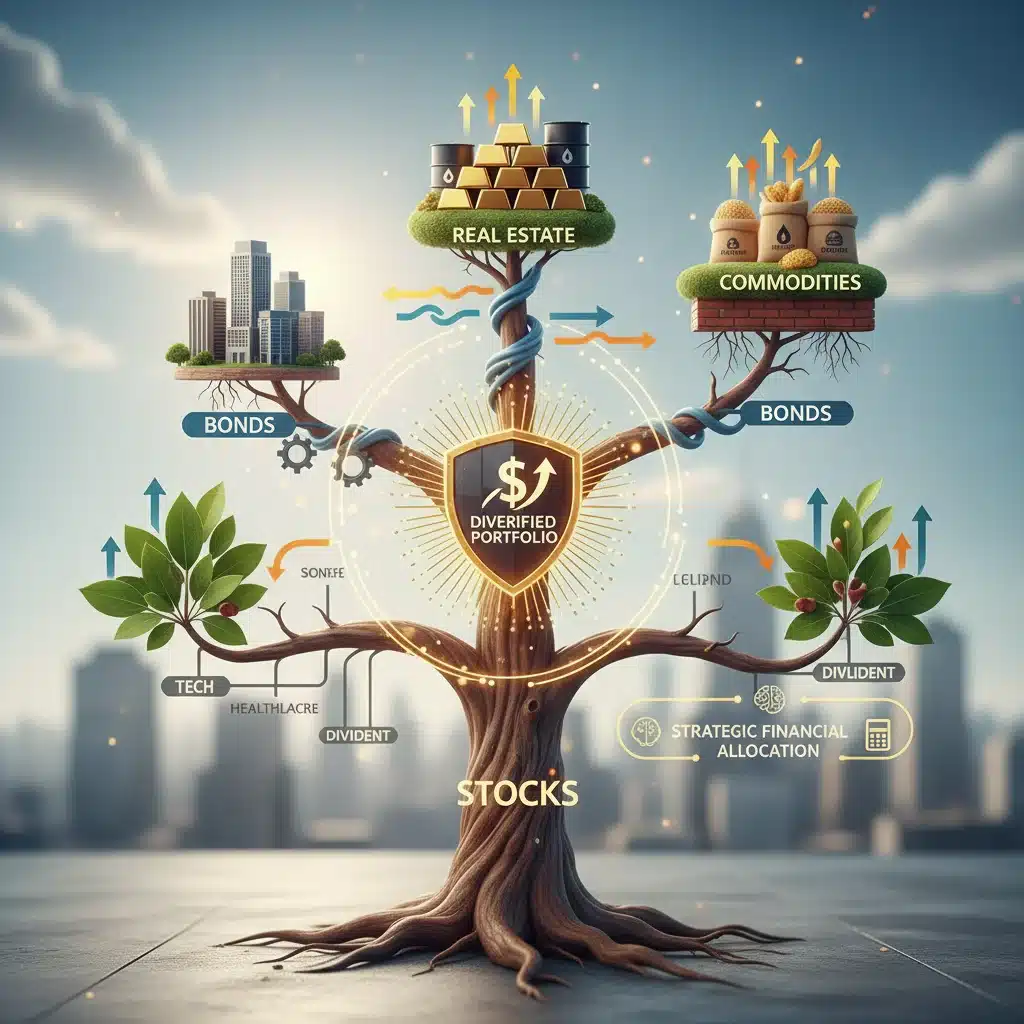
Diversification is key. Don’t put all your eggs in one basket. A well-diversified portfolio typically includes a mix of asset classes such as stocks, bonds, real estate, and potentially commodities. Each asset class reacts differently to inflation. For instance, certain stocks (especially those of companies with pricing power), real estate, and commodities like gold or oil can historically perform well during inflationary times.
Consider inflation-indexed securities, such as Treasury Inflation-Protected Securities (TIPS), which are designed to protect investors from inflation. The principal value of TIPS adjusts with the Consumer Price Index (CPI), ensuring your investment keeps pace with rising costs. While their returns might be modest compared to other investments, they offer a reliable hedge against inflation.
Real estate can also be a powerful inflation hedge. Property values and rental income often rise with inflation, providing both capital appreciation and a consistent income stream. However, real estate investments require significant capital and careful market analysis. For those with less capital, real estate investment trusts (REITs) offer a way to invest in real estate without directly owning physical properties.
Stocks of companies that have strong pricing power—meaning they can pass on increased costs to consumers without significant loss of sales—tend to fare better during inflation. Look for companies in essential sectors or those with strong brand loyalty. Value stocks, which are often undervalued by the market, can also offer resilience. On the other hand, long-term bonds might be less attractive during high inflation as their fixed payments become less valuable over time.
It’s crucial to consult with a qualified financial advisor to tailor an investment strategy that aligns with your risk tolerance, financial goals, and time horizon. They can help you construct a portfolio designed to navigate inflationary pressures and optimize your returns. Remember, investing is a long-term game; short-term market fluctuations are normal. Patience and adherence to your well-thought-out inflation budgeting strategies are paramount.
Strategy 4: Reduce Debt, Especially High-Interest Debt
Debt can be a significant burden at any time, but its impact is amplified during periods of inflation. As the cost of living rises, the financial strain of debt payments can become even more pronounced, making it harder to manage your budget and save for the future. Prioritizing debt reduction, particularly high-interest debt, is a critical component of effective inflation budgeting strategies.
High-interest debt, such as credit card balances, can quickly spiral out of control. When inflation is high, the real cost of carrying such debt increases because the interest rates often remain high, while the purchasing power of the money you earn to pay it back decreases. This creates a double whammy, making it harder to get ahead financially. Focus on paying down these debts aggressively using strategies like the debt snowball or debt avalanche method.
The debt snowball method involves paying off your smallest debts first, regardless of interest rate, to build momentum and motivation. The debt avalanche method, conversely, prioritizes paying off debts with the highest interest rates first, which can save you more money in the long run. Choose the method that best suits your psychological and financial needs.
Consider consolidating high-interest debts into a lower-interest personal loan or a balance transfer credit card (if you can pay it off before the promotional period ends). This can significantly reduce your monthly payments and the total interest paid, freeing up more cash flow for other essential expenses or savings. However, be cautious not to accrue new debt after consolidation.
For fixed-rate debts like mortgages or car loans, the impact of inflation is somewhat different. While the dollar amount of your payment remains constant, the real value of those payments decreases over time as inflation erodes the purchasing power of money. This can be seen as a slight advantage, as you’re paying back with cheaper dollars. However, focusing on reducing all debt, especially variable-rate loans, provides greater financial flexibility and reduces overall risk.
By systematically reducing your debt load, you free up more of your income to cover rising costs, invest for the future, and strengthen your overall financial position. This proactive approach to debt management is an indispensable element of robust inflation budgeting strategies, providing a solid foundation for financial resilience in 2026.
Strategy 5: Increase Your Income Streams
While cutting expenses is vital, another powerful strategy to combat inflation is to increase your income. Relying solely on your primary income source might not be enough to keep pace with rising costs. Exploring additional income streams can provide a much-needed boost to your financial resilience and enhance your inflation budgeting strategies.
Consider leveraging your skills and hobbies to start a side hustle. This could involve freelancing in your area of expertise, offering consulting services, creating and selling crafts, or even driving for a ride-sharing service. The gig economy offers numerous opportunities to earn extra money on your own schedule. Even a few hundred extra dollars a month can make a significant difference in your ability to absorb inflationary pressures.
If a side hustle isn’t feasible, explore opportunities for professional development within your current role. Acquiring new skills or certifications can make you more valuable to your employer, potentially leading to a promotion or a raise. Proactively advocating for a salary increase during your performance review, backed by evidence of your contributions and market value, is another direct way to boost your income.
For those with extra space, consider renting out a spare room or a portion of your property through platforms like Airbnb. This can generate a consistent passive income stream. Similarly, if you have assets like a car that you don’t use frequently, you could rent it out. These types of opportunities allow existing assets to work for you.
Investing in your education or professional training can also be a long-term income-increasing strategy. Higher education or specialized skills often lead to higher earning potential. While this might involve an upfront cost, the long-term benefits can far outweigh the initial investment, helping you stay ahead of inflation in the years to come.
Remember, the goal is to create financial flexibility. Having multiple income streams reduces your reliance on a single source and provides a cushion against economic downturns or unexpected expenses. By actively seeking ways to increase your earnings, you are not only battling inflation but also building a more robust and secure financial future, which is a core tenet of effective inflation budgeting strategies.
Strategy 6: Optimize Your Spending on Essentials
Even when inflation hits, some expenses are unavoidable: groceries, utilities, transportation, and housing. However, within these essential categories, there are often significant opportunities for optimization. Smart spending on essentials is a cornerstone of effective inflation budgeting strategies.
For groceries, meal planning is your best friend. Plan your meals for the week, create a detailed shopping list, and stick to it. Avoid impulse purchases and shop sales. Consider buying non-perishable items in bulk when they are on offer, but be mindful of storage space and potential waste. Exploring discount grocery stores or farmers’ markets can also yield significant savings. Cooking at home from scratch is almost always cheaper and healthier than eating out or buying pre-made meals.

Utilities can be a major drain. Implement energy-saving habits like turning off lights, unplugging electronics, and using energy-efficient appliances. Consider smart thermostats to optimize heating and cooling. Regularly review your utility bills for anomalies and compare providers if competition exists in your area. Even small changes can lead to noticeable savings over time, especially when energy prices are climbing.
Transportation costs are often volatile. If possible, reduce your reliance on personal vehicles by carpooling, using public transportation, cycling, or walking. Regularly maintain your car to ensure optimal fuel efficiency. If you’re due for a new vehicle, consider fuel-efficient models or electric vehicles, which might have higher upfront costs but lower running expenses. Review your car insurance regularly to ensure you’re getting the best rates.
Housing is typically the largest expense. While changing your housing situation might not be a quick fix, if you’re considering a move, factor in the cost of living and housing prices in different areas. For homeowners, refinancing your mortgage to a lower interest rate (if available) or making extra payments to reduce interest paid over the life of the loan can be beneficial. Renters can explore negotiating lease renewals or finding more affordable options when their lease is up.
Beyond these, critically evaluate all your recurring subscriptions – streaming services, gym memberships, software. Are you using them enough to justify the cost? Consolidating or canceling unused subscriptions can free up significant funds. Every dollar saved on essentials is a dollar that retains its purchasing power, reinforcing your overall inflation budgeting strategies.
Strategy 7: Embrace Frugality and Mindful Consumption
The final, overarching strategy for navigating inflation is to cultivate a mindset of frugality and mindful consumption. This isn’t about living a life of scarcity, but rather about making deliberate choices that prioritize value, longevity, and necessity over impulse and excess. Embracing this philosophy can significantly enhance all your inflation budgeting strategies.
Before every purchase, especially for non-essentials, ask yourself: Do I truly need this? Can I borrow it, mend what I have, or find a second-hand alternative? The rise of the sharing economy and second-hand markets (online marketplaces, thrift stores) offers excellent opportunities to acquire goods at a fraction of the cost of new items. This not only saves money but also promotes sustainability.
Practice delayed gratification. Instead of buying something immediately, wait a day or two. Often, the urge to purchase passes, or you realize you can do without it. This simple technique can prevent countless impulse buys that chip away at your budget.
Focus on quality over quantity. While it might seem counterintuitive when trying to save, investing in durable, well-made items that last longer can be more economical in the long run than repeatedly buying cheap, disposable alternatives. This applies to clothing, appliances, and even tools.
Become a savvy consumer. Research prices, read reviews, and compare options before making significant purchases. Look for sales, discounts, and loyalty programs. Don’t be afraid to negotiate prices, especially for larger items or services. Every dollar saved is a dollar that retains its value in an inflationary environment.
Mindful consumption also extends to your time and energy. Are you spending your resources on activities that truly bring you joy and align with your values, or are you succumbing to societal pressures? Re-evaluating your priorities can lead to a more fulfilling life that naturally costs less.
By consciously adopting a frugal mindset, you’re not just reacting to inflation; you’re proactively building a resilient financial lifestyle. This approach empowers you to make intentional choices with your money, ensuring that your resources are allocated efficiently and effectively, safeguarding your purchasing power against the economic shifts of 2026 and beyond. This is the ultimate goal of comprehensive inflation budgeting strategies.
Conclusion: Securing Your Financial Future Against Inflation
Navigating the potential challenges of inflation in 2026 requires more than just hope; it demands proactive planning, disciplined execution, and a commitment to smart financial practices. By implementing these seven inflation budgeting strategies, you can empower yourself to protect your purchasing power, maintain your financial stability, and even thrive amidst economic uncertainty.
From regularly reassessing and trimming your budget to strategically investing and embracing mindful consumption, each strategy plays a crucial role in building a resilient financial framework. Remember that financial planning is an ongoing process, not a one-time event. The economic landscape will continue to evolve, and your ability to adapt and adjust your strategies will be key to long-term success.
Start today by reviewing your current financial situation, identifying areas for improvement, and taking concrete steps toward implementing these strategies. Whether it’s setting up an automated savings transfer, researching investment options, or simply planning your next grocery list with greater care, every action you take contributes to your financial well-being. With diligence and foresight, you can confidently face 2026 and safeguard your financial future against the erosive effects of inflation.