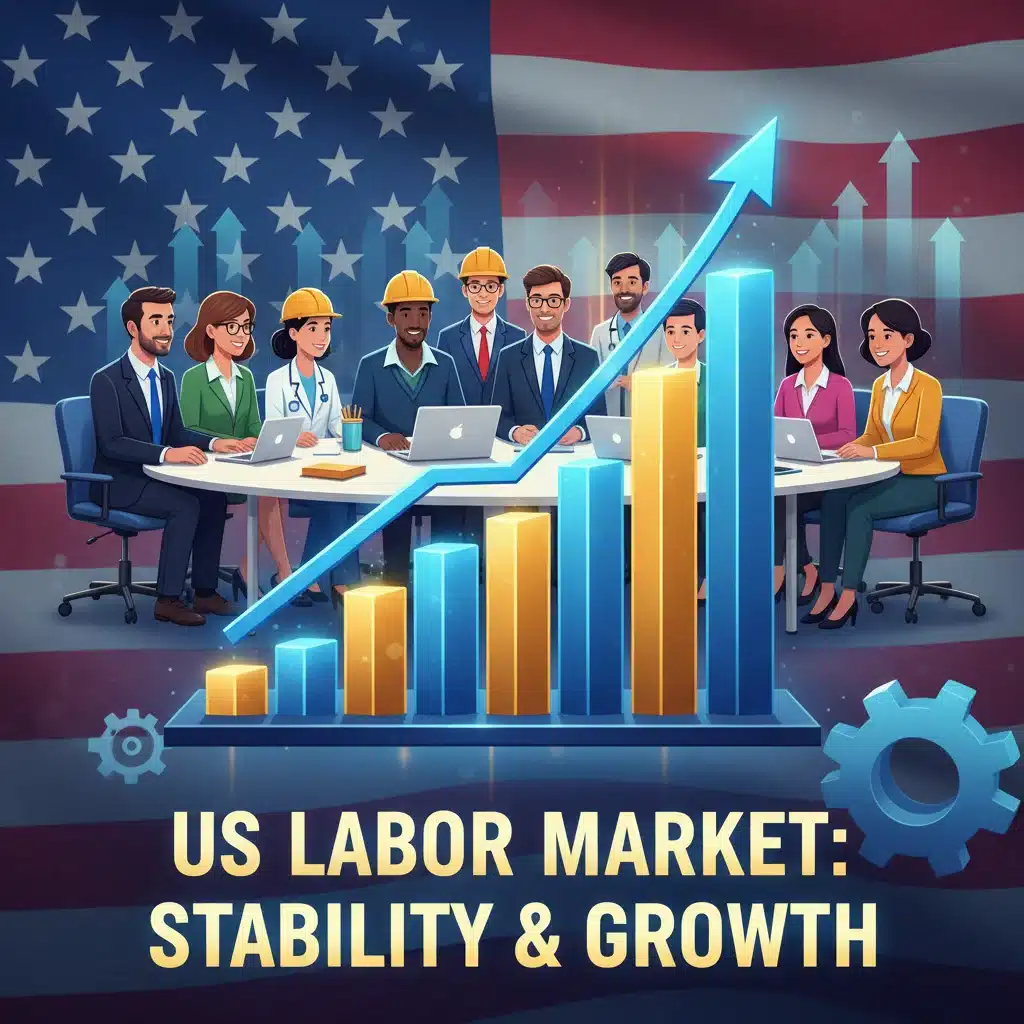
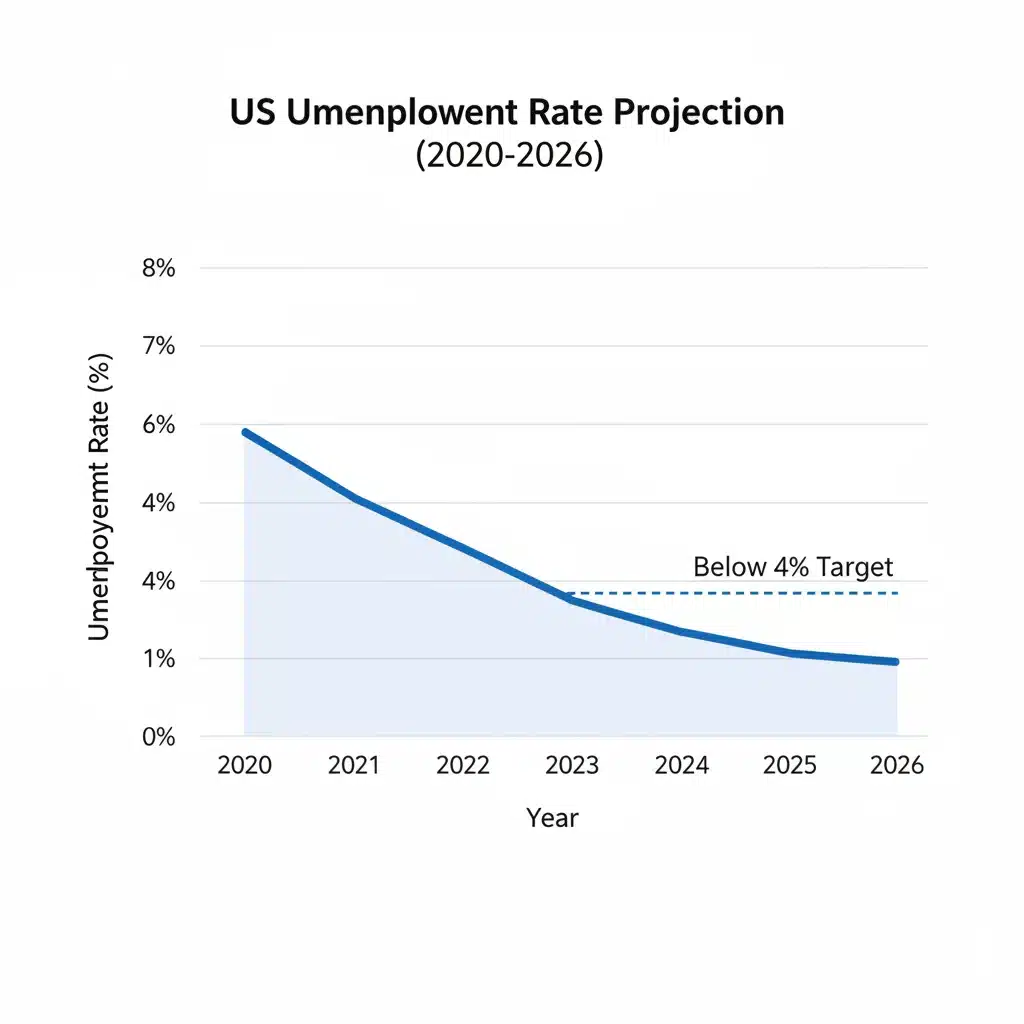
The United States economy is a dynamic and ever-evolving entity, constantly shaped by a myriad of global and domestic factors. As we cast our gaze towards the year 2026, the US Labor Market 2026 presents a fascinating picture of stability and sustained growth, with unemployment rates projected to comfortably settle below the 4% mark. This forecast signals a robust economic environment, offering significant implications for policymakers, businesses, and individual workers alike. Understanding the nuances of this projected stability requires a deep dive into the underlying economic forces, demographic shifts, technological advancements, and policy frameworks that are expected to shape the employment landscape.
The journey to a sub-4% unemployment rate in 2026 is not merely a statistical anomaly but a reflection of several interconnected trends. Post-pandemic recovery efforts, coupled with strategic investments in key sectors, have laid a foundation for sustained job creation. However, this stability is not without its challenges, as evolving skill requirements and the imperative for workforce adaptability remain central themes. This comprehensive analysis will explore the key drivers behind the anticipated stability in the US Labor Market 2026, examine the potential challenges and opportunities, and provide insights into what this means for the future of work in America.
Anúncios
The Current Landscape: Setting the Stage for 2026
Before we delve into the specifics of the 2026 forecast, it is crucial to understand the current state of the US labor market. Recent years have seen unprecedented volatility, from the sharp downturn caused by the COVID-19 pandemic to a rapid and impressive recovery. This recovery has been characterized by strong job growth, declining unemployment rates, and significant shifts in labor force participation. Factors such as government stimulus packages, increased consumer demand, and a renewed focus on domestic production have all played a role in this rebound.
As of late 2023 and early 2024, the US labor market has demonstrated remarkable resilience. Unemployment rates have consistently hovered at historically low levels, often touching or falling below 4%. This tight labor market has empowered workers, leading to wage growth in many sectors and increased bargaining power. However, it has also presented challenges for employers struggling to find qualified talent, intensifying the competition for skilled workers. The Federal Reserve’s monetary policy, aimed at taming inflation while supporting employment, has been a critical balancing act, influencing interest rates and overall economic activity.
Anúncios
The foundational strength of the US economy, underpinned by innovation, a diverse industrial base, and a relatively flexible labor market, provides a strong springboard for the projections for 2026. While global economic headwinds and domestic policy debates continue to exert influence, the underlying momentum suggests a continuation of favorable employment conditions. The lessons learned from recent economic cycles, particularly concerning supply chain vulnerabilities and the importance of a resilient workforce, are also shaping current and future strategies.
Forecasting Stability: Why Unemployment Below 4%?
The projection of unemployment rates stabilizing below 4% in the US Labor Market 2026 is based on a confluence of economic indicators and trends. Several key factors are expected to contribute to this sustained stability:
1. Sustained Economic Growth
Economists anticipate continued, albeit potentially moderate, economic growth leading up to and into 2026. This growth will be driven by various sectors, including technology, healthcare, renewable energy, and advanced manufacturing. Consumer spending, a major driver of the US economy, is expected to remain robust, supported by stable employment and modest wage increases. Business investment in new technologies and infrastructure will also contribute to job creation and economic expansion.
2. Demographic Shifts and Labor Force Dynamics
Demographic trends play a significant role in shaping the labor market. While an aging population might suggest a shrinking labor force, increased participation rates among certain demographics, such as older workers delaying retirement and greater integration of diverse talent pools, could offset these effects. Furthermore, immigration policies, if supportive, could also contribute to labor supply, helping to meet the demands of a growing economy. The evolving composition of the workforce, with a greater emphasis on flexibility and work-life balance, is also influencing how and where people work.
3. Technological Advancements and Automation
The narrative around technology and automation often raises concerns about job displacement. However, the more nuanced reality is that technology, while transforming certain roles, also creates new ones. In the US Labor Market 2026, we expect to see continued demand for skills related to artificial intelligence, data science, cybersecurity, and advanced robotics. Automation will likely enhance productivity in many sectors, allowing businesses to expand and create new types of jobs that require human oversight, creativity, and problem-solving. Investment in reskilling and upskilling initiatives will be crucial to ensure the workforce can adapt to these changes.
4. Adaptable Business Models and Remote Work Trends
The pandemic accelerated the adoption of remote and hybrid work models, which are likely to persist and evolve by 2026. This flexibility can broaden the talent pool for employers, allowing them to hire from a wider geographic area and potentially reducing labor market bottlenecks in specific regions. For employees, it offers greater work-life balance and access to opportunities that might not have been available locally. This adaptability in business models contributes to overall labor market efficiency and resilience.
5. Targeted Government Policies and Investments
Government policies, including investments in infrastructure, clean energy, and workforce development programs, are expected to continue supporting job creation. Initiatives aimed at boosting domestic manufacturing and supply chain resilience could also lead to new employment opportunities. Furthermore, educational reforms focused on STEM fields and vocational training will be critical in equipping the future workforce with the necessary skills for in-demand jobs.
Key Sectors Driving Job Growth in 2026
While the overall US Labor Market 2026 is projected to be stable, certain sectors are expected to be primary drivers of job growth and innovation. Understanding these sectors is crucial for individuals planning their careers and for businesses looking to strategically invest and expand.
1. Technology and Information Services
The technology sector remains a powerhouse of innovation and job creation. Areas such as artificial intelligence, machine learning, cloud computing, cybersecurity, and data analytics will continue to experience high demand for skilled professionals. The pervasive integration of technology across all industries means that even non-tech companies will seek tech-savvy employees to drive digital transformation and efficiency.
2. Healthcare and Social Assistance
An aging population and advancements in medical science will ensure sustained growth in the healthcare sector. Demand for doctors, nurses, therapists, medical technicians, and home healthcare aides will remain strong. Beyond direct patient care, jobs in medical research, health informatics, and healthcare administration are also projected to expand significantly.
3. Renewable Energy and Green Technologies
With increasing global focus on sustainability and climate change, the renewable energy sector is poised for substantial growth. Jobs in solar, wind, geothermal, and other green technologies, from engineering and manufacturing to installation and maintenance, will see a surge. This sector will also spur innovation in related fields like energy storage and smart grid technologies.
4. Advanced Manufacturing and Logistics
Reshoring initiatives and investments in advanced manufacturing techniques, including automation and additive manufacturing, will revitalize the manufacturing sector. The need for skilled technicians, engineers, and supply chain specialists will increase. The logistics sector, critical for efficient movement of goods, will also continue to expand, driven by e-commerce and global trade.
5. Education and Workforce Development
As the economy evolves, the need for continuous learning and skill development becomes paramount. The education sector, particularly in vocational training, higher education, and corporate learning and development, will play a vital role in preparing the workforce for future jobs. Educators, trainers, and curriculum developers will be in high demand.
Challenges and Considerations for the US Labor Market 2026
While the outlook for the US Labor Market 2026 is largely positive, several challenges and considerations need to be addressed to ensure equitable and sustainable growth.
1. Skills Gap and Workforce Preparedness
Despite low unemployment, a significant skills gap persists in many industries. Employers struggle to find workers with the specific technical and soft skills required for modern jobs. This gap necessitates ongoing investment in education, vocational training, and reskilling programs to align worker capabilities with employer needs. The rapid pace of technological change means that lifelong learning will become a necessity, not just an option.
2. Inflationary Pressures and Wage Growth
While wage growth is generally positive for workers, excessive wage growth in a tight labor market can contribute to inflationary pressures. The Federal Reserve will continue to monitor this balance closely. Ensuring that wage increases are sustainable and reflective of productivity gains will be crucial for maintaining economic stability without triggering undue inflation.
3. Geopolitical and Global Economic Volatility
The US economy is not isolated from global events. Geopolitical tensions, international trade disputes, and economic downturns in other major economies could impact the US labor market. Supply chain disruptions, for example, can affect manufacturing and retail sectors, leading to job losses or reduced hiring. Maintaining strong international relationships and diversified trade partnerships will be important buffers against such volatility.
4. Income Inequality and Access to Opportunities
Even with low unemployment, income inequality remains a persistent challenge. Ensuring that the benefits of a strong labor market are broadly shared across all demographic groups and regions is critical. Policies aimed at improving access to education, affordable healthcare, and quality childcare can help to level the playing field and provide more opportunities for upward mobility. Addressing systemic barriers to employment for marginalized communities will also be vital.
5. The Future of Work: AI and Automation Ethics
As AI and automation become more sophisticated, ethical considerations surrounding their deployment in the workplace will grow. Questions about job displacement, data privacy, algorithmic bias, and the nature of human-machine collaboration will require careful consideration and policy frameworks. The goal should be to harness these technologies to augment human capabilities rather than simply replace them.

Implications for Businesses and Workers
The projected stability of the US Labor Market 2026 carries significant implications for both businesses and individual workers.
For Businesses:
- Talent Acquisition and Retention: A tight labor market means businesses will continue to face challenges in attracting and retaining top talent. Competitive compensation, comprehensive benefits, flexible work arrangements, and a strong company culture will be crucial differentiators.
- Investment in Workforce Development: Companies will need to invest heavily in upskilling and reskilling their existing workforce to meet evolving skill demands. Internal training programs, partnerships with educational institutions, and apprenticeships will become more prevalent.
- Embracing Technology: Businesses that strategically adopt automation and AI will gain a competitive advantage by improving efficiency and allowing employees to focus on higher-value tasks.
- Diversity, Equity, and Inclusion (DEI): A diverse workforce is a resilient and innovative one. Companies committed to DEI initiatives will be better positioned to attract a broader talent pool and foster a more inclusive work environment.
- Strategic Planning: Understanding the specific trends within their industry and region will enable businesses to make informed decisions about expansion, investment, and human capital management.
For Workers:
- Continuous Learning: Lifelong learning will be essential. Workers must proactively acquire new skills, especially in digital literacy, critical thinking, and adaptability, to remain competitive in the US Labor Market 2026.
- Career Mobility: The stable job market could provide opportunities for career advancement and transitions into new fields. Workers should be open to exploring different roles and industries that align with their evolving skills and interests.
- Bargaining Power: In a tight labor market, workers may have more leverage to negotiate for better wages, benefits, and work-life balance.
- Focus on Soft Skills: While technical skills are vital, soft skills such as communication, collaboration, problem-solving, and emotional intelligence will become increasingly valuable as automation handles routine tasks.
- Financial Planning: A stable employment outlook provides an opportune time for workers to focus on financial planning, saving, and investing for their long-term goals.
Policy Recommendations for Sustained Labor Market Health
To ensure the continued health and stability of the US Labor Market 2026 and beyond, policymakers should consider several key areas:
- Investing in Education and Training: Increase funding for K-12 STEM education, vocational training programs, community colleges, and apprenticeships. Develop flexible, modular training programs that can quickly adapt to changing industry needs.
- Promoting Workforce Mobility: Implement policies that support worker mobility, such as portable benefits, recognition of prior learning, and clear pathways for credentialing.
- Supporting Small Businesses: Small businesses are significant job creators. Policies that reduce regulatory burdens, provide access to capital, and offer resources for workforce development can help them thrive.
- Encouraging Innovation and R&D: Continued investment in research and development, along with policies that foster innovation, will drive economic growth and create new industries and jobs.
- Addressing Infrastructure Gaps: Modernizing infrastructure (physical and digital) not only creates jobs in the short term but also improves productivity and competitiveness in the long term.
- Revisiting Immigration Policies: Thoughtful immigration policies can address specific labor shortages and contribute to economic dynamism, particularly in highly skilled sectors.
- Enhancing Social Safety Nets: A robust social safety net provides a crucial buffer during economic transitions, allowing workers to take risks, retrain, and seek new opportunities without fear of destitution.
Conclusion: A Resilient and Evolving US Labor Market
The forecast for the US Labor Market 2026 paints a picture of remarkable resilience and stability, with unemployment rates expected to remain comfortably below 4%. This optimistic outlook is a testament to the adaptive capacity of the US economy, driven by technological innovation, demographic shifts, and strategic policy responses. While challenges such as the skills gap, inflationary pressures, and global volatility will persist, a proactive approach from businesses, workers, and policymakers can mitigate these risks and harness the opportunities that lie ahead.
The future of work in America is not merely about job numbers; it is about creating meaningful employment, fostering economic security, and ensuring that all individuals have the opportunity to thrive in an evolving landscape. By embracing continuous learning, investing in human capital, and fostering an environment of innovation and inclusivity, the US can solidify its position as a global economic leader and ensure a prosperous future for its workforce. The stable US Labor Market 2026 is not just a prediction; it is a call to action for collective effort in building a stronger, more adaptable, and equitable economic future.