Mergers and Acquisitions 2026: US Growth Sectors & Valuations

Anúncios
The landscape of Mergers and Acquisitions (M&A) is a dynamic barometer of economic health and future potential. As we look towards 2026, the United States economy presents a complex yet fertile ground for M&A activity. Understanding the key sectors driving growth and the evolving valuation methodologies is paramount for investors, business leaders, and policymakers alike. The year 2026 is poised to be a period of strategic realignments, technological integration, and a renewed focus on resilient business models. This comprehensive analysis delves into the anticipated trends, spotlighting the sectors expected to dominate M&A US 2026, and offering insights into the valuation dynamics that will shape deal-making.
Anúncios
The past few years have demonstrated the incredible adaptability of the US market, with companies navigating unprecedented challenges from global pandemics to supply chain disruptions and inflationary pressures. These experiences have not only highlighted vulnerabilities but have also accelerated innovation and strategic consolidation. In 2026, we anticipate a more mature post-pandemic economic environment, characterized by sustained technological advancement, a push towards sustainability, and a re-evaluation of global supply chains. These factors will be central to the M&A narrative, influencing both the volume and the nature of transactions across various industries.
For anyone involved in corporate strategy, investment banking, private equity, or simply keen on understanding economic shifts, keeping a pulse on M&A US 2026 is crucial. This article aims to provide a forward-looking perspective, identifying the catalysts for deal flow and the specific niches where significant value creation is expected. We will explore how macroeconomic forces, regulatory changes, and consumer behavior will collectively shape the M&A environment, offering a roadmap for navigating the opportunities and challenges that lie ahead.
Navigating the Future: Mergers and Acquisitions in the US Economy for 2026
Anúncios
Macroeconomic Outlook and its Impact on M&A US 2026
The broader economic climate serves as the bedrock for M&A activity. As we approach 2026, several macroeconomic factors will significantly influence the appetite for deals in the US. Economic growth projections, interest rate policies, inflation trends, and geopolitical stability are all critical variables. A moderately strong US economy, characterized by stable GDP growth and controlled inflation, would create an optimal environment for M&A. Conversely, persistent inflationary pressures or significant economic slowdowns could dampen enthusiasm and lead to more cautious deal-making.
Interest rates, specifically the Federal Reserve’s policy, will play a pivotal role. Higher interest rates typically increase the cost of capital for acquisitions, potentially reducing deal valuations and the number of highly leveraged transactions. However, if interest rates stabilize or even see a slight decrease, it could reinvigorate private equity activity and corporate strategic acquisitions, making financing more accessible and affordable. The availability of credit and the overall health of financial markets will also dictate the pace and size of M&A deals.
Geopolitical factors, while often unpredictable, have an undeniable impact. Global trade relations, international conflicts, and supply chain vulnerabilities can either necessitate strategic acquisitions for resilience or deter cross-border transactions due to increased risk. For M&A US 2026, a relatively stable global environment, or at least a predictable one, would foster greater confidence among acquirers and sellers. Companies will continue to seek M&A opportunities that enhance supply chain security and market access, mitigating external risks.
Furthermore, regulatory scrutiny, particularly from antitrust bodies, is expected to remain robust. Both the Department of Justice and the Federal Trade Commission have signaled a strong intent to review deals that could stifle competition. This increased oversight will require dealmakers to conduct thorough due diligence and craft transactions that clearly demonstrate pro-competitive benefits, especially in consolidating industries. Understanding the regulatory landscape is not just a compliance issue; it’s a strategic imperative for successful M&A in 2026.
Key Sectors Driving Growth and M&A Activity in 2026
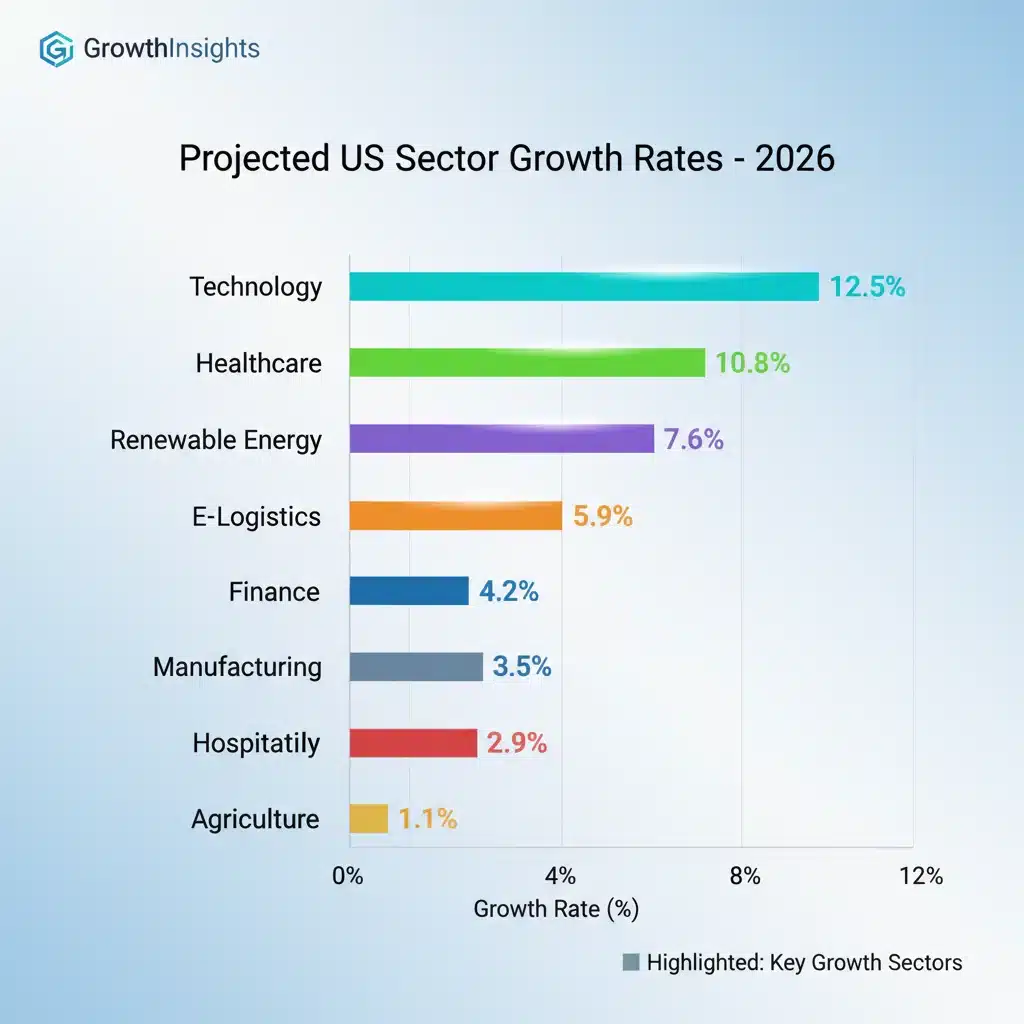
The heart of M&A US 2026 will undoubtedly be found in specific sectors poised for significant growth and transformation. While traditional industries will always see some level of consolidation, the most dynamic deal flow is expected in areas undergoing rapid innovation and structural change. Here are some of the prime contenders:
Technology and Software
The technology sector remains an undisputed leader in M&A. In 2026, this will continue, with a particular focus on artificial intelligence (AI), machine learning (ML), cybersecurity, cloud computing, and specialized software-as-a-service (SaaS) solutions. Companies will seek to acquire capabilities that enhance their digital transformation efforts, improve data analytics, and secure their digital assets. The race for AI talent and proprietary algorithms will fuel a significant number of strategic acquisitions. Furthermore, the convergence of AI with other industries, such as healthcare and manufacturing, will create new M&A avenues.
Sub-sectors like generative AI, quantum computing, and advanced robotics are still nascent but will attract considerable investment and acquisition interest as they mature. Larger tech giants will continue to acquire smaller, innovative startups to maintain their competitive edge and expand into new markets. Private equity firms will also play a crucial role, identifying and scaling promising tech companies before strategic exits.
Healthcare and Life Sciences
The healthcare sector is perennially active in M&A, driven by demographic shifts, technological advancements, and regulatory changes. In 2026, we anticipate continued consolidation among healthcare providers, pharmaceutical companies, and biotechnology firms. A key driver will be the pursuit of innovative therapies, precision medicine, and digital health solutions. Companies will look to acquire assets that bolster their drug pipelines, expand their therapeutic areas, or enhance their capabilities in telehealth and remote patient monitoring.
Specialized areas such as gene therapy, cell therapy, and personalized diagnostics will be hotbeds for M&A. The aging population and the increasing prevalence of chronic diseases will ensure sustained demand for advanced medical solutions, making companies in these niches attractive targets. Furthermore, the integration of AI and data analytics into drug discovery and patient care will drive M&A focused on health tech companies that can optimize these processes.
Renewable Energy and Sustainability
The global push towards decarbonization and sustainable practices positions the renewable energy sector as a major M&A driver for 2026. Investments will flow into solar, wind, geothermal, and hydroelectric power generation, as well as energy storage solutions and smart grid technologies. Companies will seek to acquire assets that expand their clean energy portfolios, reduce their carbon footprint, or provide innovative solutions for energy efficiency.
Beyond energy generation, the broader sustainability sector, encompassing areas like waste management, recycling technologies, sustainable agriculture, and eco-friendly manufacturing, will also see increased M&A. This is driven by both regulatory mandates and growing consumer and investor demand for environmentally responsible businesses. Strategic buyers and private equity funds will actively seek companies that offer scalable solutions to environmental challenges, aligning with ESG (Environmental, Social, and Governance) investment criteria.
Advanced Manufacturing and Robotics
The resurgence of domestic manufacturing, coupled with the imperative for increased automation and efficiency, will drive M&A in advanced manufacturing and robotics. Companies will acquire technologies and capabilities that enable Industry 4.0 transformation, including automation, IoT integration, additive manufacturing (3D printing), and advanced materials. The goal is to enhance productivity, reduce labor costs, and build more resilient and localized supply chains.
The demand for robotics and automation solutions extends across various industries, from automotive and electronics to logistics and healthcare. Companies specializing in collaborative robots (cobots), autonomous mobile robots (AMRs), and sophisticated automation software will be prime targets. This sector’s M&A activity will be characterized by both horizontal consolidation and vertical integration, as firms seek to control more aspects of the automated production process.
Financial Technology (FinTech)
FinTech continues to disrupt and transform the financial services industry, and 2026 will see robust M&A activity in this space. Key areas include digital payments, blockchain technology, artificial intelligence in finance, challenger banks, and personalized wealth management platforms. Traditional financial institutions will acquire FinTech startups to modernize their offerings, enhance customer experience, and fend off competition from agile newcomers.
Conversely, successful FinTech companies will look to acquire smaller players to expand their market share, add new product lines, or gain access to specific customer segments. The integration of AI for fraud detection, risk management, and personalized financial advice will be a significant driver. Regulatory sandboxes and evolving frameworks will also shape the types of deals that can be successfully executed in this rapidly changing sector.
Understanding Valuation Trends in M&A US 2026
Valuation is at the core of every M&A transaction. In 2026, several factors will influence how companies are valued, moving beyond traditional multiples to incorporate more forward-looking metrics and qualitative assessments. The era of cheap money may be behind us, necessitating a more rigorous approach to determining fair value.
Emphasis on Recurring Revenue and Profitability
While growth remains important, there will be a heightened emphasis on sustainable profitability and recurring revenue models. Companies with strong subscription bases, predictable cash flows, and proven paths to profitability will command higher valuations. This shift reflects a more cautious investor sentiment, prioritizing stability and financial health over aggressive, unprofitable growth strategies.
For software and tech companies, metrics like Annual Recurring Revenue (ARR), customer lifetime value (CLTV), and customer acquisition cost (CAC) will be scrutinized even more intensely. Buyers will seek businesses that demonstrate efficient customer acquisition and retention, rather than simply rapid expansion at any cost.
Strategic Value and Synergies
The concept of strategic value will gain even greater prominence. Acquirers will increasingly justify premiums based on anticipated synergies, whether they are cost savings, revenue enhancements, or market expansion opportunities. The ability to articulate and demonstrate these synergies clearly during the due diligence phase will be crucial for sellers looking to maximize their valuation. This means focusing on how the combined entity will be greater than the sum of its parts.
Valuations will also reflect the target company’s ability to fill a strategic gap, provide access to new technologies, or unlock new customer segments for the acquirer. This qualitative aspect of valuation often allows for higher multiples than purely financial metrics might suggest, particularly in highly innovative sectors.
ESG Factors in Valuation
Environmental, Social, and Governance (ESG) factors are no longer just a trend; they are becoming an integral part of valuation. Companies with strong ESG profiles are increasingly viewed as less risky and more sustainable in the long term, potentially commanding higher valuations. Conversely, poor ESG performance can lead to reputation damage, regulatory fines, and reduced investor appeal, negatively impacting value.
Buyers will conduct ESG due diligence to assess risks and opportunities related to climate change, labor practices, diversity, and corporate governance. Companies that can demonstrate a clear commitment to sustainability and ethical practices will find themselves in a stronger negotiating position for M&A US 2026.
The Role of Data and IP
In an increasingly digital economy, proprietary data and intellectual property (IP) are invaluable assets. Companies with unique datasets, patented technologies, or strong brand recognition will see these intangible assets significantly influence their valuations. The ability to leverage data for competitive advantage or to protect innovative technologies through patents will be a key differentiator.
Specialized valuation techniques for IP and data will become more prevalent, moving beyond traditional asset-based approaches. Buyers will pay premiums for companies that offer exclusive access to critical information or groundbreaking innovations, recognizing the long-term strategic advantage these provide.

Challenges and Opportunities in the 2026 M&A Landscape
While the outlook for M&A US 2026 is generally positive in key sectors, challenges remain. Economic uncertainties, regulatory hurdles, and integration complexities are perennial concerns for dealmakers. However, these challenges often present opportunities for well-prepared and agile organizations.
Integration Challenges
Post-merger integration (PMI) is consistently cited as a major hurdle to successful M&A. Cultural clashes, operational inefficiencies, and technology integration issues can derail even the most strategically sound deals. In 2026, companies will increasingly focus on robust PMI planning from the outset, recognizing that value creation happens not just at deal signing but throughout the integration process. This includes dedicated integration teams, clear communication strategies, and careful alignment of organizational cultures.
Talent Retention
In knowledge-intensive industries, talent is often the most valuable asset being acquired. Retaining key employees, particularly founders and specialized experts, is critical for realizing the full potential of an acquisition. Deal structures will increasingly include incentives for talent retention, such as earn-outs, equity grants, and tailored career development plans. The ‘war for talent’ will make this aspect of M&A even more pronounced in 2026.
Emerging Market Opportunities
While this article focuses on the US, domestic M&A will also be influenced by emerging market opportunities. US companies may look to acquire international assets to expand their global footprint, diversify revenue streams, or access lower-cost production capabilities. Conversely, foreign direct investment into the US through M&A will continue, particularly in attractive growth sectors, subject to regulatory approvals and national security reviews.
Strategic Implications for Businesses and Investors
For businesses, the 2026 M&A landscape necessitates a proactive and strategic approach. Companies should regularly assess their strategic fit within their industry, identify potential acquisition targets or divestiture opportunities, and build a strong M&A capability. This involves having a clear corporate development strategy, robust due diligence processes, and a focus on post-acquisition value creation.
Investors, including private equity firms, venture capitalists, and institutional investors, will need to be discerning. Identifying the right sectors and companies, understanding the nuances of valuation, and having a clear exit strategy will be paramount. The ability to spot undervalued assets in high-growth areas, or to identify companies ripe for operational improvements, will differentiate successful investors.
The emphasis on ESG factors also means that investors will increasingly integrate sustainability considerations into their investment thesis and due diligence. Companies that can demonstrate strong governance and a positive societal impact will be more attractive, not just from an ethical standpoint, but also from a financial risk-return perspective.
Conclusion: A Dynamic Future for M&A US 2026
The outlook for Mergers and Acquisitions in the US economy for 2026 is one of dynamic growth and strategic realignment. While macroeconomic uncertainties and regulatory scrutiny will present challenges, the underlying drivers of innovation, technological advancement, and the pursuit of sustainable business models will fuel substantial deal activity. Key sectors such as technology, healthcare, renewable energy, advanced manufacturing, and FinTech are poised to lead the charge, offering fertile ground for value creation.
Successful navigation of this landscape will require a sophisticated understanding of evolving valuation methodologies, a keen eye for strategic synergies, and a robust approach to post-merger integration and talent retention. For businesses and investors alike, a proactive and well-informed strategy will be essential to capitalize on the opportunities presented by M&A US 2026. The coming years promise to be transformative, shaping the competitive landscape and driving economic evolution across the United States.