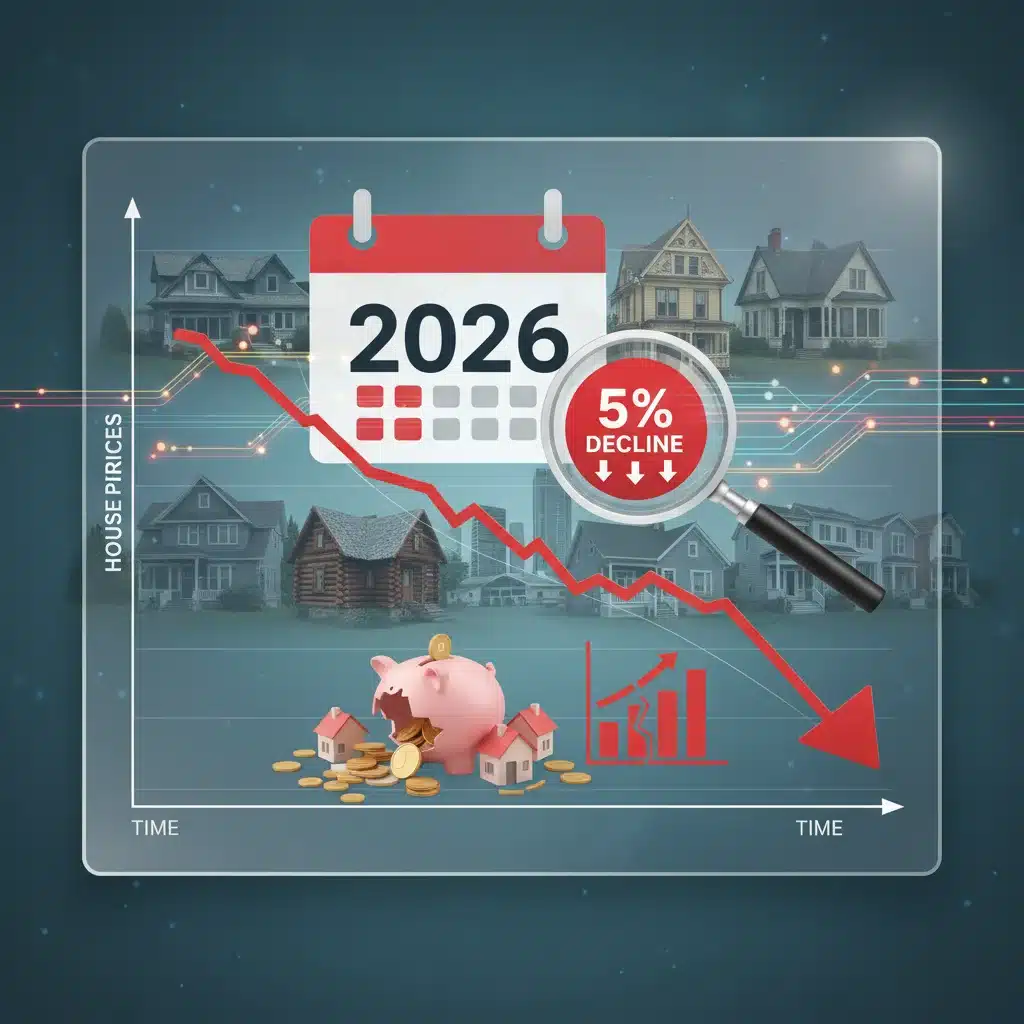
2026 Housing Market Correction: Investor Strategies for a 5% Price Decline
Anúncios
The 2026 Housing Market Correction: How a Projected 5% Price Decline Impacts Real Estate Investors
Navigating Uncertainty: Strategies for Real Estate Investors in a Shifting Market
Anúncios
The real estate market is cyclical, and while recent years have seen unprecedented growth, whispers of a potential downturn are growing louder. For real estate investors, understanding and preparing for these shifts is not just prudent; it’s essential for sustained success. As we look towards the horizon, a significant point of discussion among economists and market analysts is the potential for a 2026 housing correction, specifically a projected 5% price decline. This isn’t a doomsday prediction, but rather a calculated assessment based on various economic indicators and historical patterns. For investors, this forecast isn’t a signal to panic, but an urgent call to action – to strategize, adapt, and position themselves advantageously.
The implications of a 5% price decline extend far beyond simple property valuations. It touches on equity, financing, rental yields, and the overall psychological sentiment of the market. While 5% might seem modest compared to the dramatic drops seen in past recessions, its impact can be substantial, especially for highly leveraged investors or those with short-term holding periods. This comprehensive guide will delve into the factors contributing to this projected 2026 housing correction, analyze its potential financial ramifications for real estate investors, and, most importantly, equip you with actionable strategies to not only weather the storm but to thrive in a more challenging market environment.
Anúncios
Understanding the Forecast: Why a 5% Decline in 2026?
Before we dive into strategies, it’s crucial to understand the underlying reasons behind the forecast of a 2026 housing correction. Market predictions are never an exact science, but they are often based on a confluence of macroeconomic factors, demographic shifts, and policy changes. Several key elements are currently converging, suggesting a cooling period for the housing market.
Interest Rate Trajectories and Affordability
One of the most significant drivers of housing market dynamics is interest rates. The aggressive rate hikes by central banks in recent years, aimed at curbing inflation, have directly impacted mortgage rates. Higher interest rates translate to higher monthly mortgage payments, significantly reducing purchasing power and affordability for potential homebuyers. As affordability wanes, demand tends to soften, putting downward pressure on prices. While rates may stabilize or even slightly decrease, the cumulative effect of a sustained period of higher rates will likely continue to dampen enthusiasm and restrict buyer pools leading up to 2026.
Inflation and Economic Slowdown
Persistent inflation, coupled with a potential economic slowdown or even a mild recession, further contributes to a less robust housing market. When consumers face higher costs for everyday goods and services, and job security becomes a concern, big-ticket purchases like homes are often deferred. A weakening economy also impacts investor confidence, leading to a more cautious approach to new acquisitions and development.
Supply and Demand Rebalancing
The housing market has been characterized by a severe supply shortage for many years. However, construction has slowly been catching up, and a sustained period of higher interest rates may lead to fewer new buyers entering the market. This rebalancing of supply and demand, where supply gradually meets or even slightly exceeds demand in certain areas, is a natural precursor to price stabilization or modest declines. While a massive oversupply akin to 2008 is unlikely, a more balanced market inherently reduces the upward pressure on prices.
Demographic Shifts and Migration Patterns
While demographics generally provide a long-term tailwind for housing, certain shifts could influence regional markets. The remote work trend, for instance, initially fueled migration to more affordable areas, driving up prices there. As companies increasingly call employees back to offices, or as the cost of living rises in previously affordable locales, some of these migration patterns might reverse or slow, impacting local market dynamics. The aging population also plays a role, with some older homeowners potentially looking to downsize or move, adding to inventory.
Financial Impact on Real Estate Investors: What a 5% Decline Means
A 5% price decline, while not catastrophic, can significantly alter the investment landscape for real estate investors. Understanding these impacts is the first step in formulating an effective response to the 2026 housing correction.
Equity Erosion and Leverage Risk
For investors who purchased properties with high loan-to-value (LTV) ratios, a 5% decline can significantly erode equity. For instance, if you bought a $400,000 property with a 20% down payment ($80,000 equity), a 5% drop ($20,000) means your equity is now $60,000, representing a 25% decrease in your initial investment’s equity portion. For those with even higher leverage, the percentage loss of equity can be more pronounced. This erosion can make refinancing more challenging, potentially impacting cash-out opportunities or even leading to calls for additional collateral if loans are structured with specific LTV covenants.
Challenges in Selling and Flipping
Investors focused on ‘fix and flip’ strategies will face increased challenges. A 5% decline can quickly eat into profit margins, especially when coupled with rising renovation costs and higher holding costs due to increased interest rates. The market will become more price-sensitive, and buyers will have more leverage, demanding better deals and potentially longer marketing periods. What was once a profitable flip could turn into a break-even or even a loss, making careful underwriting and a strong value-add component even more critical.
Rental Market Adjustments
While property values may decline, the rental market doesn’t always move in perfect lockstep. However, a cooling sales market can sometimes lead to more people renting for longer, which could support rental demand. Conversely, if the economic slowdown leads to job losses, rental demand might soften, or tenants might seek more affordable options. Investors in rental properties need to monitor local rental market trends closely. A 5% price decline could, in some cases, improve cap rates for new acquisitions if rents remain stable, offering a silver lining for buy-and-hold investors.
Access to Capital and Lending Standards
In a declining market, lenders typically become more cautious. This often translates to stricter lending standards, higher interest rates for investors, and potentially lower LTV ratios offered. Access to capital might become more difficult, especially for less experienced investors or those with less robust financial profiles. This tightening of credit can further exacerbate market slowdowns, creating a feedback loop.
Strategic Responses for Real Estate Investors
The prospect of a 2026 housing correction demands a proactive and adaptive approach from real estate investors. Here are key strategies to consider:
1. Fortify Your Financial Position
This is perhaps the most crucial first step. Ensure you have ample liquidity and a strong financial buffer. Review your existing portfolio for properties with high leverage and consider strategies to reduce debt where appropriate. This might involve selling underperforming assets or refinancing to more stable terms if available. Having cash reserves allows you to cover unexpected expenses, weather potential vacancies, and most importantly, capitalize on new opportunities when they arise.
2. Re-evaluate Your Portfolio and Strategy
A market correction is an excellent time for introspection. Review every asset in your portfolio. Are there properties that no longer align with your long-term goals or that are particularly vulnerable to a downturn? Consider diversifying your portfolio geographically or by property type. If you’ve been heavily concentrated in one specific market or asset class, now might be the time to spread your risk. For ‘fix and flip’ investors, a shift towards ‘buy and hold’ in strong rental markets might be a more resilient strategy during this period.

3. Focus on Cash Flow and Value-Add Opportunities
In a declining or stagnant market, cash flow is king. Properties that generate strong, consistent rental income will be more resilient than those relying solely on appreciation. Look for opportunities to enhance cash flow in your existing properties through strategic renovations that justify higher rents, or by optimizing property management. When making new acquisitions, prioritize properties with strong cash flow potential from day one. Value-add strategies, such as acquiring distressed properties, renovating them, and then renting them out or selling them after the market stabilizes, can become particularly attractive.
4. Deep Dive into Local Market Analysis
The national forecast of a 5% decline is an average; local markets will vary significantly. Some areas might see steeper declines, while others might remain relatively stable or even continue to see modest growth due to specific local economic drivers, job growth, or supply constraints. Investors must conduct rigorous due diligence on local market fundamentals: job growth, population trends, rental demand, inventory levels, and local economic resilience. Understanding these nuances will allow you to identify pockets of opportunity and avoid areas of higher risk during the 2026 housing correction.
5. Explore Niche Markets and Alternative Strategies
A challenging market can open doors to niche opportunities. Consider exploring:
- Distressed Properties: Foreclosures, short sales, and properties from motivated sellers (e.g., due to job loss or relocation) may become more prevalent. These can offer significant discounts, but require expertise in navigating complex transactions.
- Commercial Real Estate: While residential is often the focus, specific segments of commercial real estate (e.g., industrial, certain retail niches) might offer stability or growth, depending on local economic conditions.
- Land Banking: For long-term investors, acquiring well-located land at a discount during a downturn can be a powerful strategy for future development or appreciation.
- Short-Term Rentals (STRs): While regulations are tightening in some areas, well-managed STRs in high-demand tourist or business locations can offer superior yields, but come with higher operational demands.
6. Build Strong Relationships and Networks
In any market, but especially in a challenging one, your network is invaluable. Cultivate relationships with real estate agents who specialize in distressed properties, mortgage brokers who understand investor financing, contractors for cost-effective renovations, and other investors for shared insights and potential joint ventures. A strong network can provide access to off-market deals and critical market intelligence that isn’t publicly available.
7. Master Your Negotiation Skills
A cooling market shifts power from sellers to buyers. This is the time to hone your negotiation skills. Be prepared to make strong offers, ask for concessions, and walk away if the numbers don’t make sense. Patience will be a virtue. Sellers who were accustomed to bidding wars may need time to adjust their expectations, creating opportunities for well-prepared buyers.
8. Optimize Property Management
For buy-and-hold investors, efficient property management becomes even more critical. Minimizing vacancies, retaining good tenants, and controlling operating expenses directly impact your cash flow. Consider investing in technology to streamline processes, enhance tenant communication, and reduce costs. Proactive maintenance can prevent costly repairs down the line and keep tenants happy, reducing turnover.

Long-Term Perspective: Beyond the 2026 Housing Correction
While the focus is on the immediate impact of the 2026 housing correction, successful real estate investing is fundamentally a long-term game. Market corrections are a natural part of economic cycles and often present the best opportunities for long-term wealth creation. Those who can acquire assets at a discount during a downturn are often the ones who see the most significant appreciation when the market inevitably recovers.
Historically, Corrections are Temporary
It’s important to remember that housing market corrections are typically temporary. While the duration and severity can vary, the long-term trend for real estate in most desirable areas has been upward. Population growth, inflation, and the inherent desire for homeownership all contribute to this long-term appreciation. A 5% decline, while impactful, is far from a collapse and often sets the stage for healthier, more sustainable growth in the subsequent years.
The Opportunity for Patient Capital
For investors with patient capital and a long-term outlook, a market correction can be a golden opportunity. It allows for acquisitions at more favorable prices, potentially leading to higher rental yields and greater capital appreciation over a 5-10 year horizon. The key is to avoid emotional decisions, stick to your investment criteria, and leverage the insights gained from understanding market cycles.
Adaptability is Key
The real estate market is constantly evolving. The ability to adapt your strategies to changing conditions is a hallmark of successful investors. This might mean shifting from residential to commercial, from flipping to holding, or from one geographical market to another. Continuous learning, market monitoring, and a willingness to adjust your approach will be your greatest assets.
Conclusion: Preparing for a Resilient Future
The projected 2026 housing correction, characterized by a potential 5% price decline, is not a cause for alarm but a call for strategic preparation. For real estate investors, this period will test resilience and reward foresight. By understanding the underlying economic forces, assessing the potential financial impacts, and implementing robust strategies – from fortifying finances and re-evaluating portfolios to focusing on cash flow and mastering local market analysis – investors can not only mitigate risks but also unlock significant opportunities.
The next few years will differentiate the informed, proactive investor from the reactive one. Embrace this period as a chance to refine your skills, strengthen your portfolio, and position yourself for sustained success in the ever-evolving world of real estate. The future belongs to those who are prepared.