US Inflation Outlook 2026: What a 3.2% CPI Forecast Means for Your Investment Strategy
Anúncios
US Inflation Outlook 2026: What a 3.2% CPI Forecast Means for Your Investment Strategy
Anúncios
As we navigate the complexities of the global economy, the U.S. inflation outlook remains a critical factor for investors, policymakers, and everyday consumers alike. The Consumer Price Index (CPI), a key gauge of inflation, is a number that reverberates through every facet of our financial lives. Recent projections hinting at a US Inflation Outlook of 3.2% for 2026 demand our attention. This isn’t just a number; it’s a potential game-changer that could significantly reshape investment strategies, alter spending habits, and influence economic policy for years to come. Understanding the nuances of this forecast and its implications is paramount for anyone looking to safeguard and grow their wealth.
Inflation, at its core, is the rate at which the general level of prices for goods and services is rising, and subsequently, purchasing power is falling. While a certain level of inflation is considered healthy for an economy, elevated or unexpected inflation can erode savings, diminish investment returns, and create economic instability. The 3.2% CPI forecast for 2026, though lower than the peaks seen in recent years, still represents a level that requires careful consideration and proactive planning. This comprehensive article will delve into what a 3.2% CPI forecast for the US Inflation Outlook truly means, explore its potential impact on various asset classes, and provide actionable strategies for optimizing your investment portfolio in this evolving economic landscape.
Understanding the 3.2% CPI Forecast for 2026
Before we dissect the implications, it’s crucial to understand how such a forecast is derived and what it signifies. The Consumer Price Index (CPI) measures the average change over time in the prices paid by urban consumers for a market basket of consumer goods and services. A 3.2% CPI forecast suggests that, on average, the cost of living is expected to increase by 3.2% annually by 2026. This figure is a composite, meaning some goods and services might see higher price increases, while others might experience lower or even negative growth.
Anúncios
Several factors contribute to these forecasts. Economic models consider a multitude of variables, including:
- Monetary Policy: Decisions by the Federal Reserve, particularly regarding interest rates and quantitative easing/tightening, profoundly influence inflation.
- Fiscal Policy: Government spending, taxation, and debt levels can stimulate or dampen demand, thereby affecting prices.
- Supply Chain Dynamics: Global supply chain resilience, geopolitical events, and commodity prices (especially energy) play a significant role.
- Labor Market Conditions: Wage growth and employment levels directly impact consumer purchasing power and business costs.
- Consumer Demand: The overall health of consumer spending is a primary driver of inflation.
- Technological Advancements: Innovation can lead to increased efficiency and lower production costs, potentially mitigating inflation.
A 3.2% forecast sits above the Federal Reserve’s long-term target of 2%. While not excessively high, it indicates that inflationary pressures are expected to persist, albeit at a more moderate pace than the recent past. This sustained level of inflation has distinct implications for different sectors of the economy and, consequently, for various investment vehicles. The US Inflation Outlook at this level suggests a continued need for investors to be vigilant and strategic.
Recent Updates and Economic Context
The journey to a 3.2% CPI forecast for 2026 is paved with recent economic shifts. The post-pandemic era witnessed unprecedented fiscal stimulus, supply chain disruptions, and a surge in consumer demand, leading to inflation rates not seen in decades. The Federal Reserve responded aggressively with interest rate hikes, aiming to cool down the economy and bring inflation back to its target. These actions have started to bear fruit, with inflation showing signs of moderation from its peaks.
However, the path to price stability is rarely linear. Geopolitical tensions, particularly in energy-producing regions, can cause commodity price spikes. Labor markets, while showing some signs of cooling, remain relatively tight, contributing to wage pressures. Furthermore, the ongoing debate about the long-term impact of deglobalization and shifts in trade policies could introduce new inflationary or disinflationary forces. Investors must consider these dynamic factors when evaluating the US Inflation Outlook.
Understanding the context of these recent updates is crucial for interpreting the 3.2% forecast. It reflects an expectation that while the most acute inflationary pressures might subside, a return to pre-pandemic low inflation levels might not be immediate or guaranteed. This mid-range inflation scenario presents both challenges and opportunities for investors.
Financial Impact: How 3.2% Inflation Affects Your Money
A 3.2% annual inflation rate, while seemingly modest, can have a significant cumulative effect on your purchasing power and the real value of your investments over time. Here’s a breakdown of the financial impact:
Erosion of Purchasing Power
The most direct impact of inflation is the erosion of purchasing power. Every year, your dollar buys 3.2% less than it did the year before. Over several years, this can significantly diminish the real value of your savings, especially if held in low-yield accounts.
Impact on Fixed Income Investments
Bonds and other fixed-income securities are particularly vulnerable to inflation. If a bond pays a 3% coupon, but inflation is 3.2%, your real return is negative. This means that after accounting for inflation, you’re actually losing money. Long-term bonds tend to be more sensitive to inflation than short-term bonds because their payments are fixed for a longer duration, making them more susceptible to the cumulative effects of rising prices.
Equity Market Performance
The impact on equities is more nuanced. Some companies can pass on increased costs to consumers, maintaining or even growing their profit margins. These are typically companies with strong pricing power, often found in sectors with high barriers to entry or essential goods and services. Other companies, especially those in highly competitive industries or with thin margins, may struggle to absorb higher costs, leading to reduced profitability and potentially lower stock valuations. Growth stocks, which derive much of their value from future earnings, can be more sensitive to inflation and rising interest rates as future cash flows are discounted more heavily.
Real Estate Considerations
Real estate is often considered a good hedge against inflation. Property values and rents tend to rise with inflation, providing a natural buffer. However, rising interest rates, a common response to inflation, can increase mortgage costs and dampen demand, potentially slowing appreciation. The balance between these forces will dictate real estate’s performance under a 3.2% US Inflation Outlook.
Commodities as an Inflation Hedge
Commodities like gold, oil, and other raw materials often perform well during inflationary periods. As the cost of goods rises, so too does the value of the inputs required to produce them. Gold, in particular, has a long history as a store of value during times of economic uncertainty and inflation. 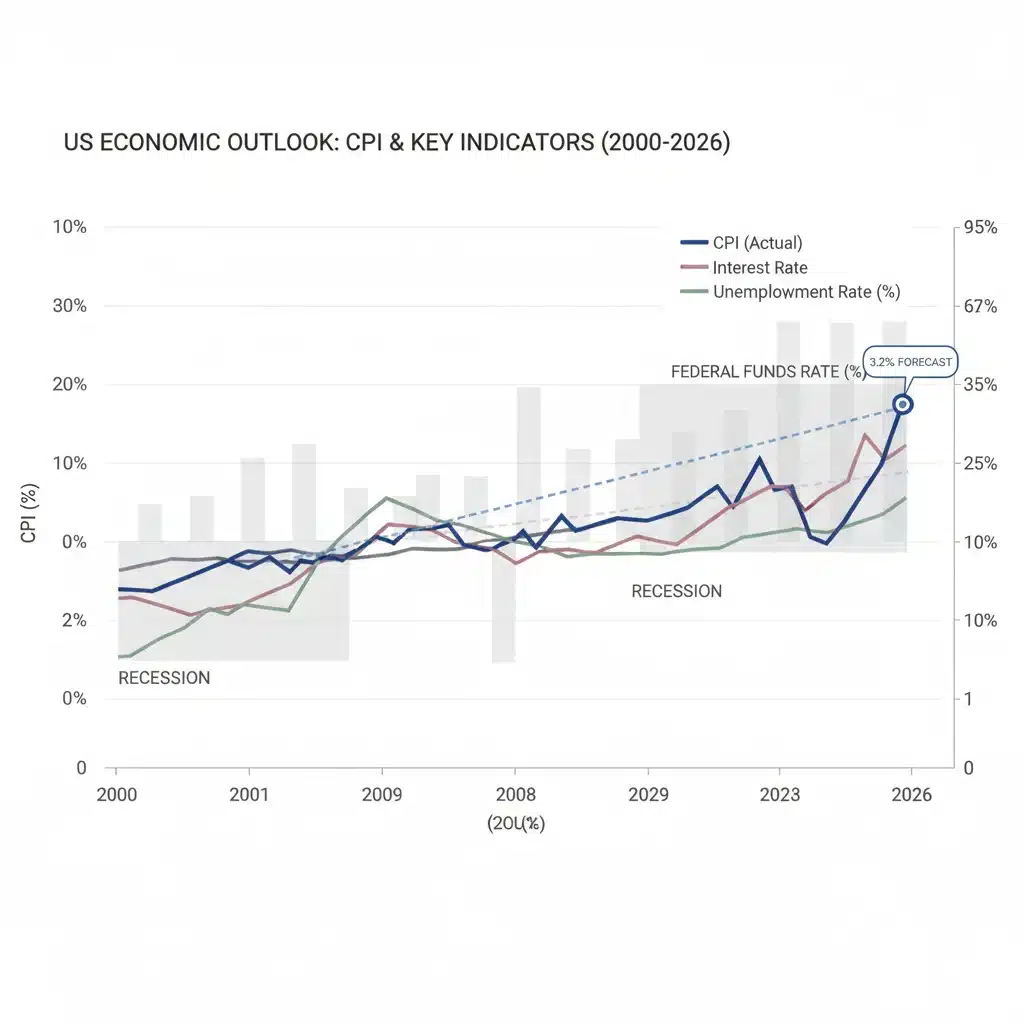
Optimizing Your Investment Strategy for a 3.2% CPI Environment
Given the 3.2% US Inflation Outlook for 2026, a proactive and adaptive investment strategy is essential. Here are key areas to focus on:
1. Diversification is Key
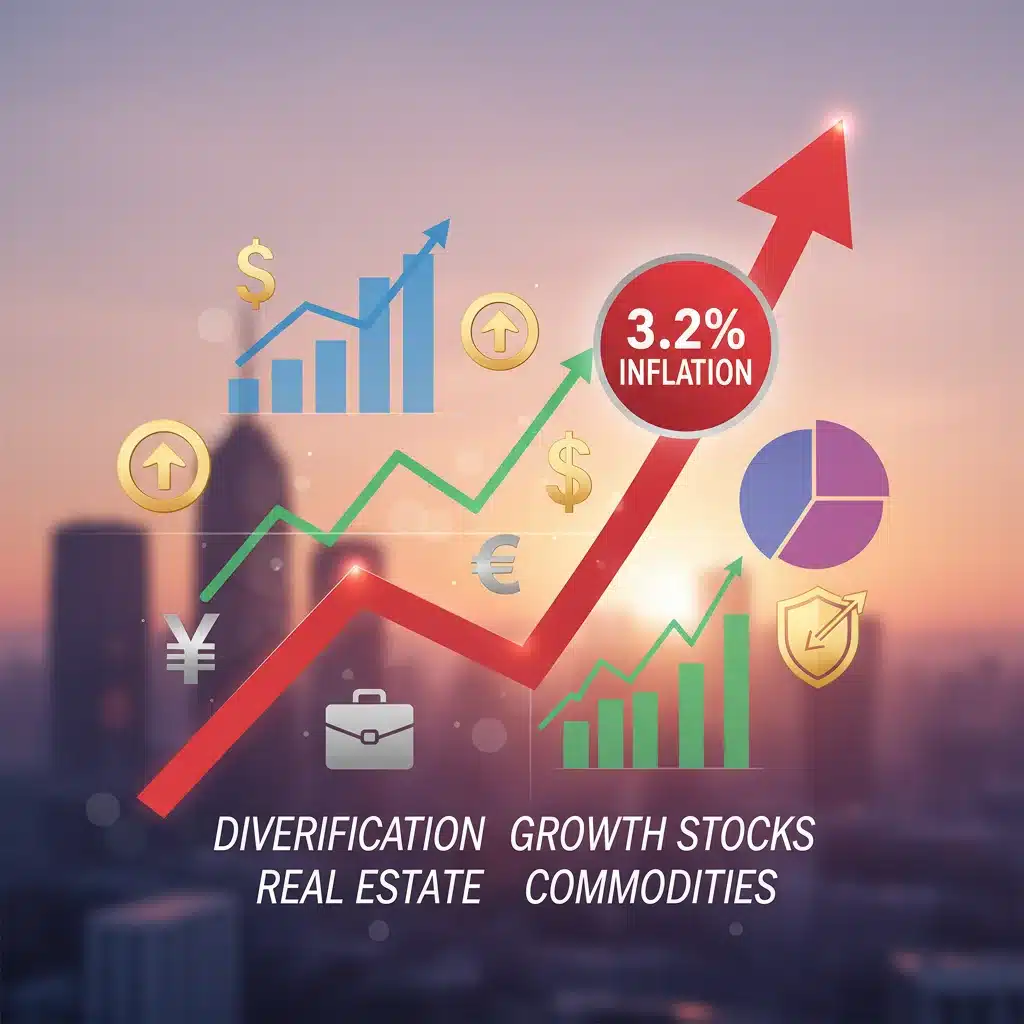
A well-diversified portfolio is always important, but it becomes even more critical in an inflationary environment. Spreading your investments across different asset classes can help mitigate risks and capture opportunities. Consider a mix of equities, real estate, commodities, and inflation-protected securities.
2. Focus on Inflation-Protected Securities (TIPS)
Treasury Inflation-Protected Securities (TIPS) are government bonds whose principal value adjusts with the CPI. This feature makes them an excellent direct hedge against inflation. As inflation rises, the principal value of TIPS increases, and so do the interest payments. They are designed specifically to protect investors from the erosive effects of rising prices.
3. Re-evaluate Your Equity Holdings
Not all stocks perform equally well during inflation. Prioritize companies with:
- Strong Pricing Power: Businesses that can raise prices without losing significant market share (e.g., essential goods, strong brands, monopolies/oligopolies).
- Low Debt Levels: High debt can become more burdensome as interest rates rise in response to inflation.
- Tangible Assets: Companies with significant real estate or other tangible assets may see their asset values appreciate.
- Exposure to Commodities: Companies involved in mining, energy, or agriculture can benefit from rising commodity prices.
- Dividend-Paying Stocks: Companies that consistently pay and grow dividends can provide a stream of income that helps offset inflation.
4. Consider Real Estate and REITs
As mentioned, real estate can be a good inflation hedge. You can invest directly in physical property or through Real Estate Investment Trusts (REITs). REITs allow you to invest in a portfolio of income-producing real estate without the complexities of direct ownership. They often pay high dividends, which can be beneficial in an inflationary environment.
5. Explore Commodities and Precious Metals
Allocating a portion of your portfolio to commodities can provide a hedge against inflation. This can be done through direct ownership (though often impractical for individual investors), commodity-focused ETFs, or mutual funds. Gold, in particular, is often viewed as a safe-haven asset during inflationary periods due to its historical role as a store of value.
6. Review Your Debt Strategy
If you have variable-rate debt, consider refinancing to fixed-rate loans if interest rates are still favorable. While inflation erodes the real value of debt, rising interest rates can make servicing that debt more expensive. For fixed-rate debt, inflation can effectively reduce the real burden of your payments over time.
7. Don’t Neglect Cash, But Be Strategic
While cash loses purchasing power during inflation, it’s essential for liquidity and emergency funds. However, avoid holding excessive amounts of cash in low-yield accounts. Consider high-yield savings accounts or short-term certificates of deposit (CDs) to at least partially offset inflation’s effects.
8. Personal Financial Planning Adjustments
Beyond investments, inflation impacts your daily budget. Review your spending habits, look for areas to cut costs, and ensure your income growth is at least keeping pace with inflation. Negotiating for salary increases that consider the rising cost of living is important.
The Role of the Federal Reserve and Monetary Policy
The Federal Reserve’s actions will be pivotal in shaping the actual inflation rate leading up to and during 2026. Their dual mandate of maximizing employment and maintaining price stability means they will be closely monitoring economic data, including CPI, employment figures, and wage growth. A 3.2% US Inflation Outlook suggests that the Fed might maintain a somewhat hawkish stance, or at least be cautious about aggressive rate cuts, to prevent inflation from re-accelerating.
Investors should pay close attention to Fed announcements, meeting minutes, and speeches from Fed officials. These communications provide valuable insights into their current assessment of the economy and their future policy intentions. Changes in interest rate expectations can have immediate effects on bond yields, equity valuations, and currency markets, all of which influence investment returns.
Potential Risks and Downside Scenarios
While a 3.2% CPI forecast provides a baseline, it’s important to consider potential risks that could alter this outlook. Higher-than-expected inflation could arise from:
- Persistent Supply Shocks: Further geopolitical conflicts or natural disasters could disrupt supply chains and drive up commodity prices.
- Stronger Wage-Price Spiral: If wage growth consistently outpaces productivity gains, businesses may continue to raise prices, leading to a self-perpetuating cycle.
- Excessive Fiscal Stimulus: Future government spending programs without corresponding revenue increases could inject too much money into the economy.
- Loss of Faith in Central Banks: If market participants lose confidence in the Fed’s ability to control inflation, inflationary expectations could become entrenched, leading to higher actual inflation.
Conversely, disinflationary or even deflationary pressures could emerge if:
- Economic Recession: A severe economic downturn could significantly reduce demand, leading to falling prices.
- Rapid Technological Advancements: Breakthroughs in automation or production efficiency could dramatically lower costs.
- Global Economic Slowdown: Weak demand from major trading partners could reduce export prices and overall inflationary pressures.
Understanding these potential deviations from the 3.2% US Inflation Outlook is crucial for building a resilient investment strategy that can adapt to various economic scenarios. 
Long-Term Perspective and Future-Proofing Your Portfolio
Investing is not just about reacting to immediate forecasts but also about building a portfolio that can withstand various economic cycles over the long term. Even if inflation moderates after 2026, the lessons learned from navigating this period will remain invaluable. Consider these long-term strategies:
- Continuous Learning and Adaptation: The economic landscape is constantly evolving. Stay informed about economic trends, policy changes, and market developments.
- Regular Portfolio Review: Periodically review your asset allocation to ensure it aligns with your financial goals, risk tolerance, and the prevailing economic environment.
- Focus on Quality: Invest in high-quality companies with strong balance sheets, sustainable competitive advantages, and consistent cash flow generation. These businesses are generally more resilient during challenging times.
- Embrace Global Diversification: Don’t limit your investments solely to the U.S. economy. Global diversification can provide exposure to different economic cycles and reduce country-specific risks.
- Financial Education: Continuously educate yourself on personal finance and investment principles. The more knowledgeable you are, the better equipped you will be to make informed decisions.
The 3.2% US Inflation Outlook for 2026 serves as a timely reminder that inflation is a persistent force that must be accounted for in any sound financial plan. It’s not merely a theoretical concept but a tangible factor that affects your real wealth and future purchasing power.
Conclusion: Navigating the Future with a Strategic Mindset
The projected 3.2% CPI for 2026 provides a critical benchmark for investors as they plan for the coming years. While this forecast suggests a more controlled inflationary environment compared to recent peaks, it still necessitates a strategic approach to investment management. The era of near-zero inflation may be behind us, and a new normal of moderately elevated inflation could be taking hold. This calls for a shift in mindset from simply chasing returns to actively protecting purchasing power and seeking real (inflation-adjusted) growth.
By understanding the mechanisms of inflation, its impact on different asset classes, and implementing a well-diversified and adaptable investment strategy, you can navigate the challenges and capitalize on the opportunities presented by the evolving US Inflation Outlook. Staying informed, critically assessing economic data, and making proactive adjustments to your portfolio will be key to achieving your long-term financial objectives in an environment where inflation remains a significant, albeit manageable, economic force. The future of your financial well-being hinges on your ability to understand and respond to these economic signals effectively.